.svg)



Tips and advice for a successful first property purchase
Dreaming of becoming a homeowner but don't know where to start? With the right preparation and support, the path to your first property purchase is more accessible than it seems. From defining your budget and choosing your dream apartment or house to handling the paperwork, it’s an adventure that is as exciting as it is daunting. Fortunately, with the right advice and guidance from seasoned professionals, you can avoid common pitfalls and make your first purchase a true success.
First-time home buying: Definition
The term "first-time buyer", as defined by banks, applies to anyone who has not owned their primary residence within the last two years. This means that even if you own a secondary home or a rental property, as long as you are currently renting your primary residence, you are considered a first-time buyer.
This status allows you to benefit from certain financial or tax advantages (see below) but it ends the moment you sign the official deed of sale at the notary's office. That is the moment you finally make your real estate dream a reality and officially become a homeowner.
With Maison Kyka by your side, buying and renovating an apartment or a house becomes child's play. That said, it is important to fully understand how things work to move forward with peace of mind.
“Despite my lack of time and experience in this area, Maison Kyka turned the purchase of my primary residence in the 15th arrondissement into a smooth and pleasant experience. Their team managed to find a property with great potential, handle the renovation work with expertise and taste, and support me at every step of the process. The result is beyond my expectations. I highly recommend their services!”
Nans R.
Defining your budget and preparing your real estate project
The first step in buying a property is to properly prepare your project. So, before diving headfirst into listing sites, take a moment to determine exactly:
- The financing plan for the real estate project
- The type of property you wish to buy
- The intended use of the property
Calculating your financing capacity and obtaining a mortgage
Determining your budget requires a precise assessment of your current situation. Your financing capacity depends on several factors: your income, your professional stability, and your personal situation. This analysis allows you to know exactly what you can borrow and adjust your ambitions according to the real estate market.
The first element to calculate is your debt-to-income ratio. This ratio allows you to evaluate the portion of your income that you can allocate to mortgage repayments. This calculation is crucial because it determines the viability of your loan.
To properly prepare the financing plan for your first property purchase, you need to:
- Determine your down payment,
- Calculate your debt-to-income ratio,
- Research the assistance programs you are eligible for as a first-time buyer.
Keep in mind that bank interest rates, the amount of your monthly payments, and the loan term are the core components of your financing plan. The goal, of course, is to negotiate the best possible terms with lenders.
To get started, consult your bank to obtain an initial estimate of your borrowing capacity. Then, shop around by visiting several institutions and comparing multiple loan offers.
Securing a financing proposal from a bank also provides you with a valuable asset: a pre-approval letter. This document, signed by the bank, proves that you have the means to finance a property. This reassures real estate agents and sellers, which can make all the difference when competing against other buyers.
What type of property are you looking for? Existing or to be built? New or older?
Precisely determining the type of property you wish to buy is also very important:
- Do you prefer an existing home, or are you tempted by a new build?
- House or apartment?
- City center or countryside?
- New or older?
Older properties often have the advantage of being more affordable, but renovating an apartment or house can involve additional costs. Conversely, new properties are generally more expensive to purchase, but they are in perfect condition and offer better energy efficiency.
If you choose to buy a new property, you may be directed toward a VEFA (off-plan purchase). In this scenario, you buy a property from blueprints, meaning before it is even built. You will therefore need to rely on the plans to visualize your future home.
Finally, older properties are often cheaper but sometimes require additional investment to bring them up to current standards. For example, it is essential to obtain a quote for any work needed in an apartment to improve its energy performance rating (DPE).
Call on Maison Kyka to combine the charm of the old with modern comfort. Our project managers and interior design studio are here to support you in the search, purchase, renovation, layout, and decoration of your property. Our goal is to help you create a space that reflects who you are while increasing the value of your property.
"My experience with this team was exceptional. My architect perfectly understood my expectations, and the project team was always attentive. My project was delivered on time, and the final result is fantastic. I am very satisfied with the service I received."
Lyrod Levy
Buying your primary residence or making a rental investment?
What are your intentions for this first real estate purchase ? Do you want to buy your primary residence or rent out the property?
Many first-time buyers choose to buy-to-let, which can be a great way to build wealth while using rental income to pay off part of the loan.
If you plan to rent, research the rental market in the area where you want to buy. This helps determine the rent you can charge and calculate the profitability of your investment. Also, consider how long you intend to keep the property: is this a short, medium, or long-term purchase?
Finally, even if you want to buy your primary residence, it can be worthwhile to use short-term rentals to offset your property's annual expenses (e.g., mortgage, taxes, utilities, etc.).
What assistance is available for first-time buyers?
When you are consideringbuying your first property, various grants and loans are available to ease your investment. That said, you will need to put together a solid application by providing several documents, such as:
- A valid form of identification;
- A family record book (livret de famille) if you have dependent children;
- Proof of address less than three months old or a lease agreement if you are a tenant;
- The last three pay slips for employees on permanent or fixed-term contracts, a certificate of tenure for civil servants, or the latest financial statements for the self-employed or business owners.
These documents are always required to assess your borrowing capacity and determine the assistance you may be eligible for. Do not wait until signing a sales agreement or a promise to sell to gather them.
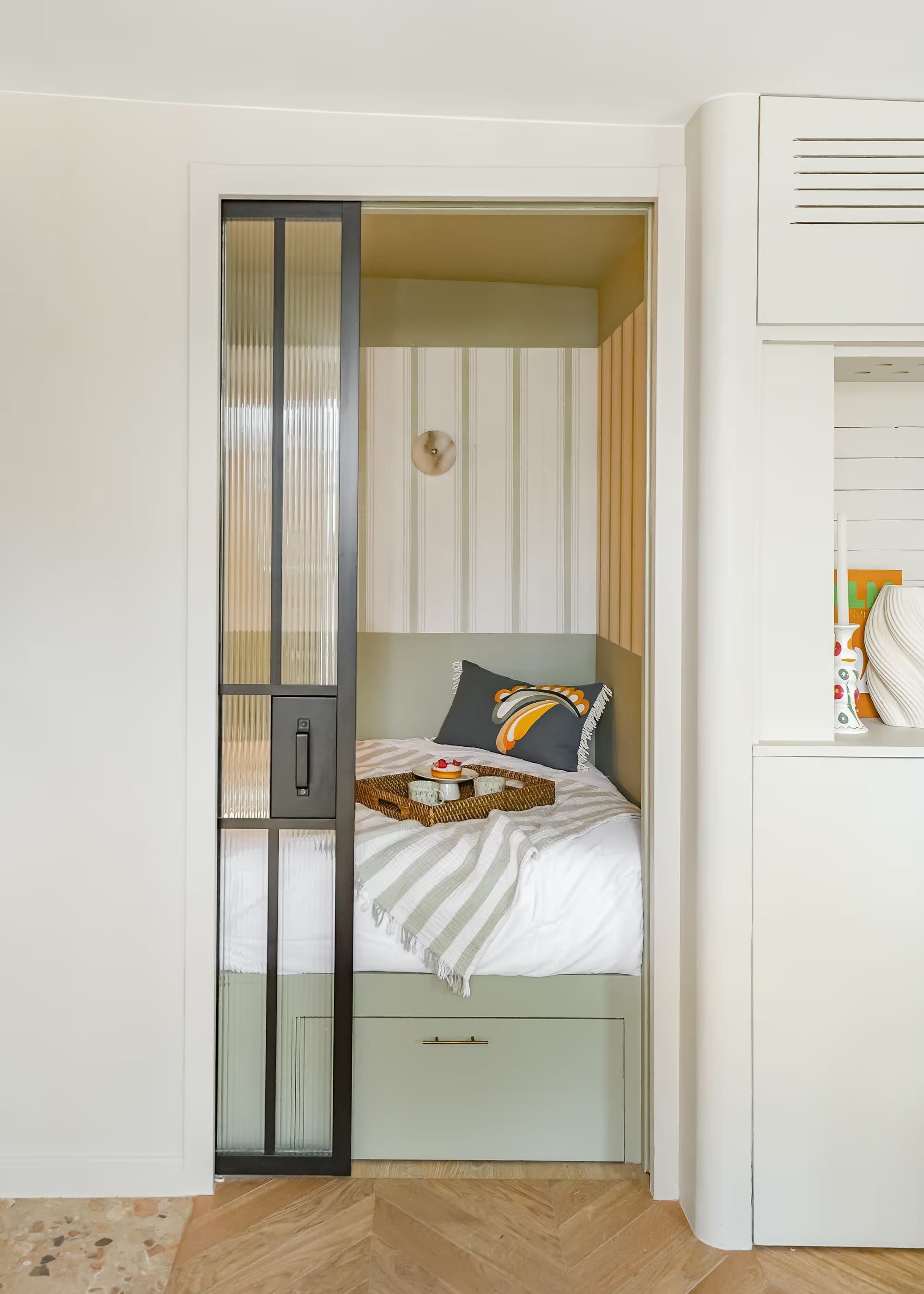


Mortgages for first-time home buyers
Under certain conditions, first-time buyers can apply for subsidized loans, such as:
- The social home ownership loan (Prêt d’accession sociale)
- The conventional loan (Prêt conventionné)
- The zero-interest loan (Prêt à taux zéro)
- The housing savings plan (Plan épargne logement)
- The Action Logement home ownership loan
- The social rent-to-own loan (Prêt social location-accession)
The social home ownership loan (PAS)
The PAS is an attractive option for low-income households looking to become homeowners. Granted by banks with a government agreement, this loan can cover up to 100% of the acquisition cost. Its main benefits include:
- Flexible repayment terms, ranging from 5 to 30 years;
- Reduced notary fees;
- The option to combine this loan with other assistance programs, such as the zero-interest loan (PTZ) or the Action Logement home ownership loan.
The conventional loan (PC)
The conventional loan is available without income requirements, which is a major advantage for first-time buyers. It can be used to finance a primary residence, whether new or existing, with or without renovation work. This loan features a capped interest rate and a repayment period of up to 30 years.
The zero-interest loan (PTZ)
The PTZ remains one of the most popular forms of assistance for first-time buyers. It is an interest-free loan granted based on income and location criteria. The PTZ is used to supplement a primary loan, such as:
- A conventional loan (PC);
- A social home ownership loan (PAS);
- A housing savings loan (PEL).
The housing savings loan (PEL)
Holders of a Housing Savings Plan (PEL) can also consider a housing savings loan. The amount depends on when the PEL was opened and cannot exceed €92,000.
The Action Logement home ownership loan
This loan is intended for private-sector employees who contribute to Action Logement and extends to the agricultural sector via the agri-accession program. It can be used to finance thepurchase of a property new builds, off-plan properties (VEFA), community land trust schemes (BRS), or existing properties, including social housing sales. It also applies to the construction of individual homes.
The benefits of the Action Logement home ownership loan include:
- A favorable fixed interest rate;
- The option to combine it, subject to conditions, with the Action Logement home improvement loan;
- No application, guarantee, or security deposit fees.
The social rent-to-own loan (PSLA)
The PSLA is designed to facilitatehome ownership for households with specific income levels. This scheme allows you to start by renting a property before purchasing it, offering several financial advantages:
- Reduced VAT;
- A reduction in the sale price of at least 1% per year of rental;
- A 15-year property tax exemption;
- Reduced notary fees.
Financial aid for renovation work
If you are considering thepurchase of a house or apartment that requires renovation work, be aware that several grants are available to support your projects, particularly for energy-efficient renovations of a primary residence.
Here are some examples of programs offered by the National Housing Agency (Anah):
- MaPrimeRénov' : A grant to fund energy-efficient renovation work, available to homeowners subject to income requirements;
- MaPrimeRénov' for Condominiums : Designed for co-owners looking to improve the energy efficiency of their building;
- Loc'Avantages : Assistance for property owners who rent at an affordable rate;
- MaPrimeAdapt' : For home modifications to meet the needs of the elderly or those losing autonomy, such as installing stairlifts or renovating bathrooms;
- MaPrime Decent Housing : Assistance for rehabilitating substandard or dilapidated housing.
With or without financial aid, smart budget management and thorough preparation of your application are the keys to a successful first property purchase. Schedule an appointment with one of our project managers; we would be delighted to learn more about your plans and show you how we can support you.
Is now the right time to buy property?
The idea ofbuying your first property can be tempting, but beyond knowing whether to buy in 2026 or wait, it is crucial to carefully evaluate your situation before taking the plunge. Even if your borrowing capacity is sufficient, it remains essential to ask yourself if this is the right time for you to commit to such an undertaking.
Let's take an example: if you know you will likely move in the next two years, buying a new property may not be the best strategy. The notary fees and other incidental costs associated with the purchase are unlikely to be offset by a potential capital gain if you decide to sell quickly. This could even result in a loss rather than a profit. On the other hand, buying an apartment or house and hiring a renovation company can quickly increase the property's value, allowing for a capital gain upon resale after two years.
Furthermore, if you have just started your professional life and do not yet have a sufficient down payment, it may be wise to wait a little. By saving for a few years, you can strengthen your loan application and secure better financing terms. While not having a down payment does not make a purchase impossible, banks are often more reluctant to grant a loan in these circumstances, and you may face numerous complications in obtaining the desired financing. It is therefore better to prepare calmly and thoroughly before getting started.
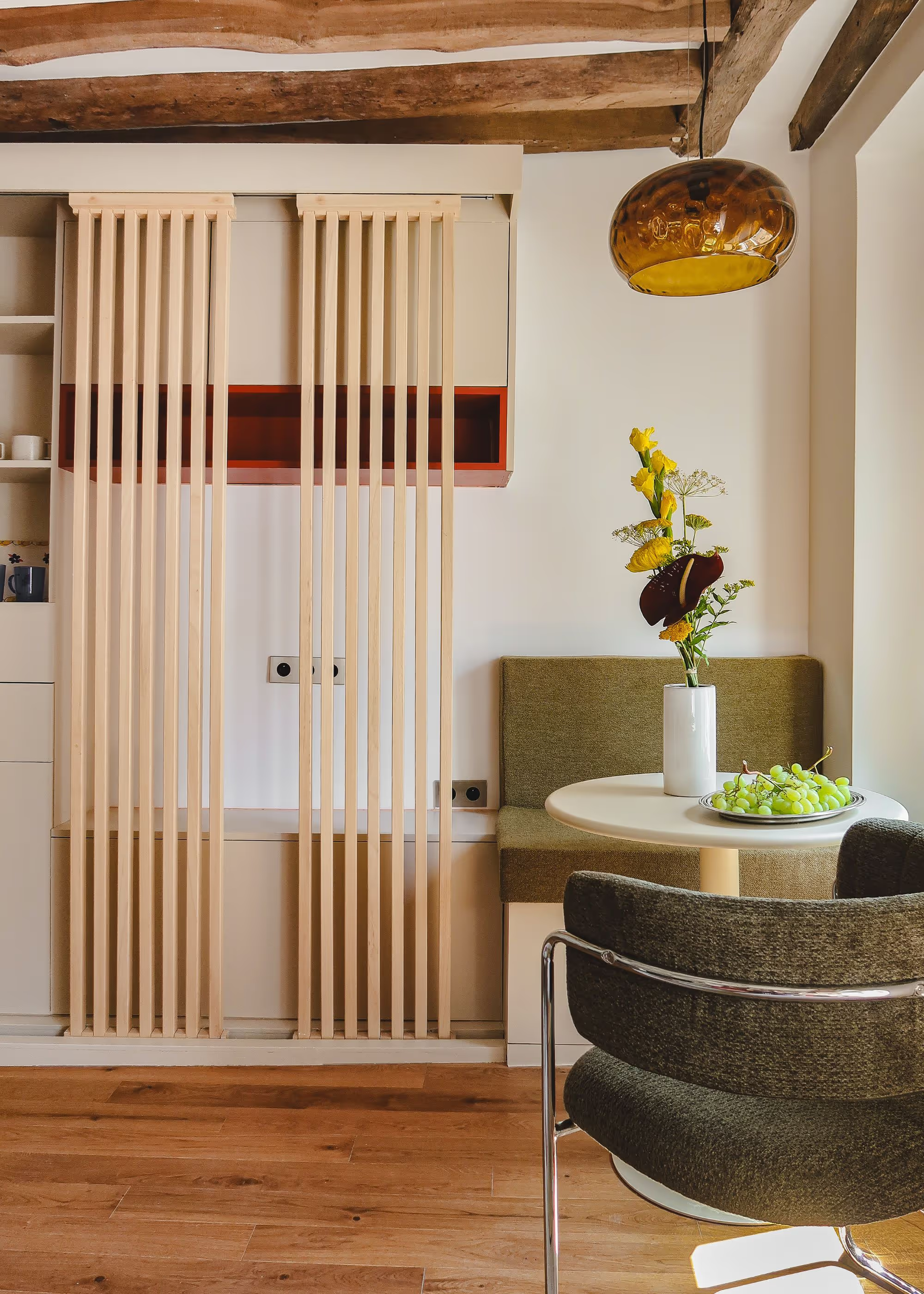


Our tips for a successful first property purchase
4 tips for a successful first property purchase :
- Be patient
- Choose your property by asking the right questions
- Master the financial side of your property project
- Surround yourself with competent professionals
1. Be patient
One of the most important aspects to consider when buying your first property is time. It is rare for everything to go quickly and smoothly. Between setting your budget, searching, viewings, negotiations, and finally the appointment with the notary, the months fly by. It is essential not to lose patience and to keep in mind that any acquisition process takes time.
You will likely need to visit several properties before finding the one that ticks all your boxes. It is imperative to remain flexible and persistent, without rushing into the first opportunity that comes along and risking buying a property too quickly or at too high a price.
2. Choose your property by asking the right questions
For your first property purchase to be a success, it is crucial to ask yourself the right questions. Every project is unique, so you must examine every aspect thoroughly to avoid any unpleasant surprises.
Know how to evaluate, select, and negotiate each property
The condition of the property is obviously a deciding factor. It is important to know which questions to ask when viewing an apartment or a house.
For example, insulation, plumbing, electrical systems, or safety standards can lead to costly repairs. By anticipating these potential projects, you will be better able to negotiate the purchase price or plan for an additional renovation budget from the start.
Becoming a co-owner?
If you are buying a property in a co-ownership, it is essential to be well-informed about the specificities involved. Condo fees, for example, must be included in your financial plan, as they can represent a significant cost.
Additionally, you should inquire about the condition of the building, particularly regarding any upcoming work in common areas that could lead to additional costs.
The neighborhood and surroundings
The environment in which your potential property is located plays a vital role in your day-to-day comfort.
It is therefore important to research public transport, schools, and nearby shops, as well as the tranquility of the neighborhood and surrounding area. Factors such as ambient noise, the amount of sunlight the property receives, or air quality can all influence your quality of life.
Before committing, consider checking with the local town hall to learn about urban development projects near your future home. Certain upcoming construction or infrastructure projects could affect the peace and value of your property. Whether it involves noise pollution from construction sites or new infrastructure, it is essential to gather information beforehand to minimize the risk of unpleasant surprises after the purchase.
3. Mastering the financial aspect of your real estate project
To succeed in your first property purchase, the financial aspect is paramount and must be considered from every angle. It is not just your borrowing capacity that counts, but also the personal contribution you are able to invest in the project.
Once your borrowing capacity is established, it is recommended to shop around. You can consult several banks or use a mortgage broker to find the most advantageous terms. Negotiating and signing the loan requires paying attention to interest rates, bank fees, loan duration, early repayment conditions, and more.
Take care to examine every proposal thoroughly and optimize every detail, as small variations can lead to significant savings over the life of the loan.
In addition to the mortgage, it is advisable to take out borrower's insurance. Although not legally mandatory, it is almost always required by banks.
Finally, if you have funds in an employee savings plan (PEE, PEI, or PEG), be aware that these sums can be unlocked for the purchase of your primary residence. Although these funds are generally locked for a five-year period, buying a home is one of the situations where you can access them early. It is a little-known financial boost that can prove crucial in helping you take the leap into your first property purchase.
4. Surrounding yourself with competent real estate professionals
In such a significant project, having the right support is very useful. A mortgage broker, for example, can play a decisive role in strengthening your application with banks.
Their mission is to present your profile in the best possible light to secure a more favorable interest rate and negotiate application fees, which can sometimes reach several thousand euros. A well-informed broker knows which levers to pull to make your application irresistible, thereby increasing your chances of obtaining financing under the best possible conditions.
When searching for and purchasing your property, you have the choice of buying directly from a private seller or using a real estate agency. While the former option allows you to reduce certain costs, it also requires a greater commitment on your part.
On the other hand, using a real estate professional allows you to benefit from their network and expertise, increasing your chances of finding the ideal property in a shorter timeframe.
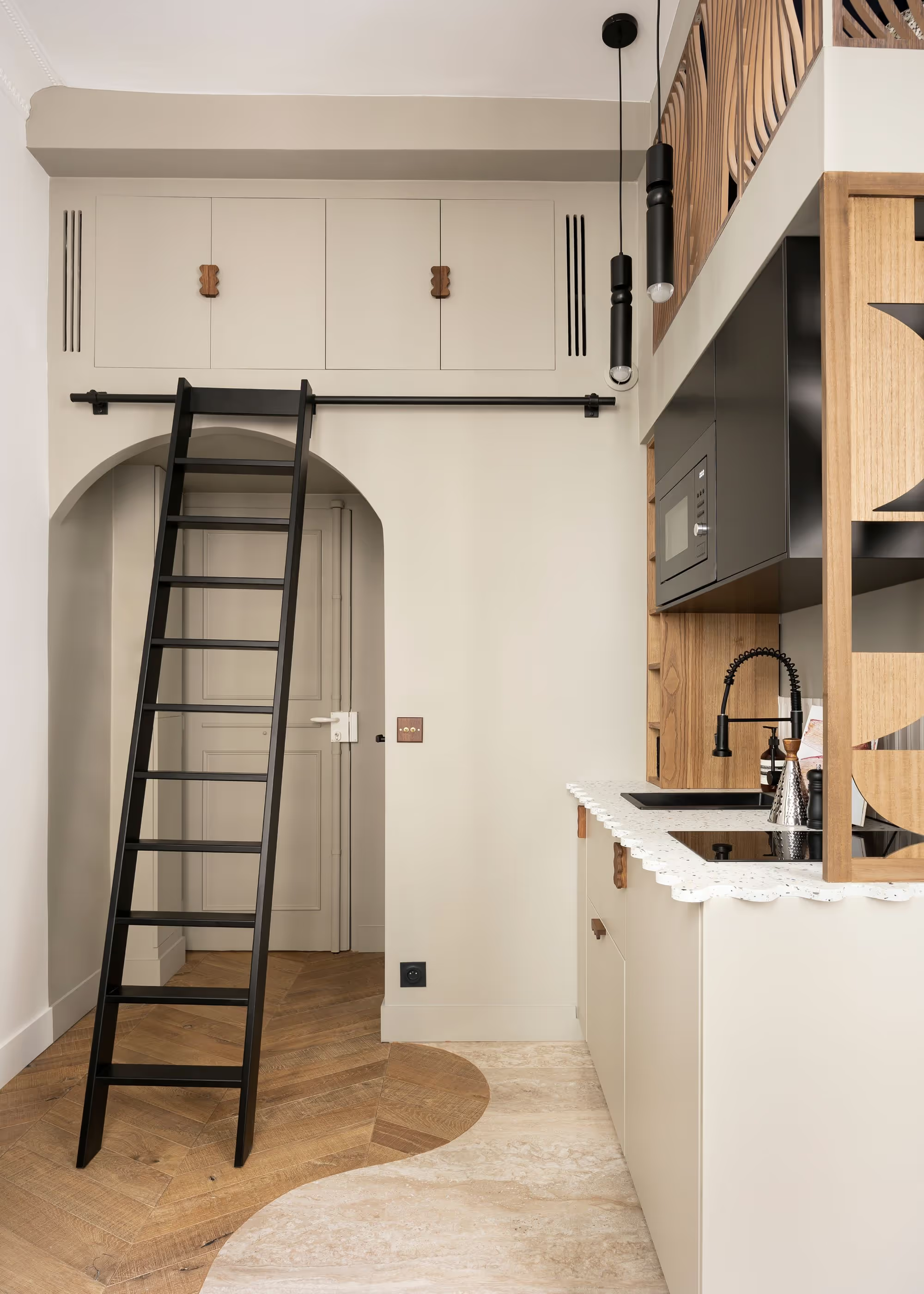
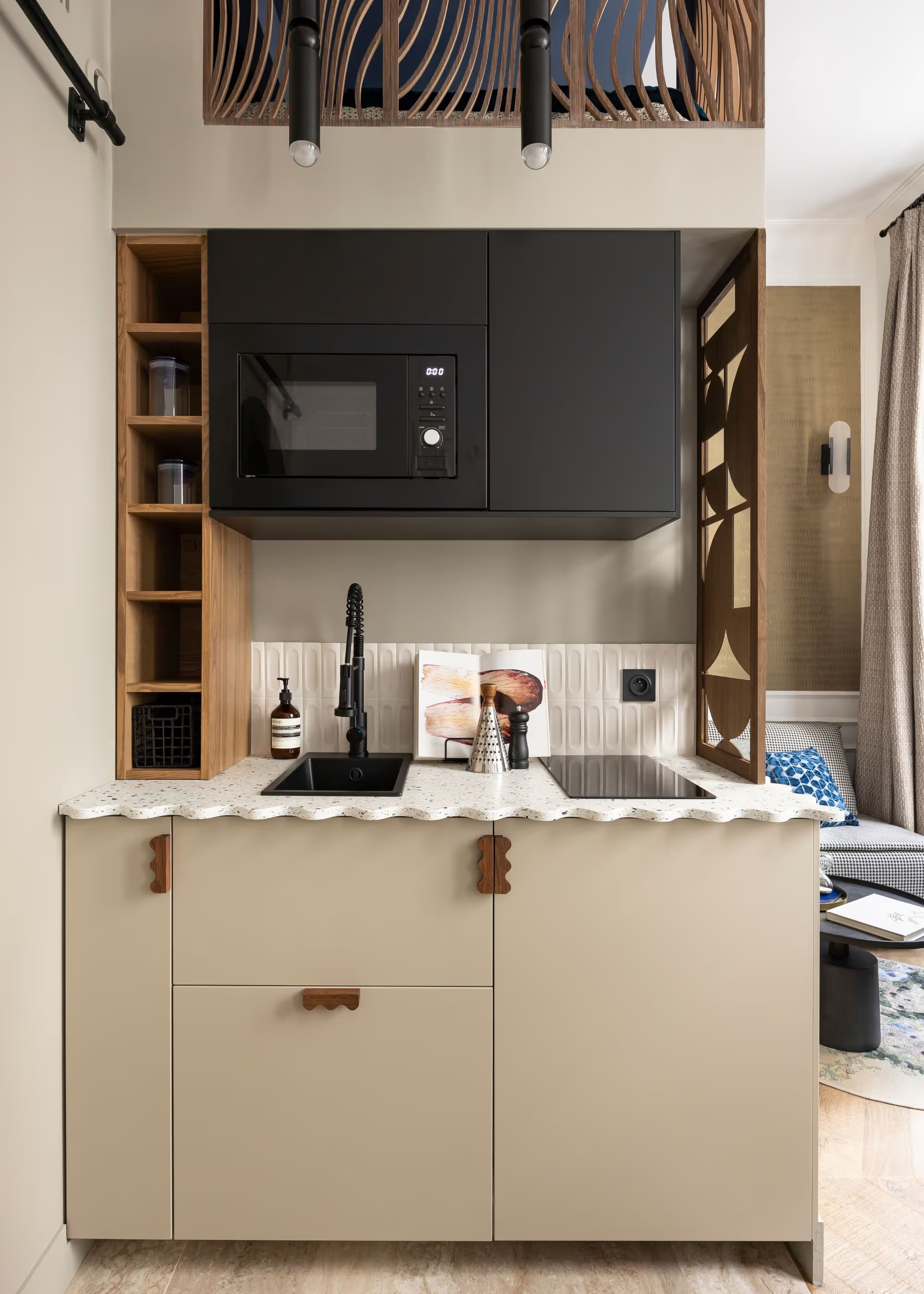

At Maison Kyka, we offer a bespoke service. Our property hunters take care of finding the home that meets your expectations in just a few weeks. Once found, our interior design studio takes over to help you renovate, furnish, and decorate the space, transforming it into a unique place that reflects your personality. This way, you optimize the value of your property and create a living space that is 100% you.
With a team of experts by your side, every step of your first property purchase is simplified, secure, and optimized to make this moment a stress-free success.
"My experience with Maison Kyka was simply incredible! The team was fantastic from start to finish. My architect really knew how to capture my ideas and transform them into an exceptional design. They were always there to answer my questions and adjust the details according to my wishes."
Wembley Da Silva



.webp)



.svg)