



What are the 8 steps to buying a property?
Buying a property can seem like a long and tedious process at first glance. But with good support from experts, some knowledge, and proper organization, each step of a property purchase can be an enjoyable experience, even if it's your first time! In this article, discover the various stages involved in buying a property, from project definition to the signing of the authentic deed of sale, and even renovation work. Follow the guide!
Defining your property project and assessing your borrowing capacity
"61 % of tenants view homeownership as an ultimate goal." Procivis Barometer 2025
Are you a first-time buyer looking to make your first property purchase? Are you a second-time buyer looking to purchase a property for rental? Is your family growing, and you're looking to sell your primary residence to buy another?
Regardless, buying a house or an apartment is a significant decision that can impact your life and well-being for years to come. It's therefore important to adopt a sound methodology to avoid any risk of buyer's remorse after a property purchase.
So, to help you write the next chapter of your life, we've written this article to give you some advice and help you find that rare gem.
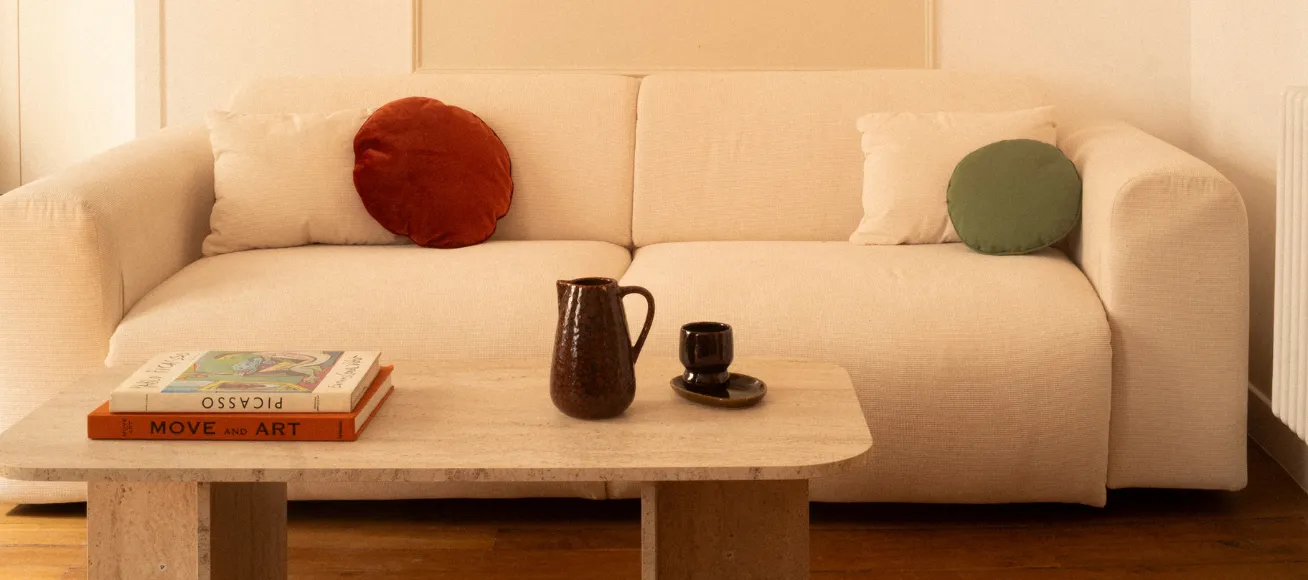
To begin, it's important to clearly define your property project by answering the following two questions as precisely as possible:
- What are your financing needs?
- What are your search criteria?
To assess your borrowing capacity and calculate your property budget, you can contact your bank, a broker, or a real estate agency. Their role is to understand your project and run several simulations to offer you financing options tailored to your profile (income, savings, professional activity, etc.).
The Banque de France limits borrowers’ debt-to-income ratio to 35 %, including loan insurance. To increase your borrowing capacity, you can pay off any outstanding loans, such as student loans or personal loans.
Contact Maison Kyka to get in touch with a property project manager tailored to your situation. Whether you're single, a head of household, an expatriate, or a foreign national, run a quick simulation, then schedule an appointment with Maison Kyka to discuss your project!
“Despite my lack of time and experience in this area, Maison Kyka transformed the purchase of my primary residence in the 15th arrondissement into a smooth and pleasant experience. I highly recommend their services.” Nans R.
Hunting for the property of your dreams
This is undoubtedly the most time-consuming step of the project. To find the property of your dreams, three strategies are available to you:
- Setting a long list of criteria and hoping the ideal house or apartment is for sale,
- Setting few criteria to find a property you like relatively quickly,
- Buying a property and renovating it to live in a place that reflects your personality and where you can achieve a capital gain upon resale (our specialty and the most profitable solution).
Here are some examples of questions that help define your property search criteria:
- Where in France do you want to buy?
- What size are you looking for?
- Are you looking for a specific type of property? (e.g., a canut apartment, a top-floor apartment, a Bordeaux échoppe, etc.)
- How important are brightness or quietness to you?
- For an apartment: which floor? with or without a lift?
- For a house: with multiple floors? a garden or a terrace? solar panels?
- What energy performance rating (DPE) should the property have?
- Do you need a parking space or a bike storage room?
- Do you need a cellar?
If you're finding it difficult to answer these questions precisely, don't worry! Browsing property listings and talking to friends and family will help you refine your criteria.
Once your criteria are identified, the hunt is on! You'll then need to use all the tools at your disposal to identify properties that match your project: online listings (e.g., SeLoger, Leboncoin, etc.), word-of-mouth, real estate agencies...
Browsing and sorting listings can be a tedious process, especially if your criteria are broad. To help you find a house or apartment that truly meets your expectations, you can sign a property search mandate with a trained property finder who has a network of partners.

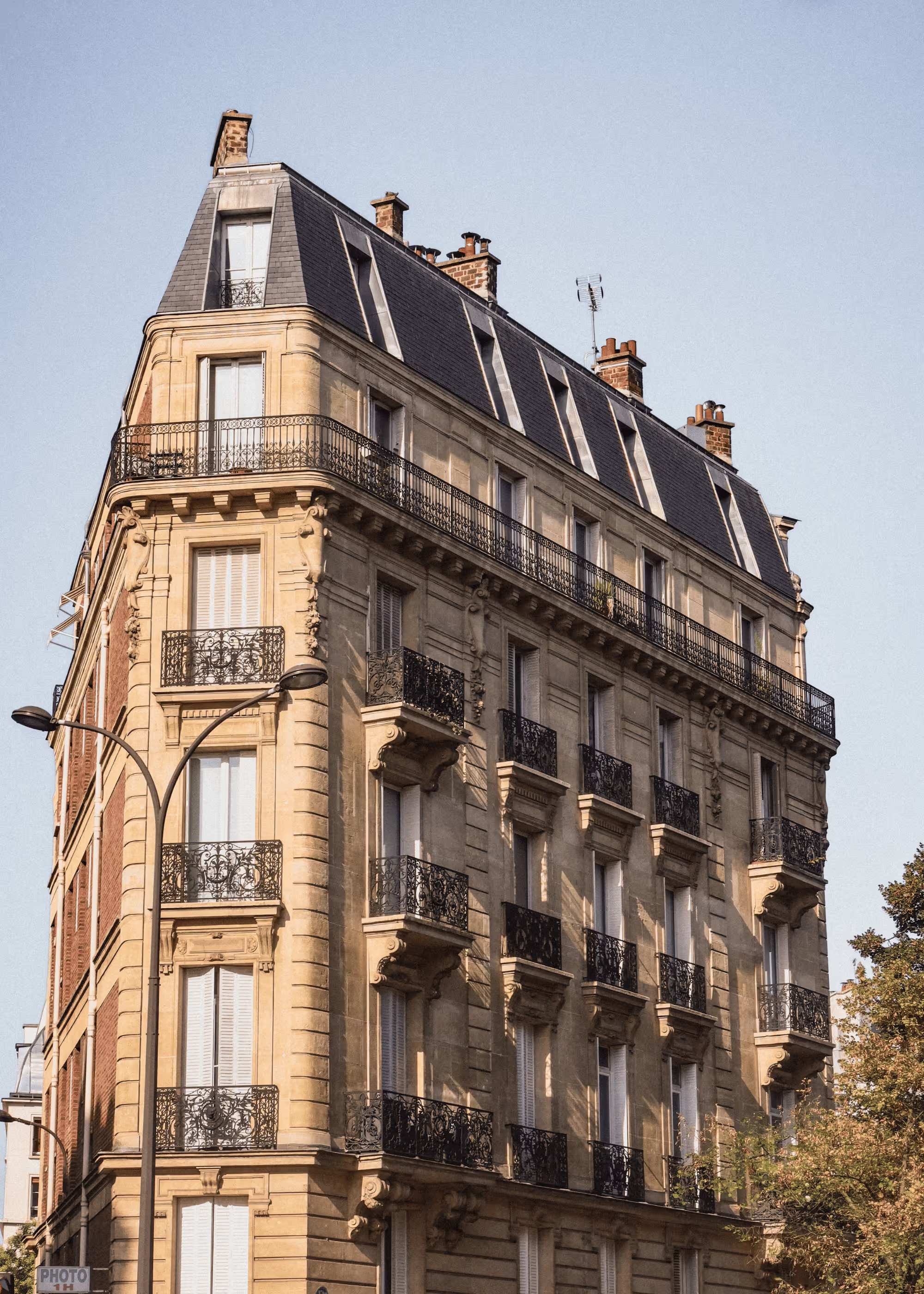

With Maison Kyka, you benefit from tailor-made support throughout your project. We have dedicated tools to find and purchase a property at the right price. And thanks to our network of real estate professionals, we have access to exclusive opportunities.
“We chose Maison Kyka for our first investment! We are extremely happy with the result; our apartment is perfect, and we were incredibly well supported by Céline and Anton, who were attentive and very responsive. Big plus: the timing was respected almost to the day. We highly recommend them!” Jeanne S.
Viewing multiple properties
Found a property you're interested in? Visit it as soon as possible, as other potential buyers have probably spotted it too.
However, to avoid unnecessary viewings, take the time to carefully analyze all the elements of the listing. For example, photos can sometimes reveal unfavorable details related to light, the quality of sound or thermal insulation, the general condition of the floor or walls, etc.
Also remember to compare the property's price per square metre with that of similar properties nearby. To do so, you can use the French tax authority's (DGFiP) “Demande de valeur foncière” property transaction database or seek advice from a property specialist such as Maison Kyka.
Once you're there, here are some examples of questions to ask when viewing an apartment:
- When was the building constructed?
- Is the heating gas or electric? Is it an individual or communal heating system?
- How many radiators are there? Do they all work properly?
- Have all the mandatory property diagnostics been carried out? (e.g., termite report, ERNMT…)
- Is the electrical system up to code?
- Are the windows double-glazed?
- What is the DPE (Energy Performance Diagnostic) rating for the apartment?
- If you visit late in the day, ask about the apartment's sun exposure at different times of the day.
- Are the neighbors owners or tenants?
- What are the condominium fees and rules? Have there been any issues in the past?
- How much is the property tax (and other local taxes)?
- How many people have already viewed the apartment?
In addition to asking the owner questions, take the time to do some checks yourself. For example, pay attention to noise that might come from outside (with windows closed and open) or from common areas; check for a ventilation system, signs of damp, drafts, etc. Prepare a checklist before visiting the apartment; this will help you remember everything and keep a record of your visit.
Keep in mind that the seller is taking the time to welcome you into their home. Be polite and tactful to avoid making the viewing feel like an interrogation. To maximise your chances of securing the property, it is in your best interest to leave the seller with a positive impression.
If you're interested in a house rather than an apartment, you can use most of the questions listed above. That said, here are some examples of questions to ask when viewing a house:
- How is it heated (oil boiler, heat pump, etc.)? Does the heating system work correctly?
- What shops are nearby?
- Is there asbestos in the house?
- Is the house exposed to flood risks?
- How is the house connected to the water supply? How is wastewater discharged?
- Can you do a second viewing before buying the house?
- Does the local urban plan allow for renovations?
- What is the condition of the roof and attic?
- If applicable: is the roof structure strong enough to support the weight of solar panels?
Again, prepare your house viewing checklist and take the time to perform some checks yourself. For example, analyze the general condition of the exterior facades and the garden to determine if house renovation work should be considered in the short or medium term.
Whether you are viewing an apartment or a house, arrive early to give yourself time to explore the surrounding area. It is important that the atmosphere of the neighbourhood appeals to you just as much as the property itself. This is particularly important if you are viewing a home in an arrondissement or town you are unfamiliar with.
Finally, even if the first or second property catches your eye, take the time to visit several properties before deciding to submit a purchase offer. This is important to get an idea of the quality of properties for sale on the real estate market. If possible, visit with someone else; this gives you another perspective and allows you to gather more information by having two people ask questions.
"On average, buyers visit 6 properties before closing a deal." Crédit Foncier Study
Submitting a purchase offer
That's it, your decision is made, you've found the gem you were looking for, and you've decided to buy it?
However, this is where the "serious business" begins. To commit to the property purchase process, you must first formally notify the seller.
A purchase offer is a written document that must at a minimum contain the following elements:
- A description of the property in question,
- The price you are offering the seller,
- The date of the purchase offer,
- The deadline to accept the offer or make a counter-proposal (generally 1 to 2 weeks).
It's now up to you to determine the amount you are willing to pay to acquire the property. Other people have visited the property you're looking to buy, and the seller has likely shown their property to each interested party individually. Except in exceptional cases, you therefore don't know how many people have submitted a purchase offer or at what price.
To maximize your chances of securing the sale, you can match the seller's asking price. Negotiating a property's sale price is common practice in real estate (especially for older properties), but it is inherently a riskier strategy. Therefore, you need to have one or more valid reasons to negotiate the property's sale price. With Maison Kyka, our advisors assist you at every stage of the negotiation.
To convince the seller of your interest, it is advisable to supplement your purchase offer with:
- A letter detailing your genuine interest in the property,
- A financing estimate,
- A financing certificate: this document, signed by your bank or broker, confirms the viability of your financing plan.
To make your plans more tangible and show the seller that you are a serious buyer, you can specify when you would like to move in, the type of renovation work you intend to carry out and the amount of the deposit you are prepared to pay to the notary when signing the preliminary sale agreement (promesse de vente or compromis de vente, see below).
Finally, you can send your purchase offer by email or registered mail with acknowledgment of receipt. It can be addressed to the real estate agent handling the sale or directly to the owner.
To increase your chances of acquiring your dream property, consult experts. At Maison Kyka, we are committed to offering our clients the best possible experience. Having successfully completed numerous purchase, renovation, and decoration projects, we know how important it is to have the right support and how much it's worth it! Request a simulation, tell us about your project, and benefit from our experts' sharp and informed advice.
“Maison Kyka is an incredible experience and team! I am the happy new owner of a property entirely sourced and renovated thanks to Maison Kyka! A first-time purchase is complicated and daunting, so being supported under these conditions is simply the best possible experience!” Jordan L.
Signing a promise to sell or a sales agreement
If the seller accepts your offer, you have two options: sign a promise to sell or a sales agreement.
In summary, a promise to sell is a unilateral contract (only one party is bound), while a sales agreement is a bilateral contract (both parties are bound). In practice, both contracts have similar effects; they are preliminary agreements that contain all the conditions that must be met for the sale to be finalized.


For example, a preliminary sales agreement must include:
- The address of the property in question and its availability date,
- The sale price and financing method,
- The property's history (previous owner, date of the last sale, etc.)
- A description of the property (with a floor plan, if available),
- For an apartment: the condominium regulations, the amount of current service charges, the minutes of the last three general meetings, etc.
- The validity period of the preliminary sales agreement,
- The suspensive conditions (and the buyer's 10-day right of withdrawal),
- The amount of remuneration that the buyer and/or seller must pay to the real estate professional(s) in charge of the sale.
In both cases, the buyer places an earnest money deposit into an escrow account (generally equivalent to 10% of the sale price, excluding notary fees) to confirm the seriousness of their commitment. The seller agrees to grant exclusivity on the purchase of the property for a period of 2 to 3 months.
The seller does not receive the deposit until the sale process has been completed. The escrow account is managed by the notary or estate agent.
Starting the day after the signing of the preliminary sales agreement or sales agreement, only the buyer has a 10-day right of withdrawal. Beyond this period, they can only withdraw from the sale by fulfilling certain suspensive conditions, such as obtaining a mortgage or a building permit.
If one of the two parties ultimately withdraws from the sale for a reason unrelated to the suspensive conditions, the other party may demand compensation. For example, the seller may keep the earnest money deposit. If the seller wishes to withdraw, the buyer may demand damages or the forced sale of the property (in accordance with the new Article 1124, paragraph 2 of the Civil Code).
In a real estate transaction, it is not uncommon for both parties to be assisted by a notary. In this case, it is generally up to the buyer to designate which notary will draft the sales agreement or, if applicable, the addendum to the sales agreement.
If you use a notary, they will most likely recommend a unilateral promise to sell (promesse unilatérale de vente). This notarised deed, which must be registered with the French tax authorities, incurs a fee of €125.
Obtaining a mortgage
Once the preliminary sales agreement or sales agreement is signed, you have 2 months to apply for a mortgage. To do this, you can contact your bank or use a broker to find a mortgage with favorable terms and interest rates.
Under French law, obtaining a mortgage is a mandatory condition precedent in the preliminary sale agreement. Therefore, if you are unable to secure your mortgage within the specified timeframe, the sale is cancelled and any sums already paid are refunded.
To apply for a mortgage or a bridge loan, you must provide a set of documents related to:
- Your personal situation : identity, family situation, proof of address etc,
- Your income : last three pay slips, last two tax assessments etc,
- Your financial situation : last three bank statements, savings account statement, property sale mandate (in the case of a bridge loan) etc,
- Your real estate project : signed preliminary contract, quotes for apartment renovation work, quotes for a house construction project, etc.
It is highly advisable to prepare your financing application from the start of your property project to avoid being caught off guard once the preliminary contract is signed. Again, a broker can help you build your application and highlight your strengths to secure advantageous loan terms. The more complete your application, the easier it will be to convince a bank to grant you the loan you desire.
Although it is not necessarily mandatory, it is strongly recommended that you include a deposit from your own funds (known as an apport personnel) when applying for a mortgage. This is the amount of money you are prepared to contribute towards purchasing the property. As a general rule, this sum is equivalent to the notary fees.
Further reading: How to sell a property and keep your loan?
Have you received an attractive loan offer?
11 days after receiving it (i.e., after the bank's cooling-off period), return the signed financing offer. Please note, if you return the signed offer more than 30 days after receiving it, the bank may refuse to grant you the home loan because the offer's validity period has expired.
Finally, allow for a 2-week waiting period between the acceptance of the loan offer and the release of funds.
By working with Maison Kyka, we do everything we can to help you find a loan as quickly as possible and at the best rate. Schedule an appointment with our team to learn more about the support we offer our clients.
“I 100% recommend the Maison Kyka experience! No stress because they manage absolutely everything, and the team is responsive to needs and requests, which makes the whole process very smooth. A big thank you, Maison Kyka!” Perrine J.
Signing the authentic deed of sale
The sale of a property is formalized by a deed of sale, which is an authentic deed drafted by a notary. This step generally occurs 2 to 3 months after the signing of the preliminary sales agreement or sales agreement. However, it is possible to reduce the period between the sales agreement and the authentic deed to a few weeks if you purchase without a bank loan.
One month before the signing date, the seller is required to present you with a draft final deed of sale prepared by the notary. If necessary, this gives you time to request modifications.
A few hours before going to the notary's office, it is advisable to revisit the apartment or house to read the meters and to check that no issues have arisen since your last visit (e.g., a water leak), that the rooms are indeed empty, and that any furniture meant to remain is still there.
If you discover any damage to the property, the seller must notify their insurance company before signing the final deed of sale.
At the notary's office, the authentic deed of sale is read to both parties before being signed. Then, the buyer pays the sale price and the notary fees, and the seller hands over the keys to the property.
Finally, the notary provides you with a certificate of ownership, which enables you to take out home insurance or any other utility subscription (water, electricity, gas) for your new home.
However, the certificate of ownership is not a title deed. To obtain the latter, the notary must register and publish the final deed of sale:
- To register the sale of the property, the notary sends the document to the tax authorities, who return a stamped version of the authentic deed.
- To register the sale of the property, the notary contacts the relevant Land Registry Office to carry out the necessary land registration formalities.
The copy of the authentic deed stamped by the tax authorities serves as a title deed. It generally takes 6 months between the signing of the deed of sale and the delivery of the title deed.
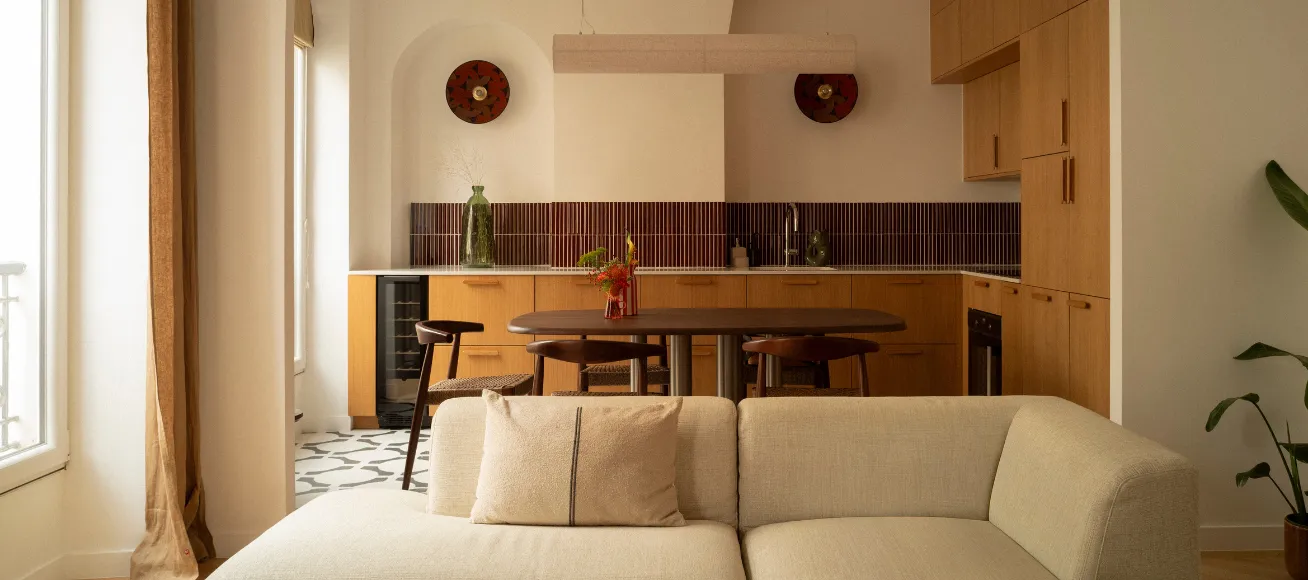
Renovating or moving into your new home
Congratulations! You now know how to become a property owner.
What happens next depends on your project and the condition of the property you purchased.
If you have purchased your primary residence, all that's left is to move in and, if applicable, rent out your previous apartment.
However, if you have purchased a property that requires renovation work, your real estate project is not over. Opting for a turnkey renovation can be a good strategy, but the professionalism and reliability of the renovation company you choose will significantly impact the success of your project.

75006 Paris