Share the article


realty
Article
Buying property in Paris : keys and advice for a successful property purchase
Summary

Buying real estate in Paris is both a dream and a challenge. Between some of the highest prices in Europe, increased competition and unique architectural heritage, each acquisition requires preparation and discernment. However, even in a tense market, great opportunities exist for those who know how to analyze and anticipate. That you were wondering if 2025 is a good year to invest in real estate or are you looking for concrete advice for buying an apartment or a house, this guide signed by Maison Kyka accompanies you step by step to transform your Parisian project into a heritage success.
Understand the specificities of the Paris market
The Parisian real estate market combines high prices, contrasting opportunities in different districts, and a global attractiveness that makes it a safe asset investment. Strong rental demand and an exceptional living environment in terms of culture, education and infrastructure reinforce the solidity of the market, despite a slowdown that began in 2022.
A tight market and high prices
To buy in Paris is to enter one of the most competitive real estate markets in Europe. Despite recent fluctuations, prices there remain much higher than those observed in major French cities. In August 2025, the median price per square meter reached €10,454, compared to €8,382 ten years earlier (source: Figaro Immobilier). This continued growth illustrates the solidity of the Paris market, even if the real estate crisis initiated in 2022 resulted in a drop of nearly 7 %.
Several factors explain these price levels:
- One significant density, since Paris has more than 2,048,000 inhabitants, i.e. 20,500 inhabitants per sq km;
- One global attractiveness who maintains constant pressure on the real estate market;
- One unique living environment offered by the french cultural, economic and tourist capital.
Historically, Paris has been a “seller” market, with properties that were sold in a few days. However, the current cycle is slightly reversing the trend: the decrease in transactions and the increase in sales times give buyers more room to negotiate.
However, one segment stands out: that of high-end real estate. Properties located in particular in the 6th, 7th or 16th districts continue to sell quickly. It is in fact more difficult to obtain concessions from a seller if the property is located in a rare building and has a high level of services (security system, large surface area, designer furniture).
The relative price stabilization observed since 2024 suggests a gradual recovery. For a long-term investment, buying in Paris therefore remains a solid investment, able to withstand economic cycles.
Different opportunities depending on the districts
Paris consists of 20 districts, each of which is distinguished by its identity, its history and especially its prices. Between the prestigious sectors of the West and the more popular districts of the North-East, the difference can exceed several thousand euros per square meter.
The historic center and the west Paris (1st, 6th, 16th.) concentrate the rarest properties: cut stone family apartments, listed buildings in Saint-Germain-des-Prés, private mansions of the Marais. These districts appeal to wealthy French and international customers, ready to invest in a safe haven, even in times of downturn.
On the other hand, other boroughs offer more accessible opportunities. In the 19th, 20th, 13th, or parts of 18th, the prices remain relatively affordable, with greater negotiation margins. These neighborhoods seduce by their cultural diversity and their lively local life, like Belleville or Butte-aux-Cailles. They also benefit from vast urban planning projects, such as the transformation of the banks of the Canal de l'Ourcq, which suggests a gradual valorization of land.
More generally, the 2024 Olympic Games and the resulting infrastructures are redrawing the face of the Paris periphery. New transport, sports facilities and urban developments contribute to the emergence of new residential areas.
NOTE
According to a report published for Société du Grand Paris, the future Grand Paris Express network will significantly reduce travel times on certain routes. For example, the journey between Bobigny and Cité Descartes will be reduced from 46 to 26 minutes, representing a time saving of nearly 43 %.
It is on this contrasting ground that Maison Kyka brings you real added value. Thanks to their detailed knowledge of boroughs and emerging sectors, our real estate project managers identify for you the best neighborhoods to buy in Paris according to your project.
Why buy in Paris in 2025?
In 2025, investing in real estate in Paris has many advantages:
- It is a safe asset investment, supported by a favourable environment for buyers.
- The rental market is characterised by its vitality and offers interesting opportunities, especially for small-scale properties.
- The living environment, which is unique and sought after in France and internationally, is reinforced by ambitious urban planning projects.
A secure asset investment
Beyond the real estate transaction, buying in Paris is a wealth strategy. While the prospects for rapid capital gain are limited due to high prices, investing in the capital remains a guarantee of solidity in the medium and long term. Indeed, the structurally strong demand, driven by the scarcity of supply and the global attractiveness of the capital, give the market a bullish momentum over time.
In 2025, the economy is even working in favor of buyers since interest rates, which had soared, returned to around 3 %. This decrease opens up new financing opportunities for borrowers. At the same time, inflation is approaching the 2 % threshold set by the European Central Bank, stabilizing real estate purchasing power and reducing uncertainty.
Finally, another advantage weighs in the balance: the tax regime applicable to the main residence. The resale of this one benefits from a total exemption from real estate capital gains tax. This advantage, which is specific to buying your main residence, reinforces the idea that Paris remains a relevant choice for securing and developing its heritage.
WARNING
The exemption from capital gains tax on real estate does not apply to rental investments.
A dynamic rental market
The rental market in Paris maintains a remarkable vitality. Admittedly, rent control and the ban on renting thermal strainers, classified F and G at the DPE, may seem restrictive. However, these measures do not affect the attractiveness of the capital for renters. Demand remains much higher than supply, which ensures permanent rental tension.
Every year, students, young workers and expatriates flock to Paris and primarily look for well-served and lively neighborhoods. In the 9th, 10th or 11th, but also in some sectors of the 2nd and 8th, homes can be rented in just a few days. The presence of schools, employment centers and a rich cultural life explain this constant pressure.
Les small areas are doing well in the game. Studios and two-room apartments concentrate most of the requests, offering both good profitability and great ease of resale. For an investor, this type of property combines several advantages: a more affordable acquisition cost, an almost zero vacancy and a very fluid resale market.
An exceptional living environment
The capital is distinguished by an incomparable cultural, educational and social wealth, offering an unique living environment conducive to real estate investment. Its iconic museums such as the Louvre or the Orsay Museum, its prestigious universities such as the Sorbonne, but also its world-famous restaurants and cafes — from the Café de Flore to the Grand Véfour — reinforce this international aura.
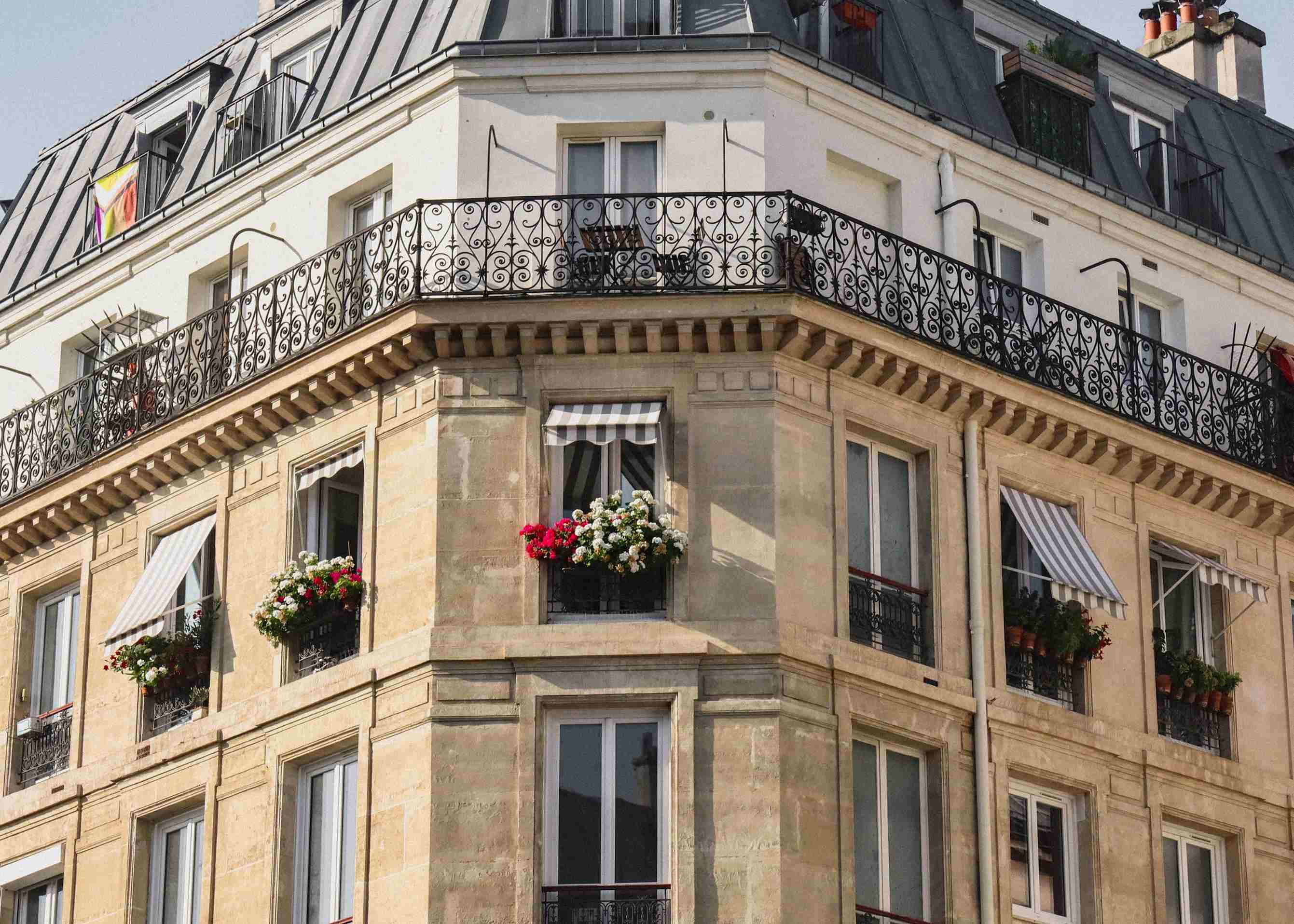
This diversity is also reflected in its built heritage. Medieval buildings sit side by side with Haussmann facades and contemporary architecture. Each neighborhood develops its own identity, allowing buyers to choose an environment in accordance with their lifestyle or project.
The transport network is another major advantage. Metro, RER, TGV stations and international airports place Paris at the heart of a dense network, quickly connecting Île-de-France, major French cities and foreign capitals. This connectivity reinforces the attractiveness of properties, whether they are intended to become a main residence, a pied-a-terre or a rental investment.
NOTE
The value of a Parisian property goes beyond its size or price per square meter; it also lies in the prestige of the neighborhood, the vitality of local life, and the ease of access to services—intangible factors that underpin the long-term resilience of your investment.
5 tips for buying real estate in Paris
For your real estate purchase in Paris to be successful, here are 5 tips to implement:
- Prepare the financing file in advance.
- Visit the targeted neighborhoods regularly in order to become familiar with the atmosphere and the types of property for sale.
- Dissect classified ads and aim for “off market” goods.
- Ask and ask yourself the right questions during visits.
- Realistically estimate the cost of the work.
Prepare your financing file in advance
In a market as demanding as Paris, having a solid financing case makes all the difference. High prices and competition between buyers make it essential to prepare beforehand. Defining your financing plan is not only a formality: it is a negotiation tool that reassures the seller and speeds up the process.
In order to immediately target properties adapted to your budget without wasting time on unrealistic visits and to be reactive when submitting your future offer, here are the four steps to follow to best prepare your financing:
- Accurately assess your borrowing capacity : this is based on your income, the stability of your professional situation, your existing expenses and your personal contribution. A banking simulation or the support of a broker partner of Maison Kyka allows you to obtain a clear vision of your envelope. You can thus immediately target the properties adapted to your budget, without wasting time on unrealistic visits.
- Compare the loan offers : your bank is not always the most competitive, and a broker can get cheaper rates or flexible repayment terms. This competitive approach is particularly useful in a period when interest rates change rapidly.
- Integrate the ancillary costs to your calculations: notary fees (on average 7 % for the old and 2 to 3 % for the new), administration fees, borrower insurance premiums, condominium fees or even property tax. These expenses have a direct impact on the budget available for your purchase.
- Find out about assistive devices existing loans that can considerably reduce the financial effort: Paris Housing Loan, Zero Rate Loan, Housing Action Loan.
ADVICE
Providing proof of financing significantly strengthens your position against competing buyers. In Paris, where some properties sell within days, this document becomes a key strategic asset.
Get familiar with the neighborhoods of Paris
For an investor as well as for a residential buyer, familiarizing yourself with the different districts of Paris allows you to guide your project with lucidity, beyond prices per square meter.
Studying the typology of properties present in the various districts of Paris gives good information on their compatibility with your search criteria:
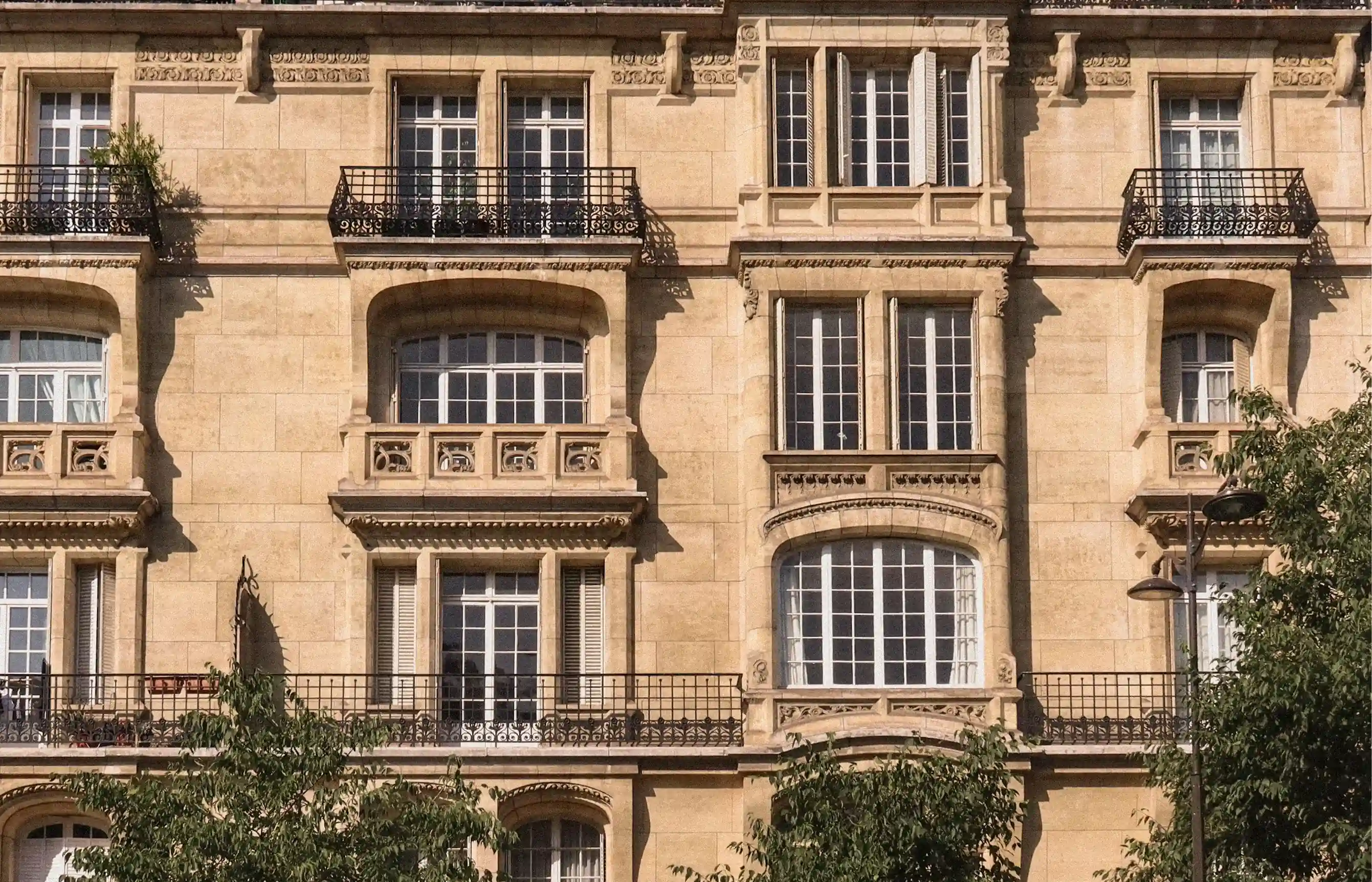
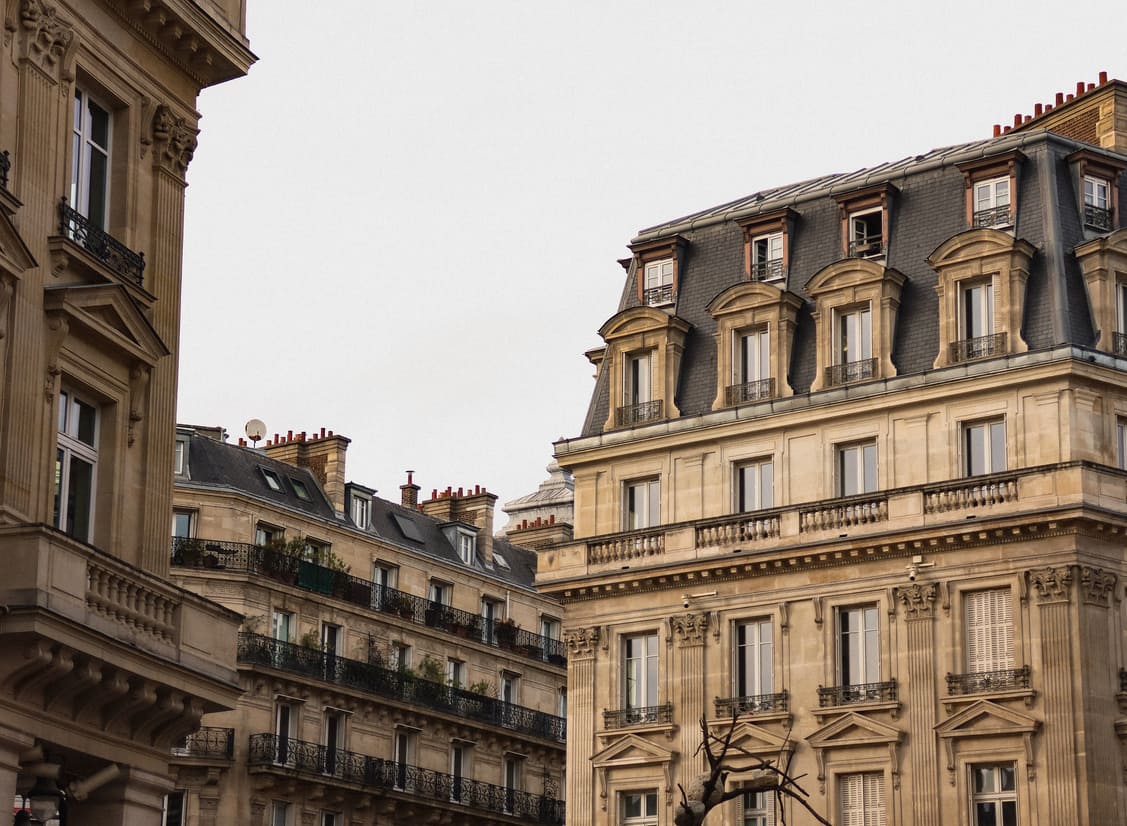
- Although 60 % of Parisian architecture is composed of Haussmannian buildings, some districts such as the 8th or the 16th concentrate a high proportion of them, with family apartments with large volumes (between five and seven rooms), generally located on the first three floors, with high ceilings and large living rooms.
- Eastern Paris, like the 10th, 11th and 20th districts, is better known for its small areas between 20 and 50 sqm, ideal for a first purchase or a rental investment.
- Although rarer, single family homes form the identity of certain neighborhoods where a village atmosphere remains, such as in the 17th arrondissement, in Les Épinettes, or around Butte-aux-Cailles in the 13th arrondissement.


The atmosphere also plays a key role. While the central districts seduce with their nightlife and their vitality, the noise pollution are also part of the decor, especially in summer. Residential and family neighborhoods such as the 12th district therefore offer more peace and quiet to buyers looking for peace and quiet.
ADVICE
Nothing replaces firsthand experience. Visit the neighborhood you are interested in, both during the day and at night, on weekdays as well as on weekends.
Buying a property in a particular neighborhood requires, however, to look at its accessibility. Metro, tram, bus and RER crisscross the capital widely, but it is still essential to assess the travel time between the chosen district and your regular destinations.
Carefully dissect classified ads and find “off-market” opportunities
Looking for an apartment in Paris often involves online ads, but they don't say everything. Some omissions are revealing: an unmentioned floor often hides a ground floor, drawn curtains suggest an opposite, and flattering photos sometimes mask a lack of light. Focus on plans, indicated surfaces, and room layout, rather than retouched images.
To multiply your chances, especially if it's your first real estate purchase, don't limit yourself to platforms that everyone can see. Neighborhood agencies have buyer files and sometimes distribute goods before they are put online. Even more exclusive, the “off-market” market includes apartments offered directly to a targeted clientele. To access it, the support of a professional with a research mandate — such as an apartment hunter or Maison Kyka real estate project managers — can be decisive.
Asking the right questions during a property viewing
A visit is the best time to ask any questions allowing to verify the quality of the property and to anticipate its possible faults. Start from the outside: observe the facade, the condition of the common areas and find out about recent or upcoming work (renovation, roof, cellar maintenance). If possible, consult the minutes of general condominium meetings: they often reveal the history of decisions and the expenses to be expected.
Once inside, test the brightness room by room, lights on and off. A simple application like sun surveyor makes it possible to assess the amount of sunshine over the seasons. Also take a moment of silence to judge the noise level, windows closed then open: in Paris, calm is a rare asset.
Don't overlook the layout either. Check the living area, the circulation between the rooms, the presence of lost spaces or rows of rows. Project yourself and imagine daily life in the apartment : traffic, storage, long-term scalability.

Correctly estimate the cost of the work
In Paris, a large part of the real estate stock dates from the 19th century. Buying an old apartment therefore often involves works, whether aesthetic or structural. Anticipating them well prevents you from unpleasant surprises and allows you to stay within your budget, especially if you want to renovating a Haussmannian apartment.
The starting point is energy performance diagnosis (DPE). More than 35 % of Parisian homes are still classified F or G. This classification requires major interventions:
- the replacement of door frames;
- wall and ceiling insulation;
- and the modernization of the heating system.
Then check the condition of the plumbing and electrical networks. A technical station, certainly expensive in the event of renovation, but essential for safety and comfort:
- test the water pressure from the faucets;
- check that water drains properly in all rooms (kitchen, bathroom, toilet);
- check the electrical panel and in particular the presence of a 30 mA differential circuit breaker, which is mandatory in recent installations to protect against the risk of electric shock;
- test several sockets to make sure they are working and not getting hot;
- Ask about the age of the water heater or boiler.
Some visual clues should also alert you:
- traces of mold,
- cracks on the walls and on the ceiling,
- the warped parquet,
- or the signs of infiltration.
These details, sometimes hidden, reveal structural problems that require work that is heavier than it seems.
At Maison Kyka, we estimate the minimum cost of renovating an apartment in Paris at €1,550/sqm. For a 50 sqm apartment, this already represents €75,000. A realistic estimate should therefore be part of your thinking from the first visit, whether you want buy new or old.
“When you don't know anything about it, it's reassuring to be accompanied by such competent people. Congratulations again!” Léo Monneret
The pitfalls to avoid when buying a home in Paris
When buying a Parisian apartment, avoid these 4 common mistakes:
- Rush without comparing multiple properties.
- Make an offer that is too low on an attractive property.
- Sign without suspensive conditions in the compromise.
- Neglect borrower and home insurance, or even construction damage in the event of work.
Rush without comparing several properties
Faced with the tension of the Paris market and the fear of missing out on an opportunity, many buyers make the same mistake: hurry to the first one that comes. However, buying in Paris requires a step back.
It is by visiting several properties in a short period of time that you build a price and service reference, while refining your vision. Without these points of comparison, it is easy to overpay for housing or to miss out on a major defect.
Giving yourself time to compare therefore makes it possible to distinguish the true potential of a property from its flattering appearance. Even if the market remains competitive, resisting the rush is the best guarantee to secure your investment and avoid long-term disappointment.
Make an offer below the price
In Paris, the temptation to negotiate is strong, but the market does not always leave this margin. A well-located apartment, displayed at a consistent price, can receive several offers at the price from the first visits. In this case, offering less often means immediately excluding yourself from the race.
This does not mean that any negotiation is impossible. It is possible if the home has been on sale for several months, if its price is clearly higher than comparable properties in the neighborhood or if heavy work is to be expected. In these specific cases, a lower offer may be heard by the seller.
ADVICE
A higher offer can sometimes be justified: for a rare property that has just come onto the market and is located in a highly sought-after area, offering a slightly higher price can help you secure the deal.
In summary, the success of an offer is based on a detailed analysis: knowing the prices in the neighborhood, evaluating the real attractiveness of the property and adapting your strategy. Negotiating to negotiate is risky; adjusting your offer to the reality of the market remains the best approach.
Sign in a hurry and forget the suspensive conditions
The euphoria of having found the ideal apartment often pushes buyers to speed up the signing process. But neglecting the suspensive conditions in the sales agreement can have serious consequences.
These clauses protect the purchaser: they provide that the sale is only final if certain events take place within a fixed period of time. The most common is obtaining a home loan. Without this condition, if the bank refuses your financing, you remain committed... and may lose your security deposit.
Other situations are covered by these clauses:
- absence of servitude or right of pre-emption,
- absence of a mortgage,
- obtaining a building permit or a work permit.
These are all points that, if not respected, can make buying risky or even impossible.
Concretely, if the suspensive condition is met, the sale becomes firm and final. If it is not, the compromise is void and the buyer gets back his security deposit in full.
Do without insurance or guarantees
One insurance coverage proves to be essential when buying real estate in Paris, where the properties are old and their value is high.
The borrower insurance, although not legally mandatory, is required by most banks to grant credit. It covers reimbursement in the event of death, disability or job loss. Its cost can represent up to a third of the loan amount: it is therefore essential to compare offers rather than automatically accepting one from your bank.
Once the authentic act of sale is signed, you become responsible for the home. Without multi-risk home insurance, the slightest damage (water damage, fire, infiltration) can be very expensive and involve your responsibility vis-à-vis the neighbors. This coverage must be taken out from the day of purchase.
Finally, if you are undertaking heavy work, the construction damage insurance is a valuable protection. It guarantees the rapid repair of defects covered by the ten-year guarantee, without waiting for a possible judgment. It is mandatory for developers and highly recommended for individuals who are renovating an old property.
Conclusion
Parisian real estate combines prestige, complexity and long-term valuation potential. Whether it's choosing the right district, preparing your financing, detecting a defect during a visit or avoiding classic pitfalls, each step deserves to be approached methodically and thoughtfully.
By entrusting your purchase and renovation project to Maison Kyka , you secure your investment and prepare for the future with confidence.