.svg)

.webp)
Which cities in the Île-de-France region are best for real estate investment?
While Paris is often the only place people consider for real estate investment, the most promising buying opportunities today are actually emerging in the cities of the Île-de-France region. With its eight departments and some 1,268 municipalities spread across the inner and outer suburbs, the region offers a diverse range of options to suit any type of project.
The challenge lies in knowing where to look, which is the first of many steps in the property buying process.
By breaking down regional trends and selecting the most strategic cities for investment, Maison Kyka guides you through this comprehensive overview of key areas in the Paris region.
Why buy in the Île-de-France region instead of central Paris?
Buying property in the Île-de-France region is a smart choice for 3 main reasons:
- Property prices are lower than those in central Paris
- The Grand Paris project is making Île-de-France municipalities more attractive
- The departments of the Île-de-France region offer a good balance between quality of life and investment opportunities
Real estate prices lower than those in Paris
Whether you are looking to invest in a new or existing property, choosing a location is often driven by budget considerations. Although Parisian real estate prices began a slight recovery in early 2026, the median price has now settled below the symbolic threshold of €10,000/m² (it stood at approximately €9,450/m² in February 2026). Despite this correction, buying in the capital remains a significant financial challenge for many households.
By comparison, the median price for the entire Île-de-France region is stabilizing around €4,550/m², offering more accessible and strategic opportunities for a future purchase in the suburbs.
Furthermore, the credit market is showing signs of easing: while the strongest borrower profiles are managing to secure rates close to 2.80%, the general trend at the start of 2026 is hovering between 3% and 3.20%, marking a welcome stabilization after the volatility of previous years. So, is it really worth insisting on the best neighborhood in Paris, when the solution lies just a few kilometers from the capital?
In this context, the departments bordering Paris can offer a better balance between available space and price per square meter, while maintaining direct proximity to the capital and its many attractions.
An attractive sector thanks to the Grand Paris project
Living outside of Paris has long been associated with remoteness, characterized by endless commutes by public transport or car. Yet this situation is about to change significantly thanks to the Grand Paris project. This major undertaking, aimed at developing the public transport network and revitalizing towns in the Île-de-France region, is redrawing the map of a region previously centered solely on the appeal of the capital. This is set to influence the real estate market and open up new investment opportunities.
More than just the expansion of the transport network departing from Paris, most notably with Metro line 14, the Grand Paris Express is creating an unprecedented network connecting inner and outer suburban municipalities, thanks in particular to:
- The creation of automatic metro lines 15, 16, 17, and 18, connecting cities such as Saint-Denis, Nogent-sur-Marne, and Villejuif across a 200 km network,
- The construction of 68 new stations by 2030,
- Access to a station within 10 minutes for 2 million residents of the Île-de-France region.
The real estate sector is also following this transformation, with the development of 250,000 new homes in the newly served cities.
The benefits of Grand Paris are therefore manifold:
- Commute times between Paris and secondary hubs in the Île-de-France region are reduced,
- Access to major employment hubs such as La Défense, Orly, and Saclay is made easier,
- The development of Grand Paris is leading to a rapid increase in property values in the area.

An ideal balance between quality of life and investment opportunities
Far from the congested image of the Paris metropolis, many towns in the Île-de-France region offer a more spacious urban fabric, a varied architectural landscape, and a housing stock often consisting of detached houses, small apartment buildings, or homes set back from noisy main roads. This is enough to attract buyers whose expectations are evolving alongside shifts in professional habits, such as remote work.
Behind this residential comfort lies a sound investment strategy: the market remains dynamic, supported by strong rental demand and pressure on family housing, particularly in well-connected municipalities where vacancy rates are low and rents are stable.
This search for space is coupled with a desire for nature, which towns in the Paris region are well-equipped to satisfy. Forests like those in Rambouillet or Fontainebleau, and landscaped parks such as the Saint-Cloud national estate, provide opportunities for outdoor sports or simply access to green surroundings—a key factor, especially for families.
Finally, the cultural and heritage offerings are an all-too-often underestimated asset. From the Palace of Versailles and the Gérard-Philipe National Theater in Saint-Denis to the MAC VAL in Vitry-sur-Seine, the region is brimming with vibrant spaces for discovery that contribute to the area's overall appeal.
Buying in the Paris Region: An Overview of Key Areas from North to South, East to West
Investing in the Paris region offers a wide range of possibilities in terms of locations, prices, and lifestyles, which vary by town and department:
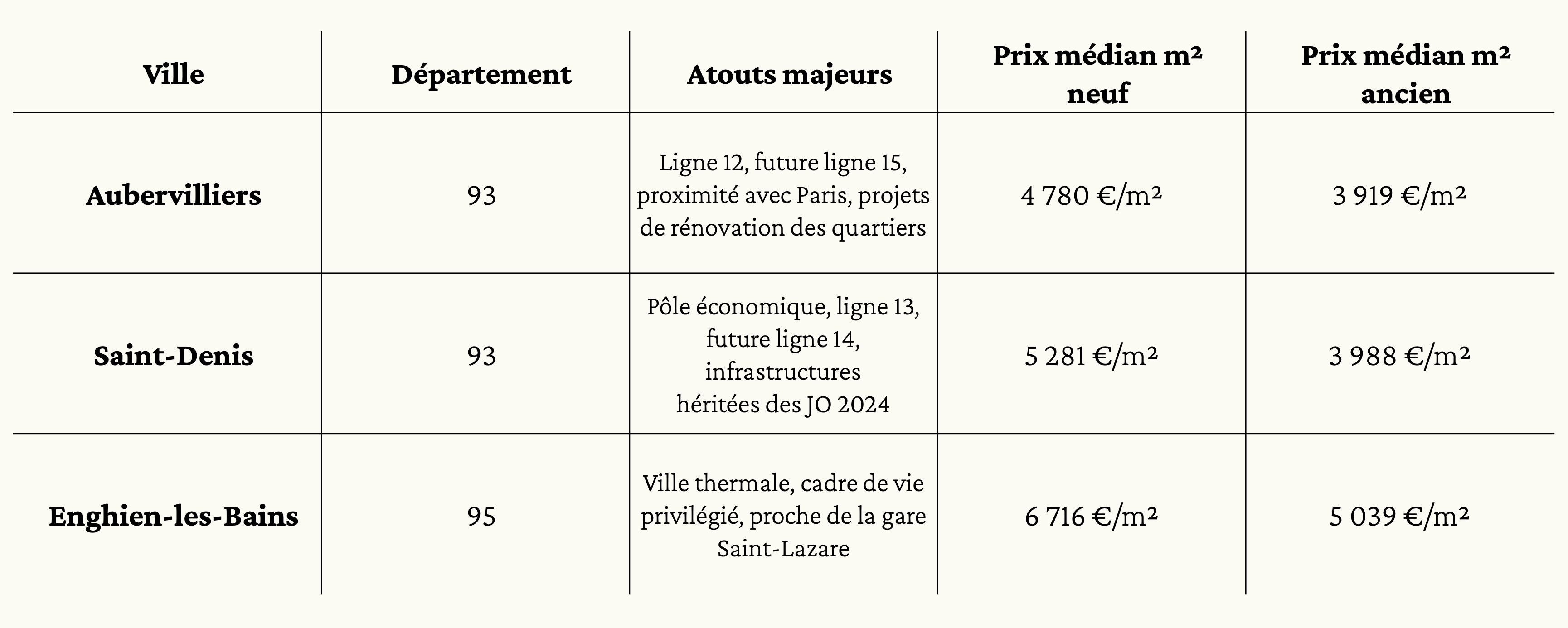
- In the north, cities undergoing major transformation (such as Saint-Denis or Aubervilliers) still offer affordable prices, boosted by the Grand Paris Express.
- In the south, the area is attractive for its greenery, its employment hubs (Saclay, Orly), and its well-balanced residential neighborhoods.
- In the east, the contrast between urban and rural zones provides access to properties with the best space-to-price ratio in the region.
- In the west, the market remains the most upscale, with strong heritage appeal and sought-after towns like Versailles or Levallois.
Each area has specific advantages to consider depending on your real estate project.
The North of the Paris Region: A Sector Undergoing Urban Transformation
The northern Paris region, encompassing Seine-Saint-Denis (93), the Val-d’Oise (95), and the northern part of the Hauts-de-Seine (92) is currently undergoing a major transformation. Long viewed as a disadvantaged periphery of the capital, this area is gradually changing its face.
Two hubs of transformation stand out:
- the Roissy-Charles de Gaullearea, France's leading airport and a strategic logistics hub on a European scale,
- and the Plaine Saint-Denisdistrict, which is home to both major urban projects and infrastructure related to the 2024 Olympic Games.
These dynamics are creating new pressure on the local real estate market, which still benefits from relatively contained prices per square meter.
But it is the impact of the Grand Paris Express that is reshuffling the deck. Thanks to the creation or modernization of numerous stations, towns previously overlooked by buyers are becoming accessible and attractive. The opening up of the region, long hindered by an inadequate transport network, is initiating a gradual increase in property values.
Prices remain attractive, and the potential for appreciation is real. This is evidenced by several towns that are emblematic of this ongoing reconfiguration:
The southern Paris region: a good compromise between greenery and residential appeal
The south of the Île-de-France, encompassing theEssonne (91), the Val-de-Marne (94) and the southern part of Hauts-de-Seine (92), embody a sought-after balance between nature, residential comfort, and proximity to the capital.
This region is organized around two key hubs:
- the Saclay Plateau, a major technological and academic center,
- andOrly Airport and its surrounding area, the second-largest airport hub in the Île-de-France region.
This dual anchor boosts the local economy and enhances accessibility in the southern Paris region. With excellent connectivity, the area benefits from a highly efficient transport network : the RER B, tram lines, the extension of Metro line 14 to Orly, and major highways that provide quick access to Paris.
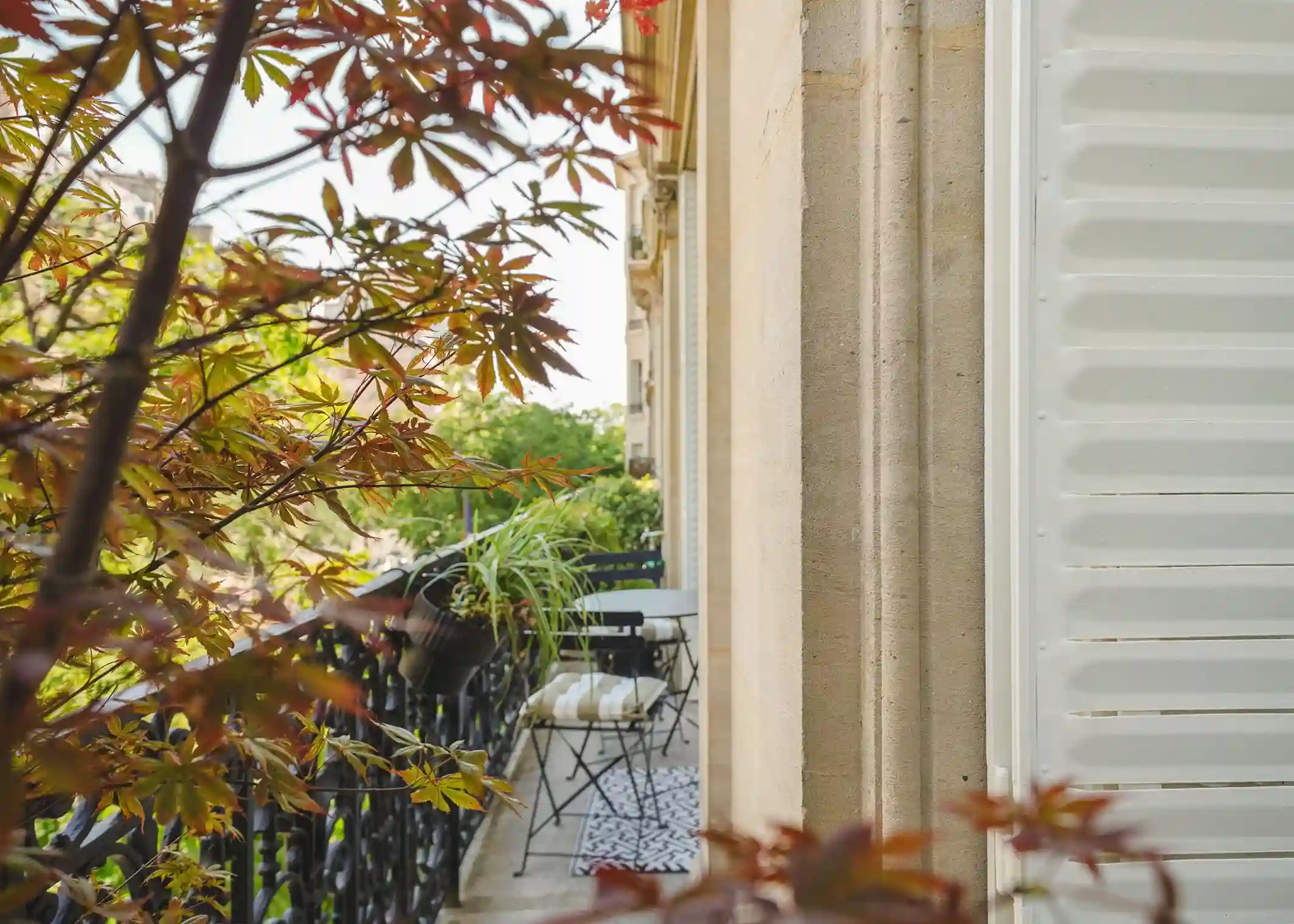
The quality of life is particularly appealing, with the presence of natural spaces such as the Parc de Sceaux, the Chevreuse Valley, and the Sénart State Forest, which are a major draw for families and professionals looking for greenery without sacrificing access to job hubs.
The local real estate market reflects this diversity. It features sought-after residential neighborhoods, vibrant small town centers, and areas undergoing urban renewal. Prices generally remain lower than those in the inner suburbs or the western Paris area, offering a more accessible path to homeownership without compromising on quality of life.
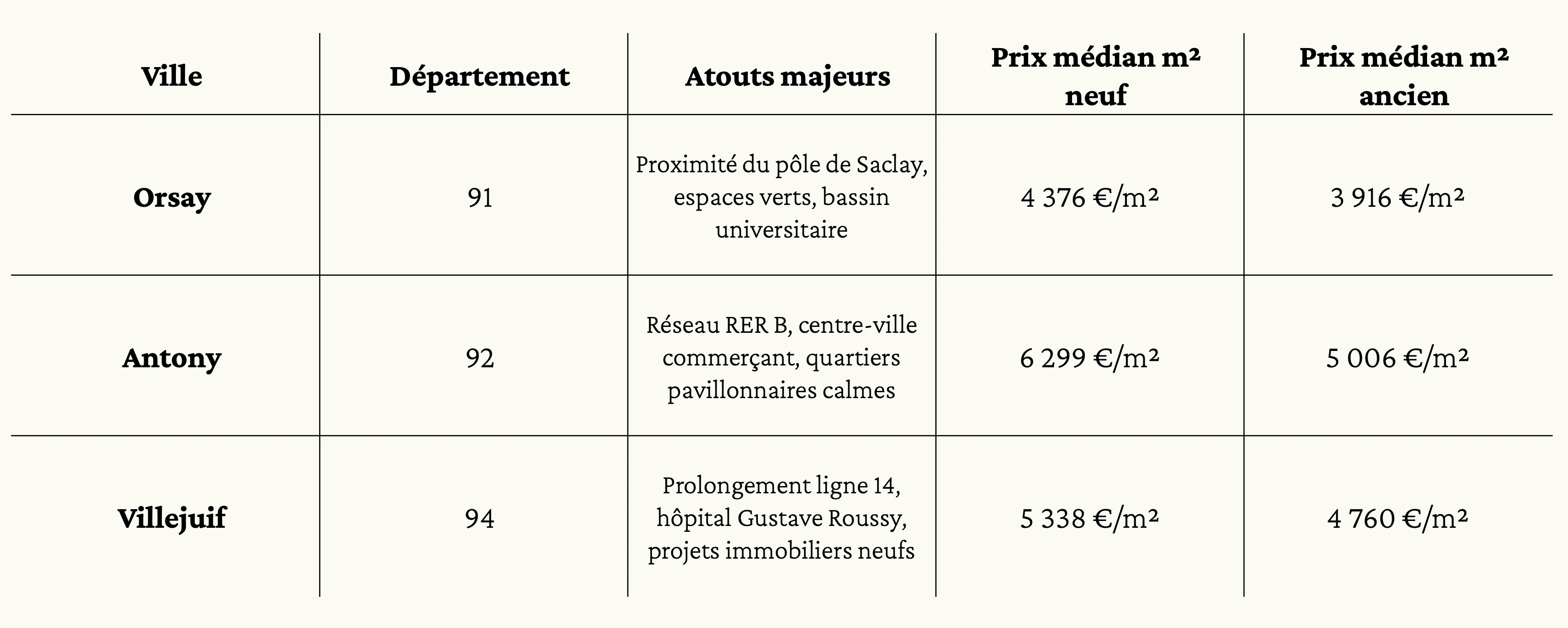
If you are considering buying a property in the southern Île-de-France region, three towns deserve special attention:
Eastern Île-de-France: A diverse landscape blending urban development with preserved rural areas
The eastern Paris region, comprising Seine-et-Marne (77), parts of Val-de-Marne (94), and Seine-Saint-Denis (93), is defined by its contrasting geography. It is a territory where densely populated cities, evolving suburban neighborhoods, and vast agricultural or forested lands to the east coexist. This hybrid composition is gaining visibility today, driven by improved transport links and a growing interest in less congested environments.
Two major hubs define this territory:
- Marne-la-Vallée, a business and university hub connected to Paris via the RER A, and energized by the presence of Disneyland Paris.
- Noisy-le-Grand, located along the A4 motorway at the crossroads of the eastern Paris suburbs and the outer ring.
It is also in the eastern Paris region that price per square meter is the most affordable in all of Île-de-France. A strategic feature for first-time buyers and buy-to-let investors looking for the best price-per-square-meter ratio.
The gradual development of the transport network (Line 15 in Champigny-sur-Marne, the extension of RER E to the east), combined with the real estate pressure on the inner suburbs, is opening up new opportunities for towns along the Marne or near major transport arteries.
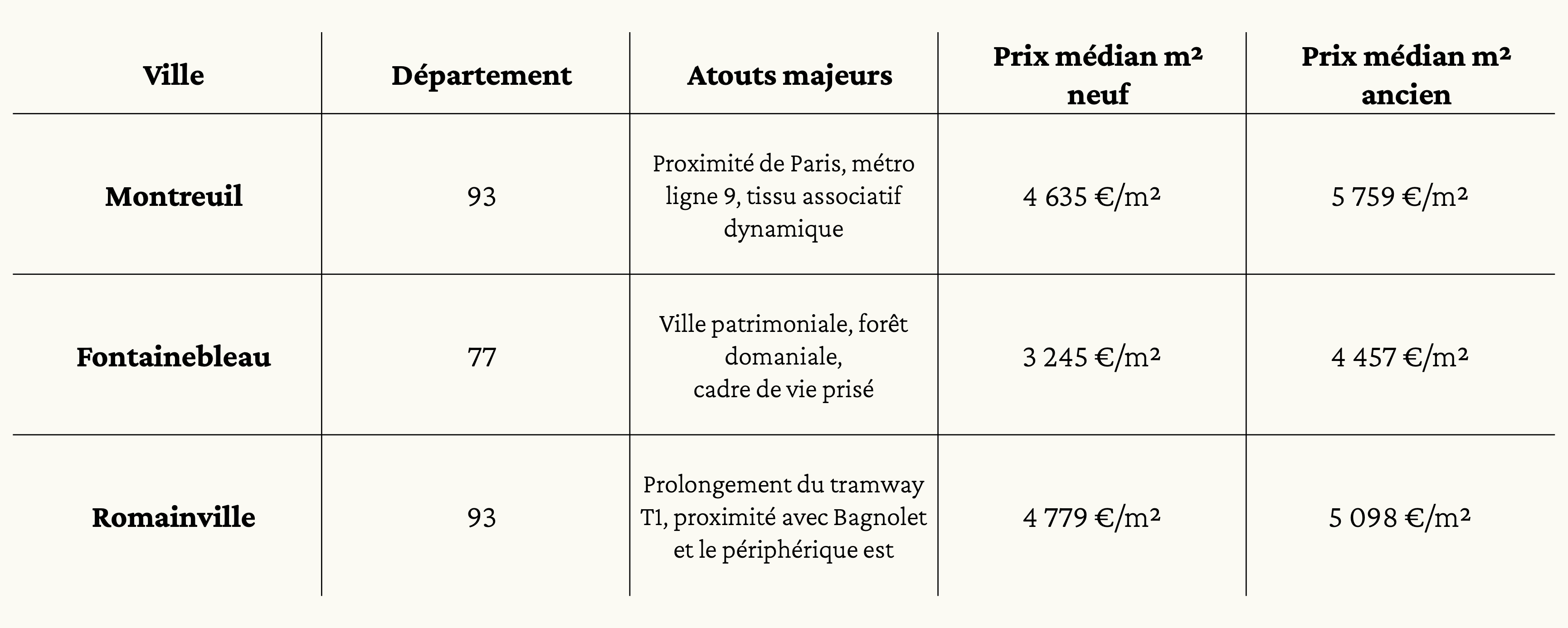
Here are three towns that perfectly balance accessibility, urban vitality, and quality of life:
The western Paris region: a historic area with high-end real estate
Comprising the Hauts-de-Seine (92), the Yvelines (78), and part of the Val-d’Oise (95), the west of the Île-de-France region has historically been considered the most residential and the most sought-after part of the region. It is appealing for its harmonious landscapes, affluent towns, high-quality school system, and direct proximity to major economic hubs.
Two key centers define this territory:
- Versailles, the royal and administrative capital of the Yvelines, embodies the heritage charm and cultural richness of the outer suburbs.
- La Défense, Europe’s leading business district, is a true magnet for professionals who want to live near their workplace while enjoying a more peaceful environment than central Paris.
The infrastructure is already highly developed, with numerous metro, RER, and tram lines, soon to be bolstered by the arrival of the Grand Paris Express (Line 15 West, future Line 18). The quality of life is highly sought after: large houses with gardens, family apartments in Haussmann-style buildings, local shops, remarkable green spaces like the Domaine de Saint-Cloud, and cultural institutions.
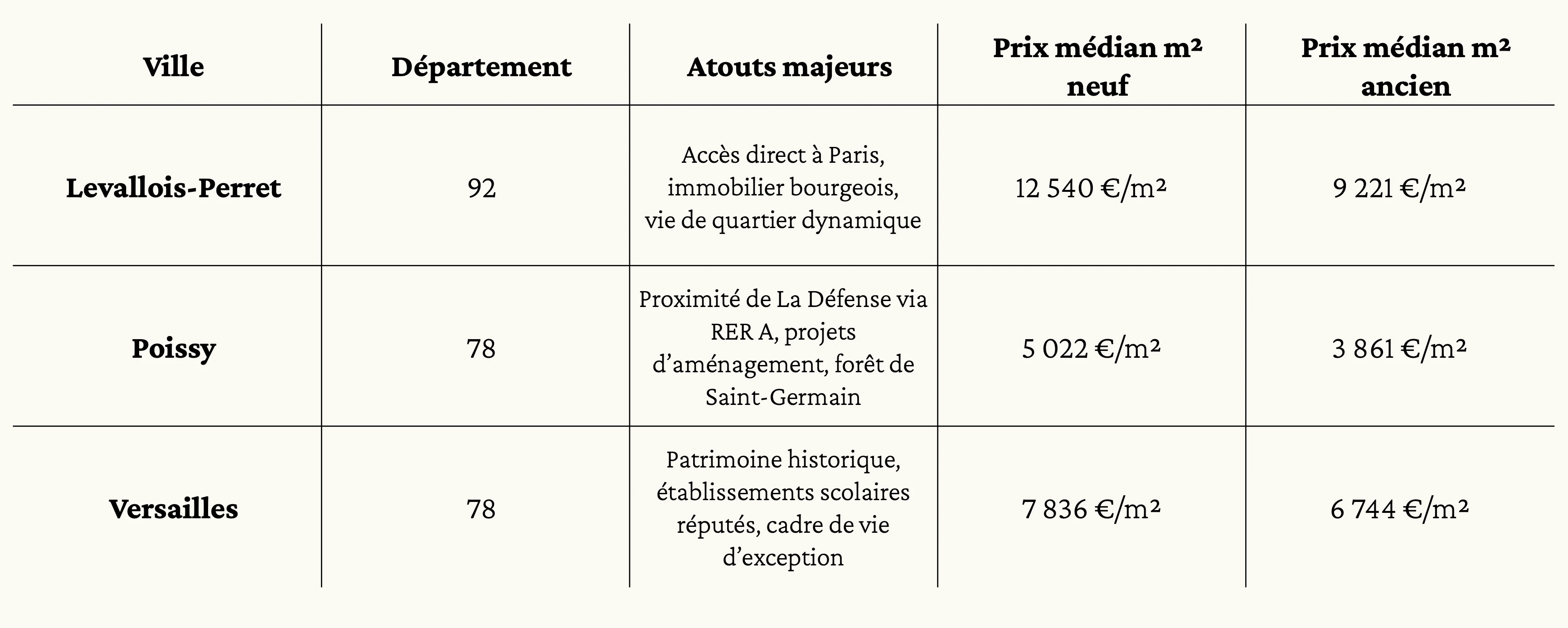
Here are three cities that illustrate this high-end positioning, while offering varied profiles:
Ranking of the 5 best cities to buy a property to renovate
5 towns with varied but promising profiles are highly recommended if you are looking to invest in a property to renovate in the Île-de-France region:
- Vincennes, east of Paris, is appealing for its heritage setting, vibrant retail scene, and strong residential demand.
- Saint-Ouen-sur-Seine, currently undergoing major urban transformation, offers an excellent price-to-location ratio for a first purchase requiring renovations.
- Saint-Germain-en-Laye, to the west, combines nature, prestige, and stable property values, making it ideal for a long-term investment.
- Asnières-sur-Seine, right on the edge of Paris, is leveraging the Grand Paris project to boost its appeal and potential for appreciation.
- Boulogne-Billancourt, an upscale town in the western suburbs of Paris, remains a safe bet, particularly for high-end rental investment.
Vincennes: a royal lifestyle at the gates of Paris
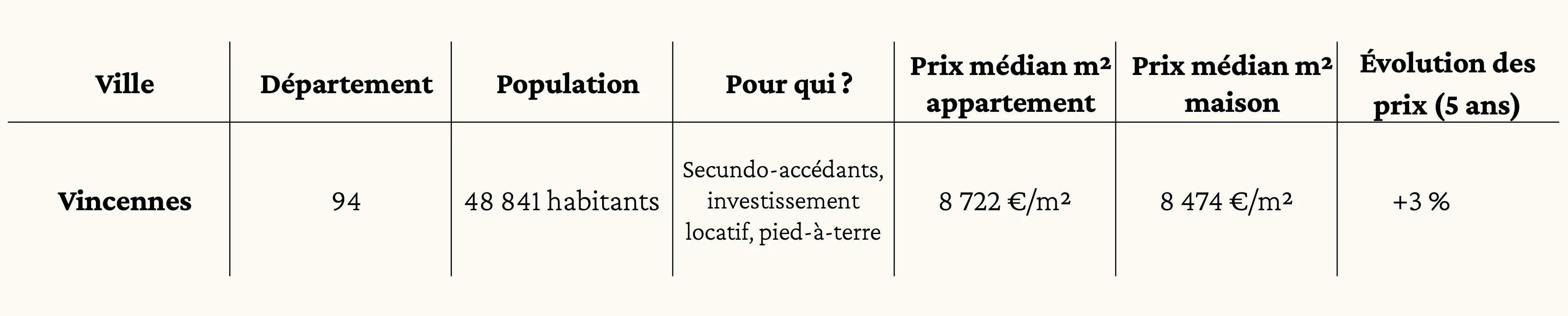
Located east of Paris, in the Val-de-Marne (94), Vincennes perfectly blends the elegance of a historic setting with the energy of a well-connected city. Bordering the Bois de Vincennes, it offers a sought-after residential environment that is both quiet and lively, attracting a discerning clientele for several years now.
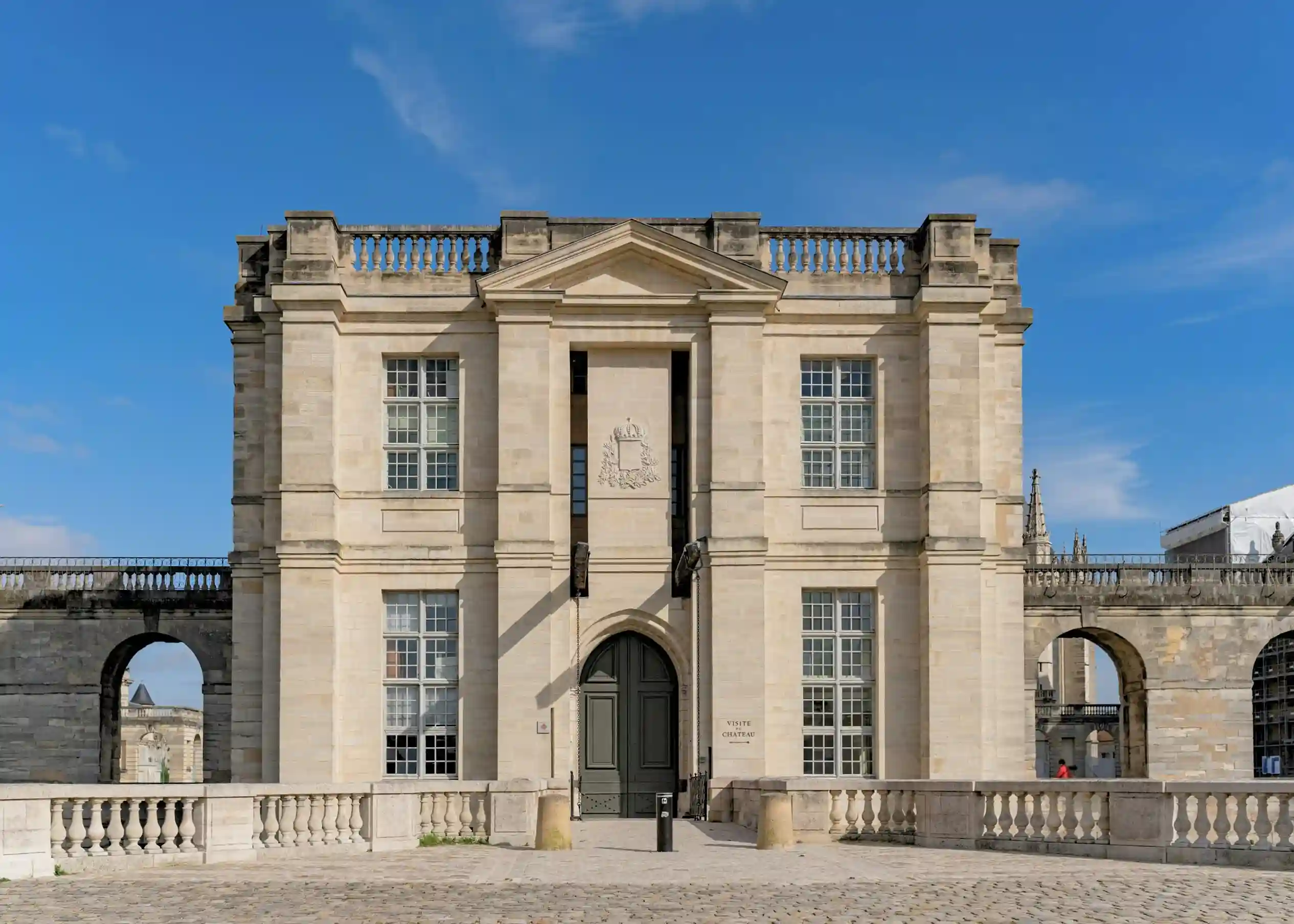
Its accessibility is one of its greatest strengths. Vincennes is served by both the RER A line and metro line 1, making it possible to reach the center of Paris in about fifteen minutes.
The city also stands out for its rich architectural heritage and a real estate market consisting of period and luxury apartments, often ranging from 40 to 70 m². The Vignerons district, located on the edge of the woods, perfectly illustrates this upscale positioning: highly sought-after, it commands prices that sometimes rival those of certain Parisian arrondissements.
Vincennes is particularly well-suited for young families and move-up buyers, who find the right balance here between quality of life, reputable schools, and a vibrant retail scene. The dynamism of the local market—where properties often sell very quickly—is evidence of high real estate demand, making it ideal for a long-term or rental investment.
Here are the key takeaways:
Saint-Ouen-sur-Seine: the up-and-coming town
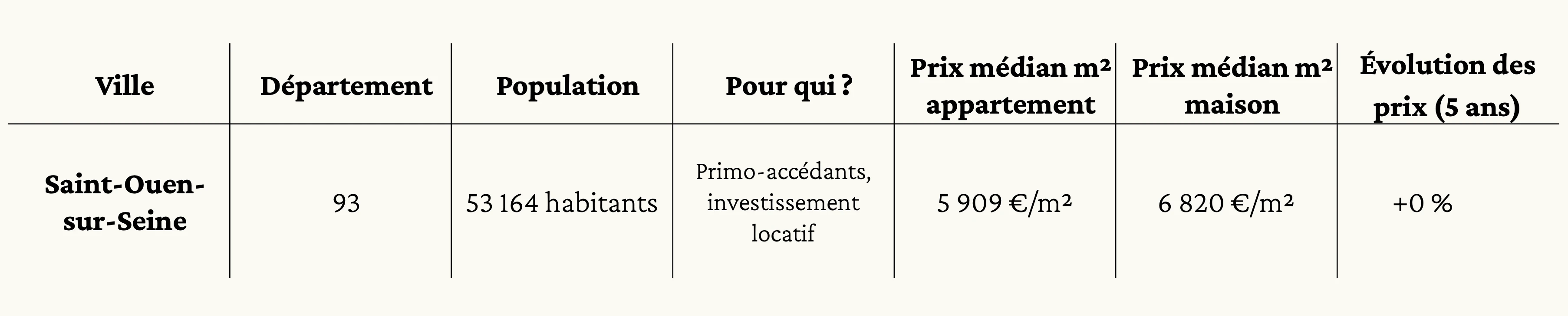
Located north of Paris, in Seine-Saint-Denis (93), Saint-Ouen-sur-Seine has established itself as one of the most dynamic municipalities in the inner suburbs. The city is attractive due to its still-affordable prices and strong potential for appreciation, especially when buying an apartment and renovating it.
Saint-Ouen-sur-Seine benefits from excellent transport links, provided by metro lines 13 and 14, as well as the RER C line. This connectivity is further enhanced by its immediate proximity to the northern ring road and major highways.
Saint-Ouen’s identity, once industrial, is undergoing a profound transformation. The vast Docks eco-district, located in the heart of the city, embodies this redevelopment: new housing, public facilities, revitalized riverbanks, and green spaces. Meanwhile, the famous flea market, classified as intangible cultural heritage, stands as a testament to the town’s vibrant, working-class soul.
The real estate market, historically dominated by suburban apartment buildings and condominiums from the 1950s to the 1970s, is being enriched by new developments, particularly in the Hugo-Payret-Zola or Vieux-Saint-Ouen neighborhoods. The market consists mostly of 40 to 70 m² apartments, well-suited for first-time buyers, alongside a few highly sought-after detached houses.
With the presence of corporate headquarters for major companies like Alstom and Samsung France, and its proximity to university hubs, Saint-Ouen also appeals to rental investors, driven by strong demand from students and young professionals.
Here are the key takeaways:
Saint-Germain-en-Laye: a jewel of the outer Paris suburbs
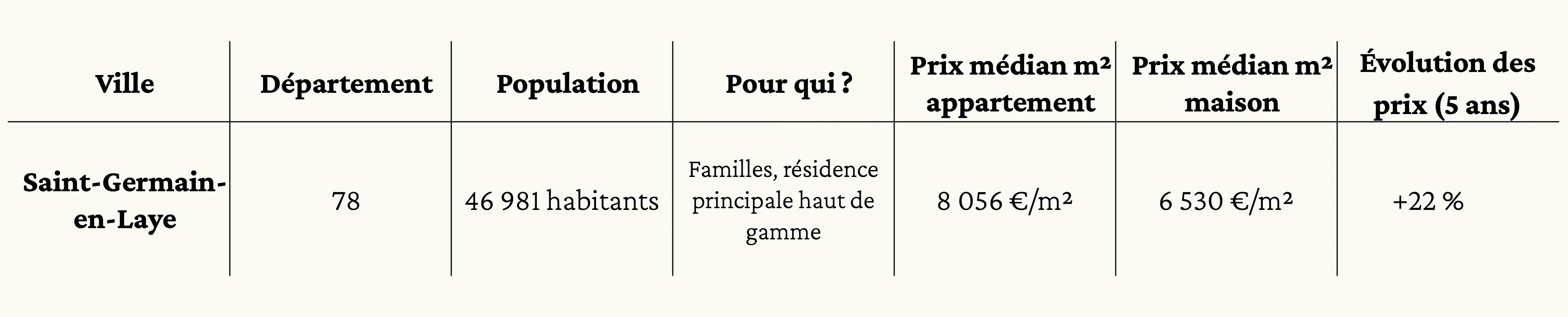
Nestled on the heights above the Seine, west of Paris in the Yvelines (78) region, Saint-Germain-en-Laye cultivates a discreet elegance and a highly sought-after lifestyle. As a former royal town, it is as captivating for its exceptional heritage as it is for its lush green surroundings, bordering the national forest that bears its name.
Accessible from Paris via the RER A in about thirty minutes, it remains very well connected despite its location outside the city center. The town also has direct links to La Défense and the Nanterre business district via bus and Transilien train lines, a benefit appreciated by Paris-region executives.
Saint-Germain-en-Laye attracts a family-oriented clientele often in search of a peaceful alternative to the pace of Paris. You will find many houses with gardens, well-maintained period buildings, and apartments ranging from 70 to 120 m² in luxury residences. The pedestrian-friendly town center, with its many shops, enhances the appeal of a town where quality of life and academic excellence go hand in hand: the international high school, in particular, attracts a cosmopolitan population.
The real estate market here follows a long-term investment strategy. Properties are rare and prices are high, but the stability of the land market reassures buyers in the long run. Saint-Germain-en-Laye is not a town for high rental yields, but it is a safe investment.
Here are the key points to remember:
Asnières-sur-Seine: urban metamorphosis at the gates of Paris
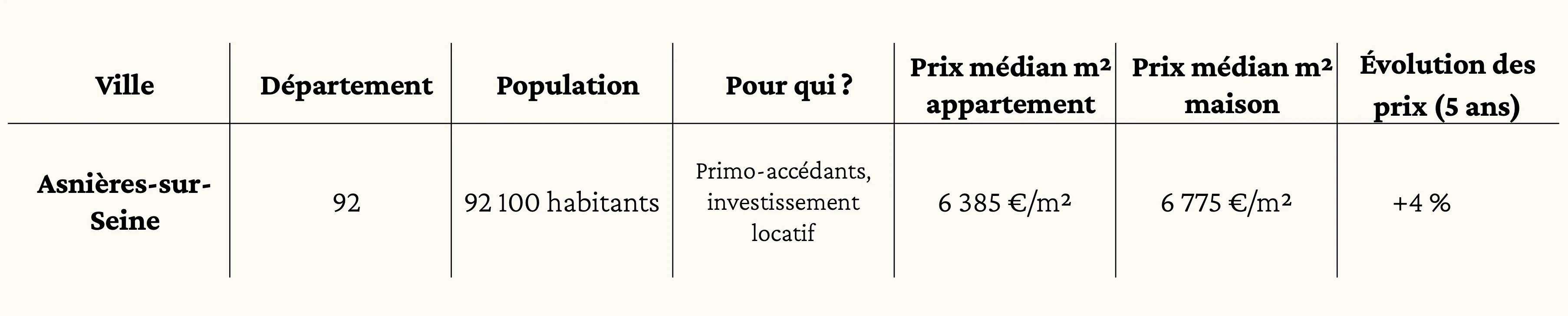
Located in the Hauts-de-Seine (92) department, northwest of the capital, Asnières-sur-Seine is currently enjoying a resurgence in appeal, driven by the Grand Paris development project and the ongoing revitalization of its neighborhoods.
The city relies on tangible assets: reimagined banks along the Seine, well-maintained parks, and a diverse architectural heritage—ranging from early 20th-century buildings and new developments to homes in need of renovation —as well as a quiet but genuine economic vitality, evidenced by the presence of the Louis Vuitton workshops.
To the north, around the future Les Agnettes station (Paris Metro Line 15), several urban transformation projects are underway. This area, historically less sought-after, is beginning a shift that could reshape the town's real estate landscape in the coming years.
Still relatively affordable for the Hauts-de-Seine region, Asnières-sur-Seine currently combines an urban lifestyle, potential for appreciation, and excellent transport links. This combination attracts both first-time buyers and savvy investors looking for properties to renovate in an area in transition.
Here are the key takeaways:
Boulogne-Billancourt: the reliable choice in the western Paris suburbs
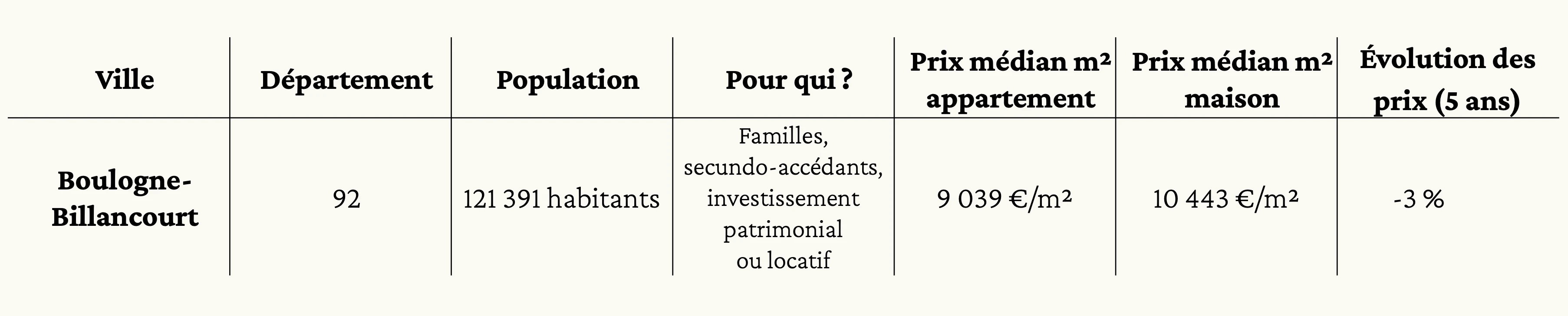
As the most populous city in the Île-de-France region after Paris, Boulogne-Billancourt occupies a strategic position in the Hauts-de-Seine (92), bordering the 16th arrondissement and the Bois de Boulogne. This immediate proximity to the capital's most upscale neighborhoods makes it a highly desirable town, particularly in the luxury real estatemarket.
With an excellent transport network, Boulogne-Billancourt is connected to Paris via metro lines 9 and 10, as well as numerous bus lines serving the western suburbs. This seamless connectivity allows residents to fully enjoy the cultural and professional buzz of the capital while living in a more tranquil environment.
The local housing stock consists primarily of 1930s buildings and post-war constructions, with a predominance of 2 to 3-room apartments, typically ranging from 40 to 80 m². A few houses remain in the more residential areas, particularly in the Parchamp-Albert Kahn district, south of the woods, which is highly sought after for its quiet, leafy atmosphere.
Positioned at the very high end of the market, Boulogne-Billancourt primarily attracts families looking for spacious properties, as well as long-term investors drawn by the market's stability and strong rental demand. The town remains a safe haven, despite a slight price correction observed over the last five years.
Here are the key takeaways:
Conclusion
Investing in the Île-de-France region is more than just a fallback option in the face of soaring Parisian prices. It is a strategic decision that addresses new aspirations: more space, a better quality of life, solid appreciation prospects, and economic hubs undergoing significant transformation.
Whether it’s towns undergoing major changes like Saint-Ouen or Asnières, safe havens such as Boulogne-Billancourt or Vincennes, or cities with high heritage potential like Saint-Germain-en-Laye, every type of investor can find a project that suits their goals.
The key is toprecisely identify the right area, in line with your budget, your investment horizon, and your life goals. We support you in this process by combining real estate expertise, attention to detail, and a deep understanding of local dynamics.
The Île-de-France region is on the move: it’s up to you to find the city that suits you best.


.svg)