.svg)

Maximalism: dare to embrace eclectic interior design
A prime canvas for renovation projects, interior design offers a thousand and one moods, ranging from the most minimalist to the most exuberant. Maximalism is one of them, and it charms with its unconventional approach. You have surely come across it on your screens thanks to the quirky, colorful world ofEmily in Paris, or perhaps within the walls of the iconic Hotel Brach in Madrid, where French inspiration and Spanish lifestyle collide.
Regardless, in maximalism, only emotion and excess matter, which is why we want to share all the keys to adopting this style as quickly as possible and without moderation.
What is maximalism?
A movement swimming against the tide of minimalism and quiet luxury
Between the opulence of the 19th-century Victorian era and the boldness of the early 20th-century avant-garde, maximalism has deep historical roots. In interior design, it translates into a true aesthetic of excess. Fueled by pop art and the artistic movements of the 60s and 70s, the maximalist trend is making a strong comeback in design inspiration boards. In contrast to minimalism and quiet luxury, it stands as a bold snub to overly restrained interiors.
Focusing on an abundance of colors, patterns, and textures, maximalism celebrates layering and unapologetic whimsy. Plenty of inspiration if you are planning to renovate an apartment and create a unique space that transcends fleeting trends.
Eclecticism: one of the many decorative interpretations of maximalism
Maximalism and eclecticism share similar approaches, which explains why they are often confused. A true artistic movement born in the mid-19th century, eclecticism goes beyond the boundaries of interior design and is expressed in art and architecture, among other fields.
Its fundamental principle is based on mixing, or even clashing, different styles and eras to create an unexpected yet cohesive whole. The idea behind eclecticism is not to follow a compartmentalized aesthetic, but rather to aggregate decorative objects discovered through travels and personal favorites in a slow, instinctive process.
Eclecticism is therefore perfectly suited for maximalist interior design and fits readily into an ambitious home renovation project .
How to create a maximalist and eclectic interior design?
Embrace excess: colors, patterns, and textures in dialogue
The key to maximalist decor is mixing and accumulating everything that might stimulate the eye.
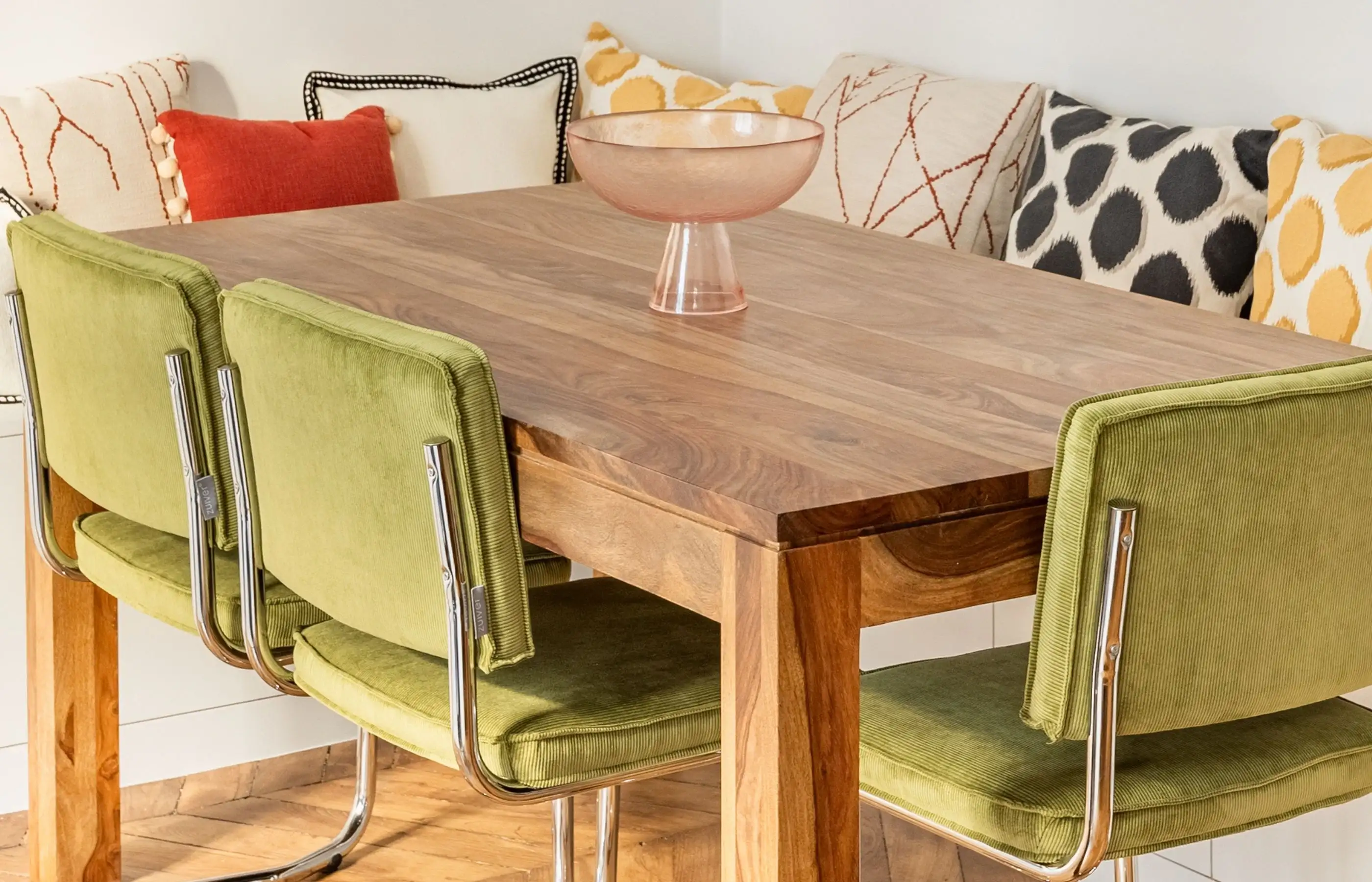
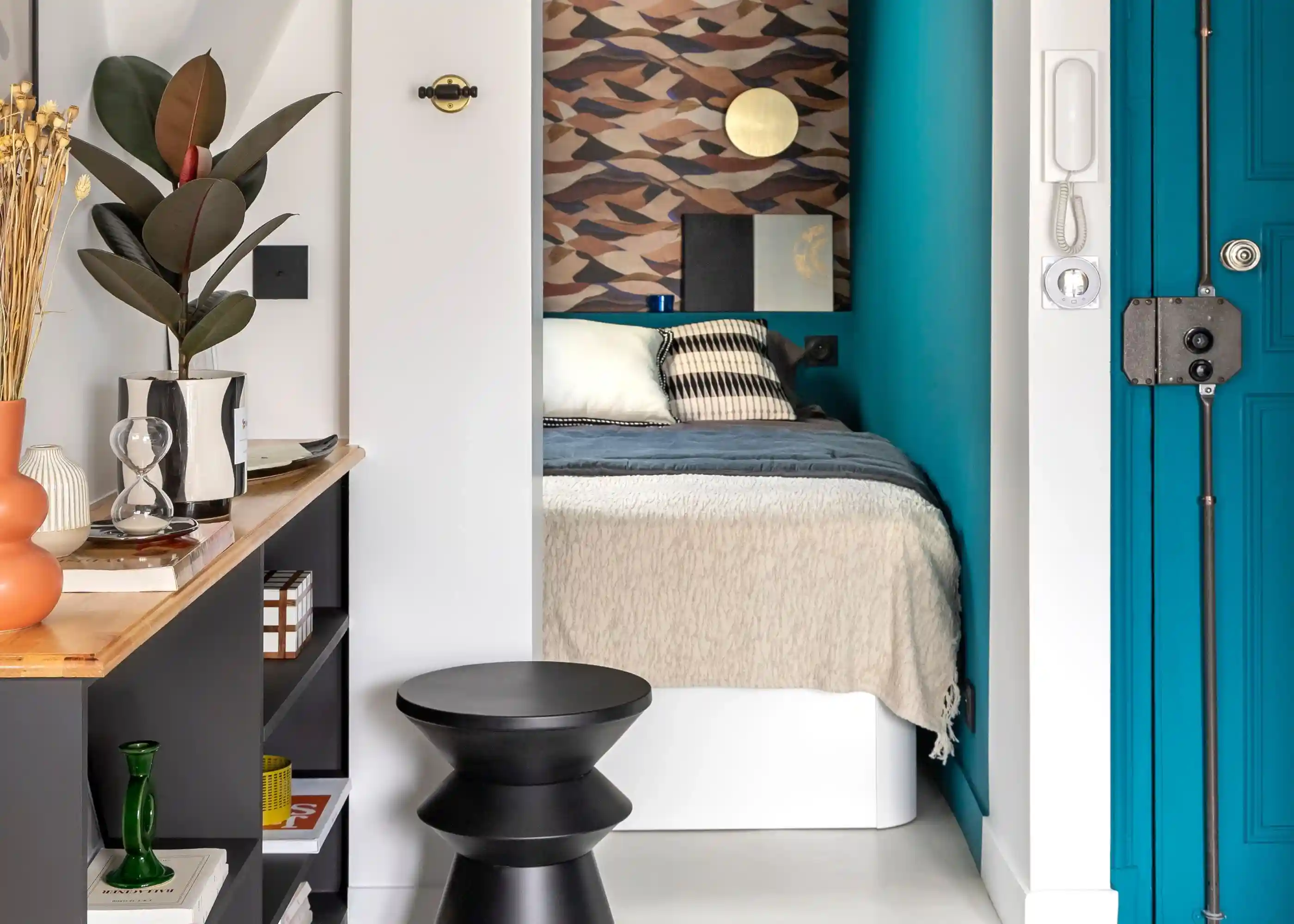
This is primarily reflected in the introduction of color, which is used here in abundance. Instead of clinical tones, we prefer a rich and saturated color palette by playing with the color wheel. For a high-contrast look, don't be afraid to combine two or even three colors. In maximalism, pink flirts with green, and blue with orange, from floor to ceiling.
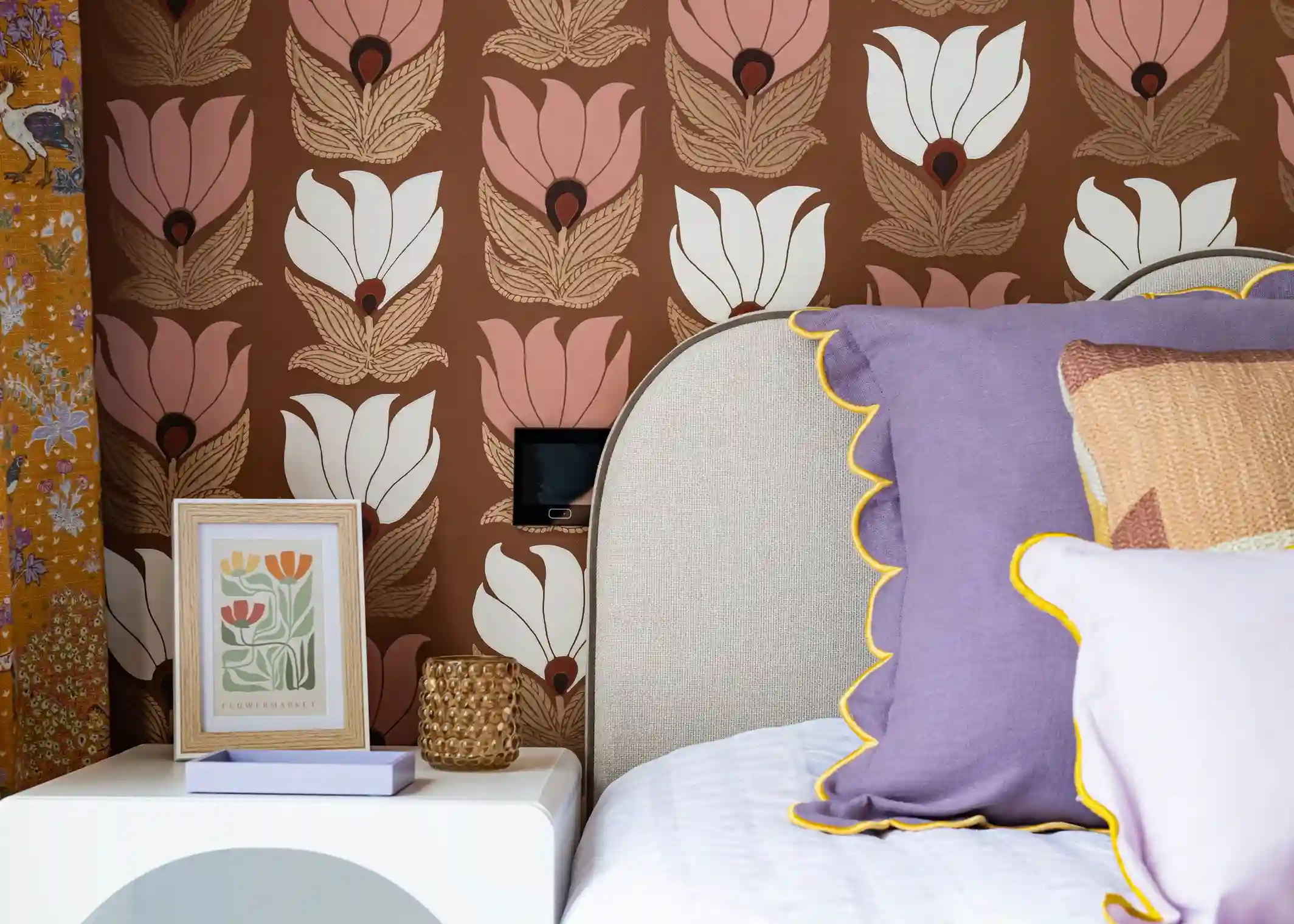
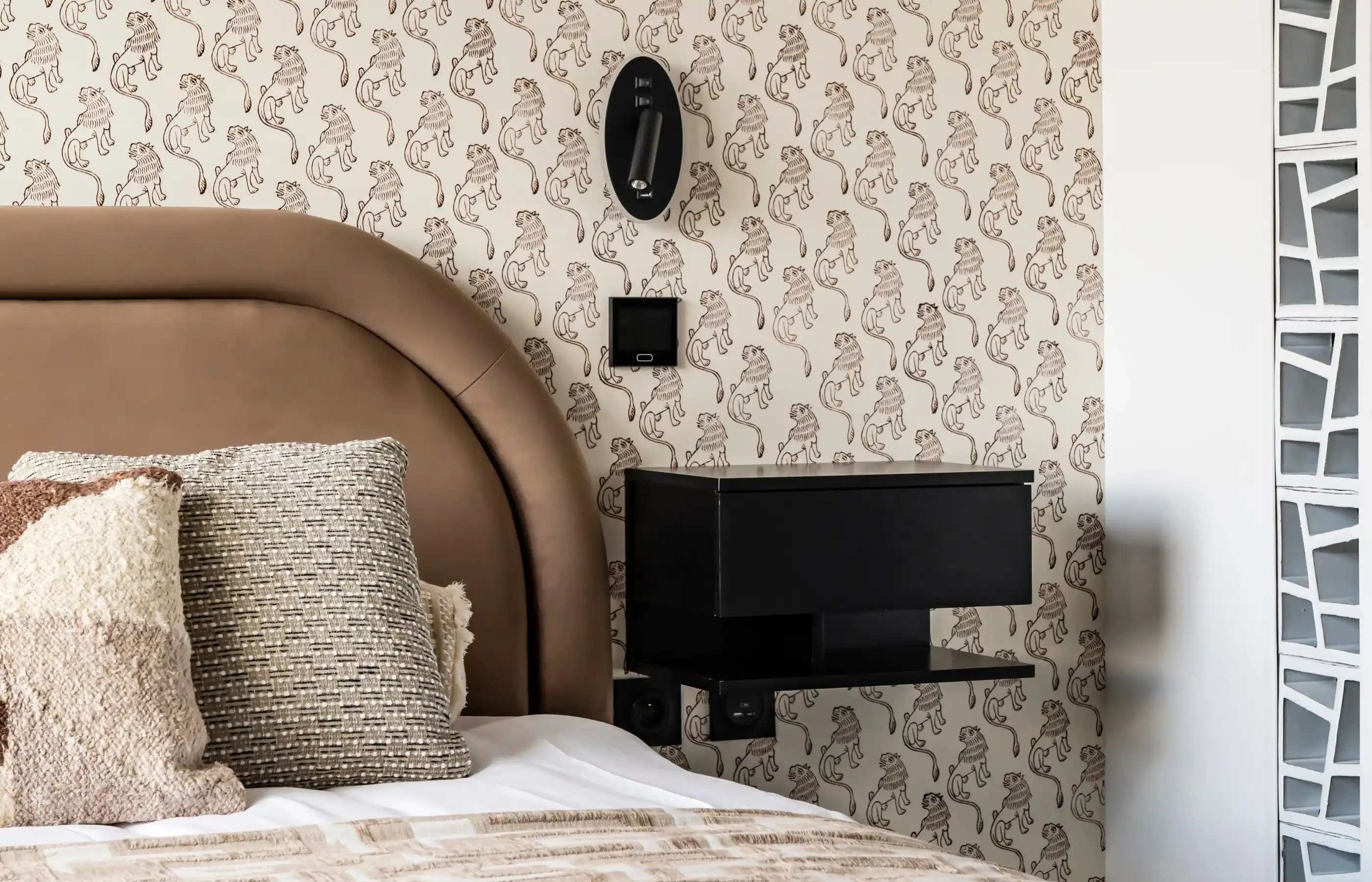
Once the color foundations are set, it's time for prints, true levers of decorative expression. Walls, whether painted or covered with carefully chosen wallpaper, become a vibrant canvas where patterns breathe character into the space. Some prints do more than just dress up a room: they change how we perceive it. Stripes, for example, play with proportions—vertical ones elongate walls to create an impression of height, while horizontal ones widen the room.
But patterns aren't just for walls. Curtains, cushions, upholstered armchairs, and rugs all offer opportunities to introduce rhythm, contrast, or texture to your decor. Whether floral for a fresh, country feel, animal print for a kitschy eighties touch, or geometric for a graphic, contemporary style, prints open up a world of possibilities. It’s up to you to find your own.
More subtle but just as important for maximalist interior design, materials create dynamism and tactility. Alternating between shiny and matte materials, or silky textiles and raw fibers, enriches a decorative scheme without visually cluttering the room.

Statement pieces and collectible furniture: curate a decor that reflects you
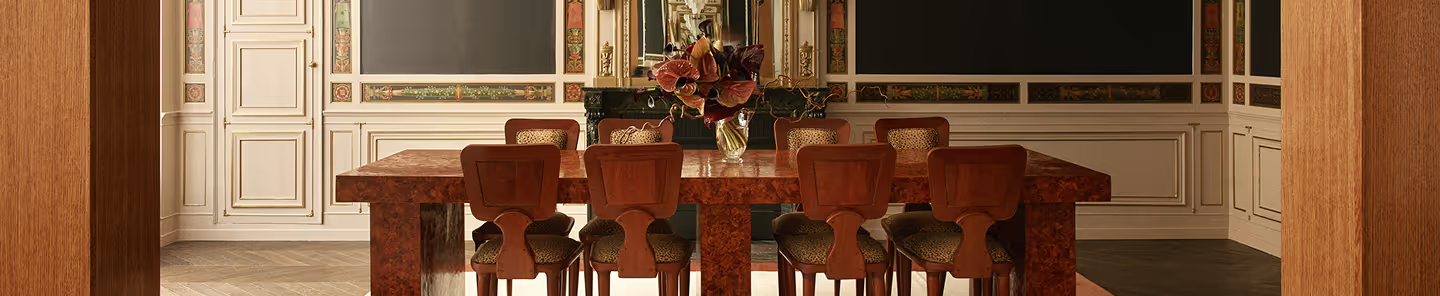
Eclectic and maximalist decor relies on your choice of furniture. While there are no strict rules, the idea is to navigate between a few statement pieces from different inspirations and eras. If you are planning to renovate a Haussmann-style apartment and decorate it eclectically, contrast the classicism of the moldings and fireplaces with modern or bohemian furniture.
Around a mid-century modern coffee table, for example, arrange a colorful velvet sofa filled with patterned cushions and a graphic Pierre Paulin armchair, all set atop a large Berber rug.
The success of a maximalist interior lies in the details and the authenticity of the pieces. Gradually build the cabinet of curiosities of your dreams by browsing everything from high-end brands to small artisan shops, and prioritize objects that tell a story. Hunting for vintage furniture at flea markets is a great way to find that rare gem while getting advice from design-loving professionals.
4 mistakes to avoid to maintain balance
The great freedom offered by the maximalist style does, however, require some attention to detail to keep your interior decor harmonious and cohesive.
1. Too many colors, not enough cohesion
Rather than an explosion of color, it is better to opt for a curated palette, composed of carefully chosen shades and enriched with a few subtle gradients. This approach helps maintain a visual thread while avoiding a saturated effect that tires the eye and eventually becomes tiresome.
2. Accumulating without structure
It is better to structure the space by defining a focal point around which the other elements will be arranged. This focal point could be a piece of wall art, an imposing mirror, or a uniquely designed piece of furniture—all of which catch the eye and set the tone for the room.
3. Forgetting proportions
In maximalist decor, abundance should not come at the expense of accurate volumes. Too often overlooked, proportions play a key role in the visual balance of a room. An oversized armchair in a small bedroom or a clutter of small objects in a spacious living room can quickly ruin the desired harmony. Be sure to adapt each element to the scale of the space, and don't hesitate to play with size contrasts intentionally, rather than by chance.
4. Underestimating the power of light
Light structures space, reveals textures, and makes colors vibrate. To achieve this, multiply your light sources : sculptural pendants, graphic wall sconces, table lamps… Alternate between direct and indirect lighting to create nuanced atmospheres and highlight your statement pieces. A large, beautifully framed mirror can also amplify natural light and become a striking element of your decor.

At Maison Kyka, we craft bespoke interiors where the decor tells a story and conveys powerful emotions. Whether through the use of color or the selection of unique, high-end furniture, we offer a personalized experience where thinking outside the box is a philosophy. Beyond increasing the value of your property, introducing maximalism into your home has never been easier thanks to the expert advice of the Maison Kyka studio and its interior designers.

.svg)