.svg)

Choosing the right wallpaper: styles, materials, and installation tips
Long considered outdated, wallpaper is making a spectacular comeback in our homes. More than just a wall decoration, it has become a true narrative tool, capable of transforming the atmosphere of a room. Less timeless than a white wall? Think again: when chosen well, wallpaper adds depth and warmth where a neutral background can feel impersonal. With endless patterns, colors, and textures, it stands out as the perfect ally for the bold interiors cherished by Maison Kyka studio.
What is wallpaper and why should you incorporate it into your home?
History and origins of wallpaper: from China to France
Originating in China, wallpaper takes its name from the art of depicting scenes on large sheets of paper or fabric intended to adorn the walls of the most prestigious homes. Introduced to Great Britain in the 16th century, it saw meteoric success in France the following century.
A more affordable alternative to luxurious textile tapestries and silks, wallpaper became a true French craft coveted throughout Europe. It was during this era that "dominoterie" emerged, a term referring to the design, manufacture, and trade of "dominos"—printed sheets used to decorate walls, furniture, or books. Several key figures emerged in the 18th century, the golden age of decorative arts, including Jean-Baptiste Réveillon, owner of the Royal Wallpaper Manufactory at the Folie Titon in the Faubourg Saint-Antoine, in what would become the 11th arrondissement of Paris.

Previously considered an exclusive product for wealthy Parisian aristocratic families, wallpaper gradually became democratized as the Industrial Revolution reshaped a society in flux. Wallpaper factories multiplied, manufacturing costs dropped, and this decorative element began to appear in the homes of the bourgeoisie and more modest classes alike. Techniques evolved and materials changed; naturalistic and romantic patterns were succeeded in the second half of the 20th century by geometric and colorful prints, yet the enthusiasm for wallpaper remained intact.
It fell out of favor in the 1990s, however, eclipsed by a minimalist and futuristic aesthetic. A few decades later, it has regained its prestige, driven by the resurgence of eclectic and expressive decor. Ready to embrace wallpaper for your home with Maison Kyka?
The different types of wallpaper and their uses
Wallpaper actually covers a wide variety of materials that differ in appearance and application.
Traditional wallpaper
The traditional wallpaper, or classic wallpaper, is made exclusively of printed paper. It is called "simplex" when it consists of a single sheet, and "duplex" when a second, often thinner, layer is added. This type of wallpaper is common but also very fragile. It cannot be scrubbed and requires special care when being cleaned or wiped down. Because the thinness of the sheets makes it sensitive to light, it is best used on surfaces that are not heavily used, in areas with moderate light and no humidity. Bedrooms and offices are ideal rooms for this type of wallpaper.
Installation is done on a pre-pasted wall, which requires careful attention during positioning, as this paper is difficult to reposition. It is recommended to apply this type of paper to smooth, perfectly dry surfaces to avoid any bubbling or tearing.
Non-woven wallpaper
Made from compressed polyester and cellulose fibers and then covered with a layer of vinyl, non-woven wallpaper is particularly valued for its durability and ease of maintenance. Available in various weights, it helps smooth out surfaces with light cracks and other minor imperfections. Easy to use, it is applied directly to a pasted wall and does not shrink or stretch when drying. It is also waterproof and washable, making it a great option if you are planning to install wallpaper in a humid, high-traffic room like a kitchen. Its woven and textured appearance brings a warm atmosphere to any space in your home—a look you should adopt without delay.
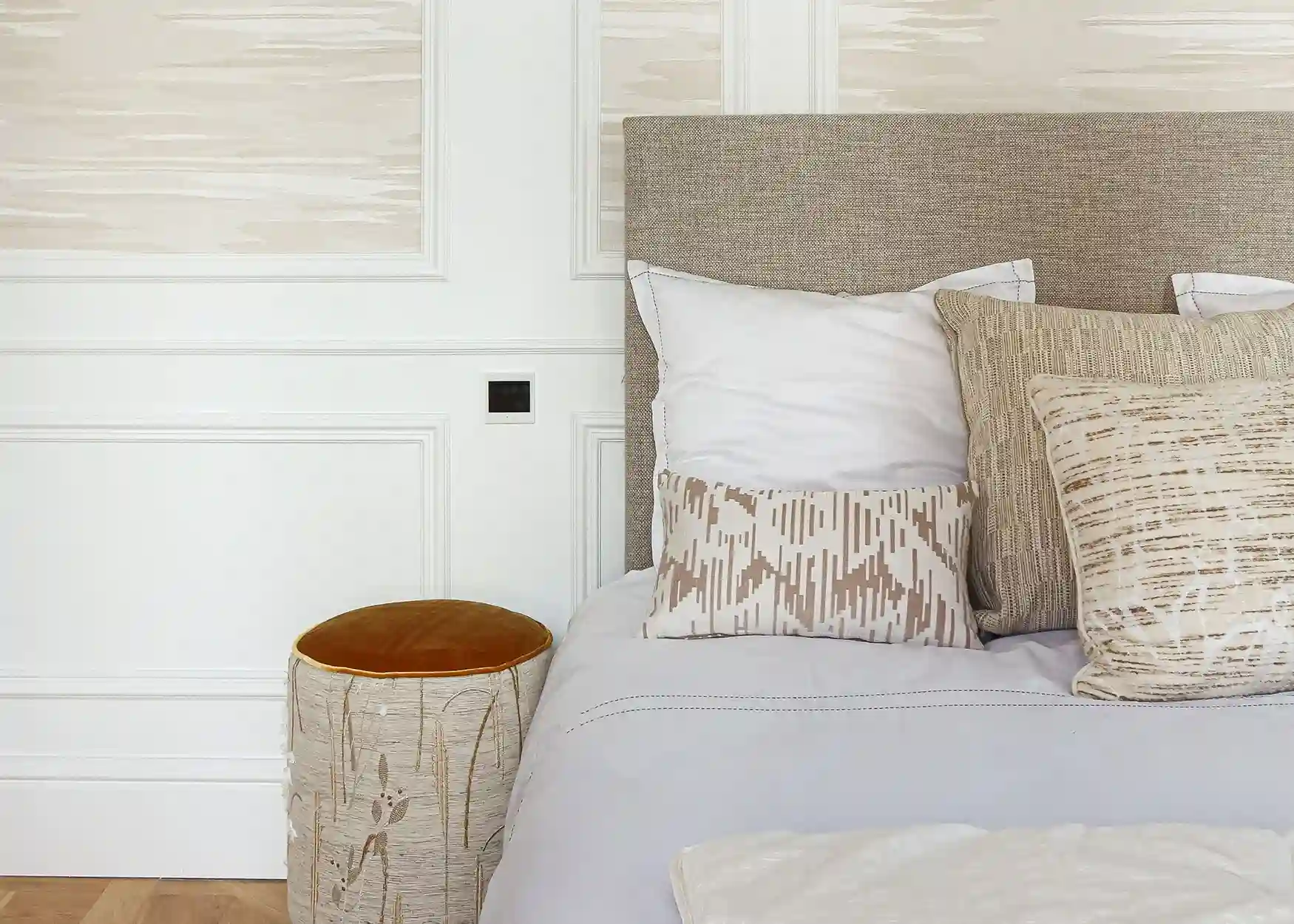
Non-woven wallpaper is installed "dry," meaning you apply the paste to the wall rather than the strips of paper. It adheres perfectly to smooth or slightly irregular surfaces, making it a practical solution for renovations. It is also easy to remove dry, without leaving any residue.
Paintable wallpaper
If the property you are renovating has damaged walls or ceilings, paintable wallpaper is an ideal solution that will not only cover surface imperfections but also give you total freedom regarding color, since the paint is applied afterward. This wallpaper is generally white, thick, and easy to install. Offering even greater resistance, fiberglass prevents new cracks from appearing and is available in large dimensions, which is useful for covering large surfaces.
Installation is done on a pasted wall for classic wallpapers, or dry if the backing is non-woven. Highly opaque, it is suitable for porous, damaged, or irregular walls. Once installed, it must be perfectly dry before applying paint.
Lining paper
Used less and less since the rise of ready-to-hang wallpapers, lining paper is useful for preparing raw or highly irregular walls. By evening out the surface, it improves the adhesion of the final covering and prevents defects from showing through. It is particularly recommended before hanging thin or delicate wallpaper to ensure a neat and long-lasting finish.
Vinyl wallpaper
As the name suggests, vinyl wallpaper consists of a paper backing covered with a thin layer of PVC, onto which patterns are printed directly. Available in matte or glossy finishes, it is known for its great versatility and durability, especially on walls subject to frequent use. It can be found in every room of the house as well as in specific spaces like children's bedrooms or bathrooms. This type of covering is also appreciated for being easy to cut, hang, and remove, although hiring a professional is still recommended for the best results.
A textured variant, expanded vinyl wallpaper is characterized by its relief, created by the effect of heat on the top layer of PVC.
This wallpaper is generally applied to a pre-pasted wall, although some models are available in a pre-pasted version. Waterproof, it is suitable for both new walls and slightly irregular surfaces. To ensure a neat finish, it is important to smooth the strips thoroughly to prevent air bubbles from forming under the surface.
Metallic wallpaper
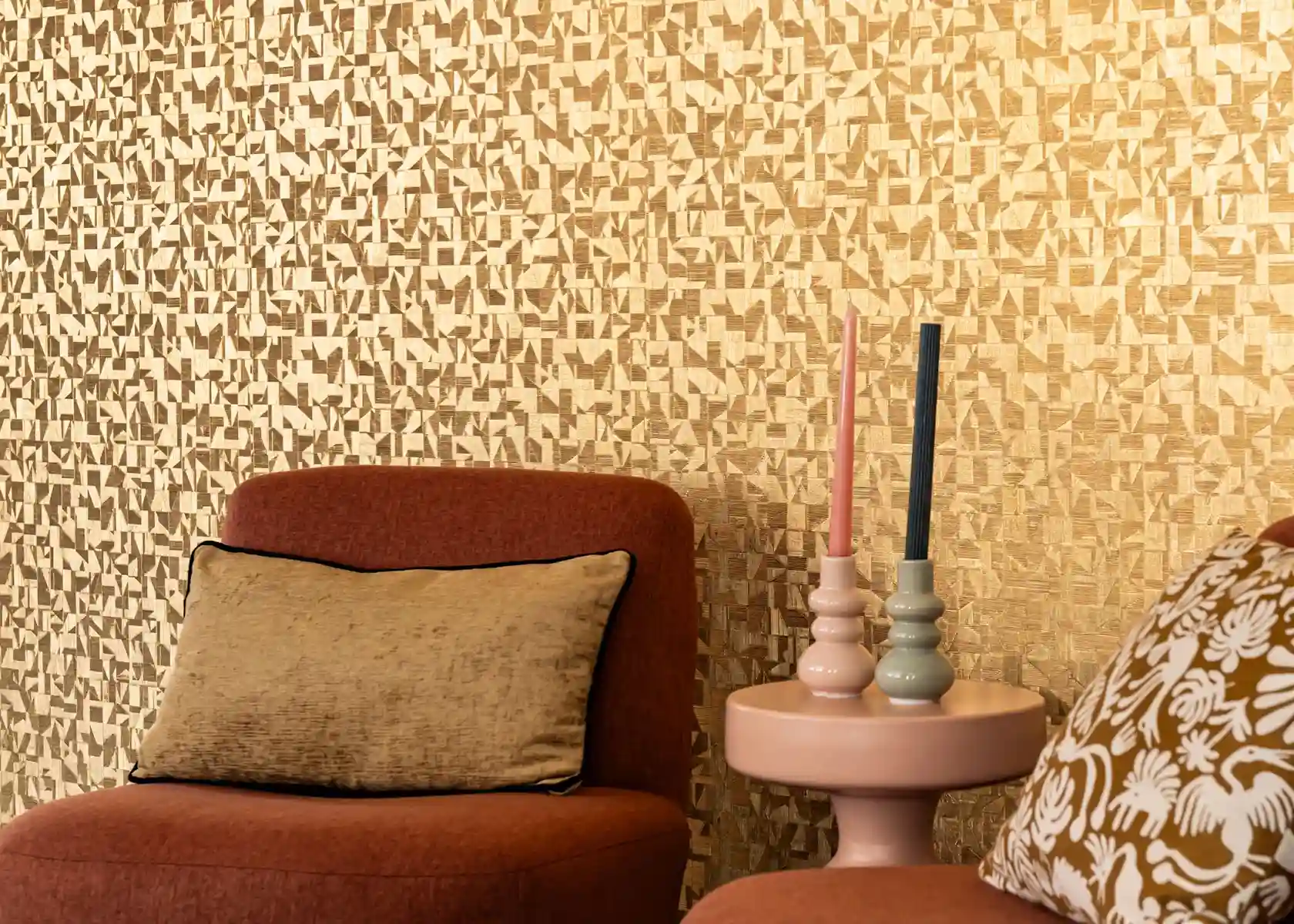
As manufacturing techniques continue to evolve, it is now possible to find sophisticated and stylish wallpapers that give your interiors a truly unique identity. This is the case, for example, with metallic wallpaper, whose metallic layer beautifully reflects light while sporting an iridescent hue. Be careful, however, to properly prepare the surface where this type of wallpaper will be applied, as imperfections will be even more noticeable.
The gluing process depends on the composition of the backing (paper or non-woven). Due to its shiny appearance, metallic paper requires very careful, or even professional, installation to avoid any visible seam marks or bubbles.
Flocked velvet wallpaper
Vintage style is making a notable comeback in interior design, and with it, flocked velvet is once again finding its way onto our walls. An emblem of the 1970s, it is the result of a technique called flocking. The paper is coated with glue where the pattern is located, and then a second layer of synthetic fibers, usually nylon or rayon, is applied to create this relief effect. Beyond its unique and bold appearance, the flocked velvet wallpaper is thick and can therefore be applied to any type of surface, even imperfect ones. However, it remains delicate and requires a certain level of care to stand the test of time.
The adhesive used here must be suitable for this type of covering (special heavy-duty wallpaper paste). It is advisable to work with precision, as the fibers can attract dust and glue stains. Best suited for spaces with low exposure to humidity or friction.
Natural fiber wallpapers
In recent years, we have seen theemergence of new wall coverings, often made from natural fibers that reflect new aesthetic and ethical considerations. Bamboo, cork, and seagrass are taking over our interiors, adding a very trendy zen touch.

These coverings generally require a specific adhesive (often high-tack) and meticulous installation on smooth, well-prepared walls. As some models are rigid or textured, they may require custom cutting or professional installation. Their unique finish is ideal for decorative accent walls or reception areas.
Anticipating the constraints of the surface for wallpaper application
Before installation
As you can see, not all wallpapers are suitable for all surfaces. Beyond aesthetics, technical considerations are what ensure optimal wallpaper installation. Since quality wall coverings often represent a significant investment, it is essential to accurately measure the surface to be covered to purchase the right amount of wallpaper and minimize waste. It is generally sold in rolls to be cut or in pre-cut strips. By taking into account the width (the width of the strip) and the vertical pattern repeat, you will be able to calculate exactly how many rolls are needed. When renovating your property, this step is naturally handled by the Maison Kyka teams for a perfect result.
Maison Kyka supported us throughout the search for and renovation of our apartment. They handled everything from A to Z, right down to the furniture and finishing touches. We enjoyed all the benefits without any of the mental load. Marion Feuillet
Successful wallpaper installation depends primarily on proper surface preparation. You should ensure the surface is dry and smooth, removing as much dust, cracks, and other imperfections as possible to guarantee adhesion and longevity. Before applying, mark vertical guidelines using a laser level, let the paper relax for a few minutes for a perfect fit, and change your utility knife blade for every strip to ensure the cleanest possible cut.
During installation
Installing the first strip is crucial for the rest of the process. Not all wallpapers are repositionable. Only adhesive models are designed to be applied, removed, and reapplied without damaging the wall or the material. Some high-quality non-woven wallpapers also offer a slight tolerance for repositioning. Conversely, traditional, vinyl, flocked velvet, or metallic wallpapers must be handled with precision from the first application, as any movement risks damaging them. Once the wallpaper is in place, smooth the strip from the center toward the edges to prevent bubbles.
The quality of the installation is even more critical with patterned wallpaper, as each strip must be perfectly aligned with the next to avoid an uneven result where each seam is clearly visible.
After installation
The drying time for wallpaper varies depending on the type of material used, the adhesive applied, and the room's ambient conditions. On average, allow 24 to 48 hours for complete drying. Non-woven and vinyl wallpapers, which are often thicker, may take slightly longer to dry, especially if a large amount of glue was used. During this time, it is essential to maintain a stable temperature, avoid drafts, and not overheat the room, as this could cause peeling or bubbling. Proper drying ensures long-lasting durability and a high-quality aesthetic finish.
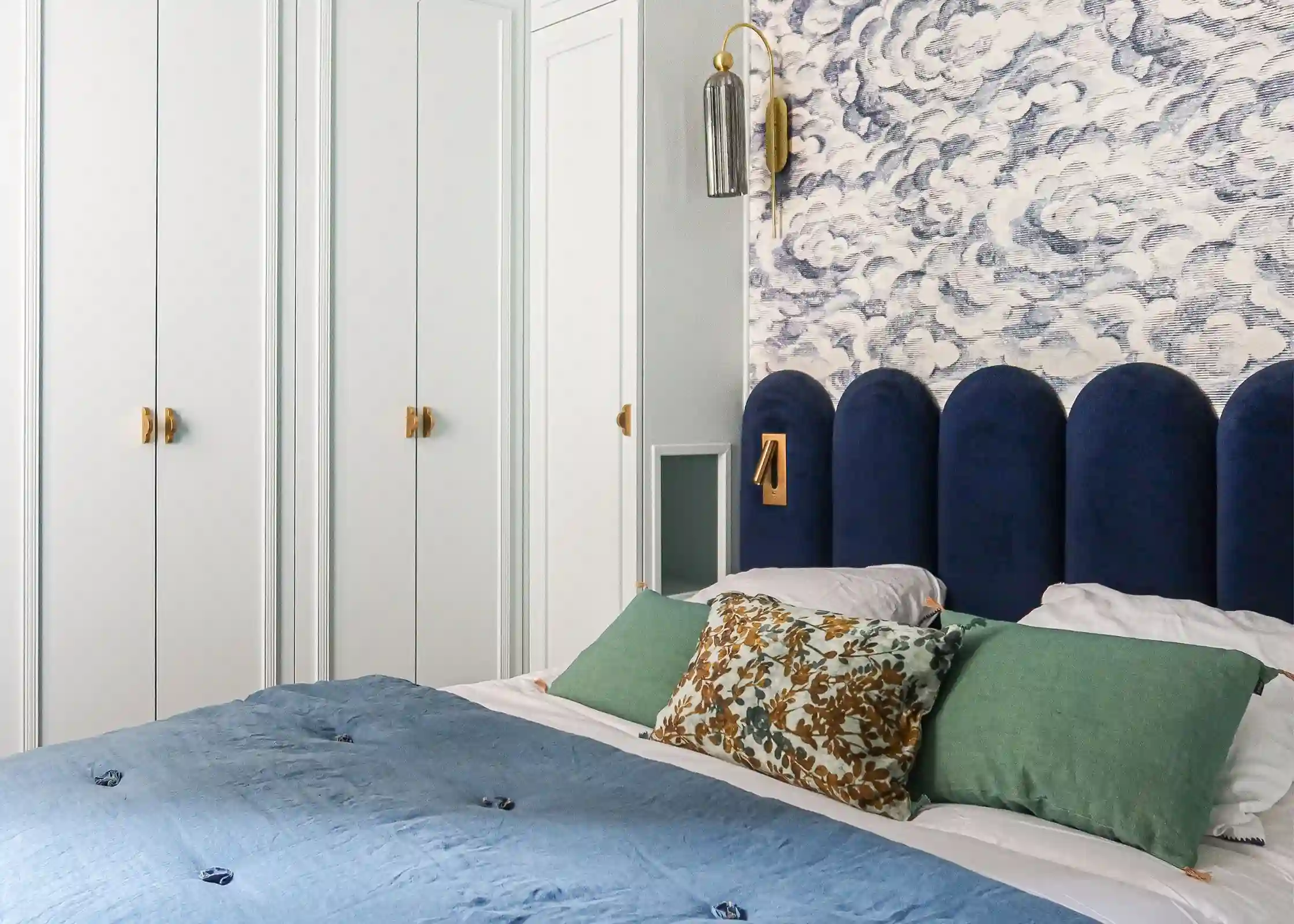
Wallpaper is appreciated not only for its aesthetic qualities, but even more for its ability to quickly transform the look of a room. Removing it depends primarily on the type of paper and the adhesive used during installation. Modern non-woven or vinyl wallpapers, especially repositionable ones, can generally be removed dry in a single strip without damaging the wall.
Conversely, traditional or older wallpapers require prior soaking. To do this, generously dampen the surface using a sponge, spray bottle, or steam stripper, focusing on the seams. Once the adhesive has softened, simply peel the paper away gently using a scraper. If it resists, a second application of warm water mixed with a little white vinegar or wallpaper remover may be necessary. A thoroughly cleaned wall after this step is essential to ensure the proper adhesion of any new wall covering.
Developing a unique style with wallpaper
Maison Kyka cultivates a passionate and exacting vision of interior design, which is particularly evident in the choice of materials used in our renovations. Wallpaper is no exception: the richness of its patterns and the sensory dimension it brings to a room align perfectly with our architecture studio's philosophy. Our only rule: be bold.
Add color and texture to your home
Wallpaper helps to bring color into an interior, which is essential for personalizing a space and creating a cohesive atmosphere. For example, warm tones like terracotta or mustard foster a cozy and welcoming vibe, while cool shades such as blue or gray bring calm and serenity.
Beyond the color palette, the texture of wallpaper plays a crucial role by adding relief and dynamism to walls, thus avoiding the monotony of a flat surface. Textured wallpapers, such as flocked velvet, expanded vinyl, or woven natural fibers, create a tactile depth that invites touch and captures light in a subtle way, thereby modulating the room's lighting ambiance.
Combining colors and textures can also be used to visually structure a space, by highlighting an accent wall or defining specific zones without the need for physical partitions. Finally, wallpaper allows you to play with the perception of volume. A vertical print will visually elongate a room, while a larger or panoramic pattern will expand a space by creating a sense of openness.
Wallpaper: one covering, endless possibilities
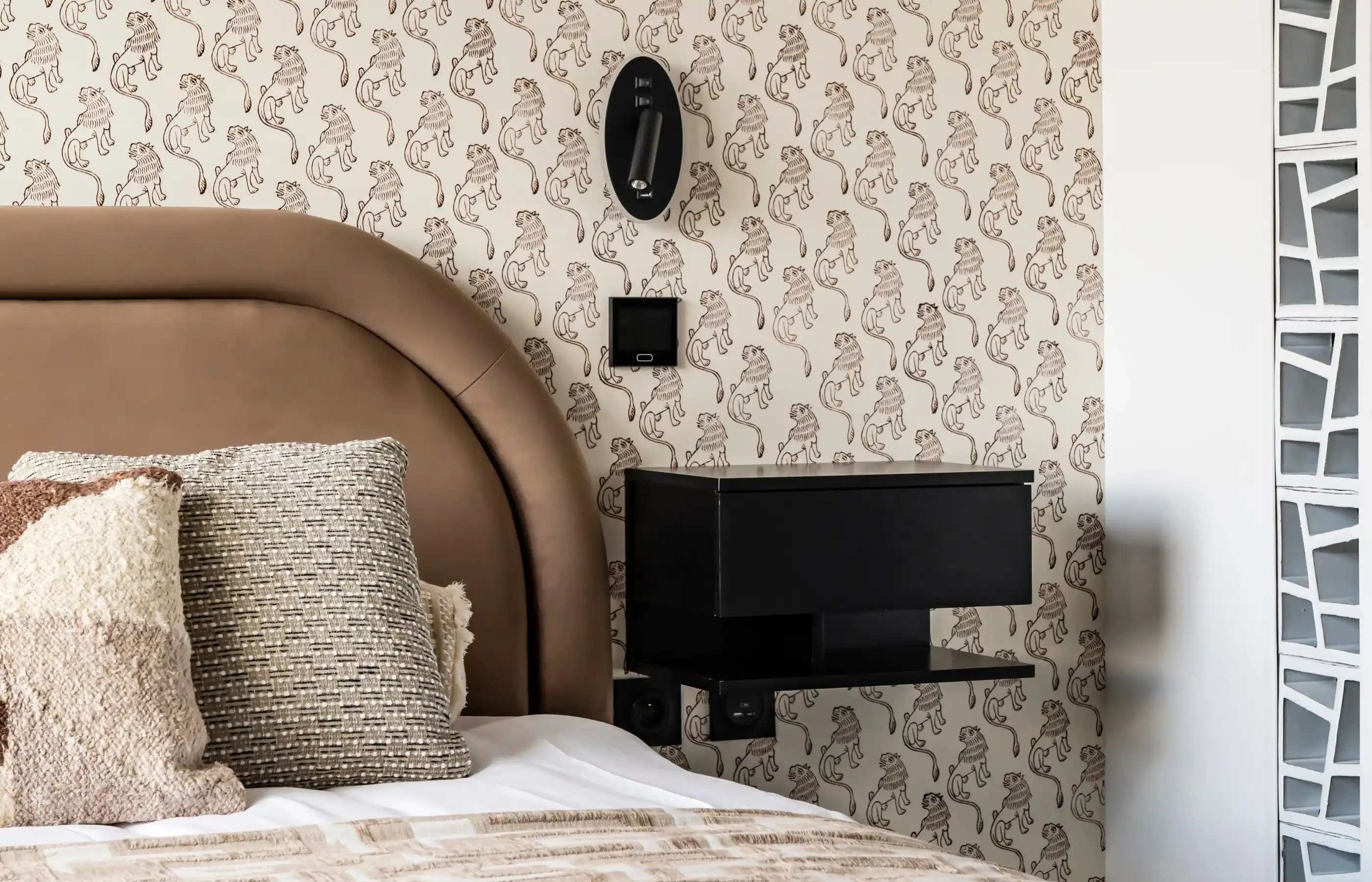
Wallpaper offers a multitude of ways to shape the atmosphere of an interior. It can be used in targeted touches, behind a headboard or in a hallway, to create a subtle and elegant focal point. Conversely, when applied as a full wall covering, it gives a room a theatrical and immersive dimension, reinforcing the space's identity and grandeur.
Beyond the walls, wallpaper can also dress up furniture or architectural elements, providing an original aesthetic continuity. For perfect harmony, it is possible to pair wallpaper with upholstery fabric featuring coordinated patterns or textures, creating a refined dialogue between wall surfaces and furniture.
Finally, creating decorative borders or styling custom alcoves are all techniques that enrich your decor while playing with volume and depth.
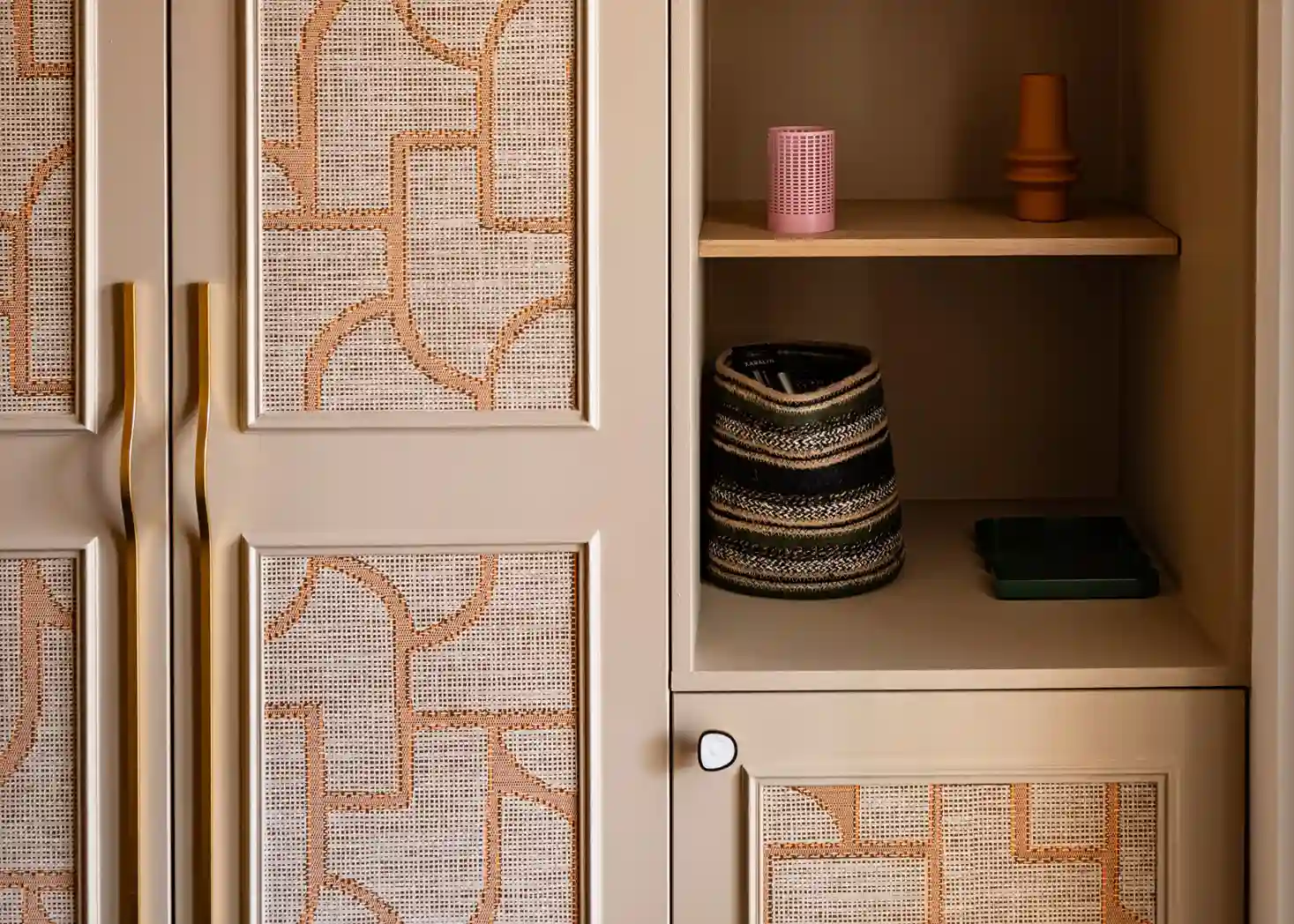
Masters in their field, certain French design houses are regularly selected by Maison Kyka to support its clients' renovations. Among them, Pierre Frey, Nobilis, and Casamance stand out for their expertise, enabling the creation of exceptional interiors.
Whether you have decided to apply wallpaper to all your walls or are still undecided, the teams at Maison Kyka are at your disposal to guide you through your renovation project in Paris and the Île-de-France region.

.svg)