.svg)

Buying an apartment in Paris's 1ˢᵗ arrondissement
Buying a property in the 1st arrondissement of Paris is an opportunity to join one of the capital's most iconic districts, blending prestige, culture, and the French art of living. Just steps from the Louvre, the Palais-Royal, or the Place Vendôme, every address tells a story, and every building carries the elegance of time.
This highly sought-after central area combines limited supply, architectural quality, and an exceptional environment. To ensure a successful acquisition, it is best to master its specificities and anticipate the key steps—because here, properties are often passed on discreetly, and the best opportunities rarely wait.
Maison Kyka guides you in understanding the 1st arrondissement's real estate market, identifying the Parisian neighborhoods best suited to your project, refining your strategy, and securing a lasting investment.
The 1ˢᵗ arrondissement: an overview of the Parisian city center
Key data to know everything about the 1ˢᵗ arrondissement
In the heart of the French capital, straddling the Right Bank and the Île de la Cité, lies the 1st arrondissement. Small in size but rich in incomparable institutional and cultural heritage, its tourist appeal and business district make it one of the most frequented areas in Paris.
Here is some key information to keep in mind to know the 1st arrondissement inside out:
- Surface area: 1.83 km²
- Population: 15,475 residents (source: Insee)
- Public transport: five metro lines (1, 4, 7, 11, 14) and three RER lines (A, B, D)
- Must-see monuments and landmarks: the Louvre Museum, the Tuileries Garden, Place Vendôme, the Comédie-Française
Beyond its postcard image, the 1st arrondissement is an area with multiple identities, embodied by its various neighborhoods.
The Place-Vendôme neighborhood
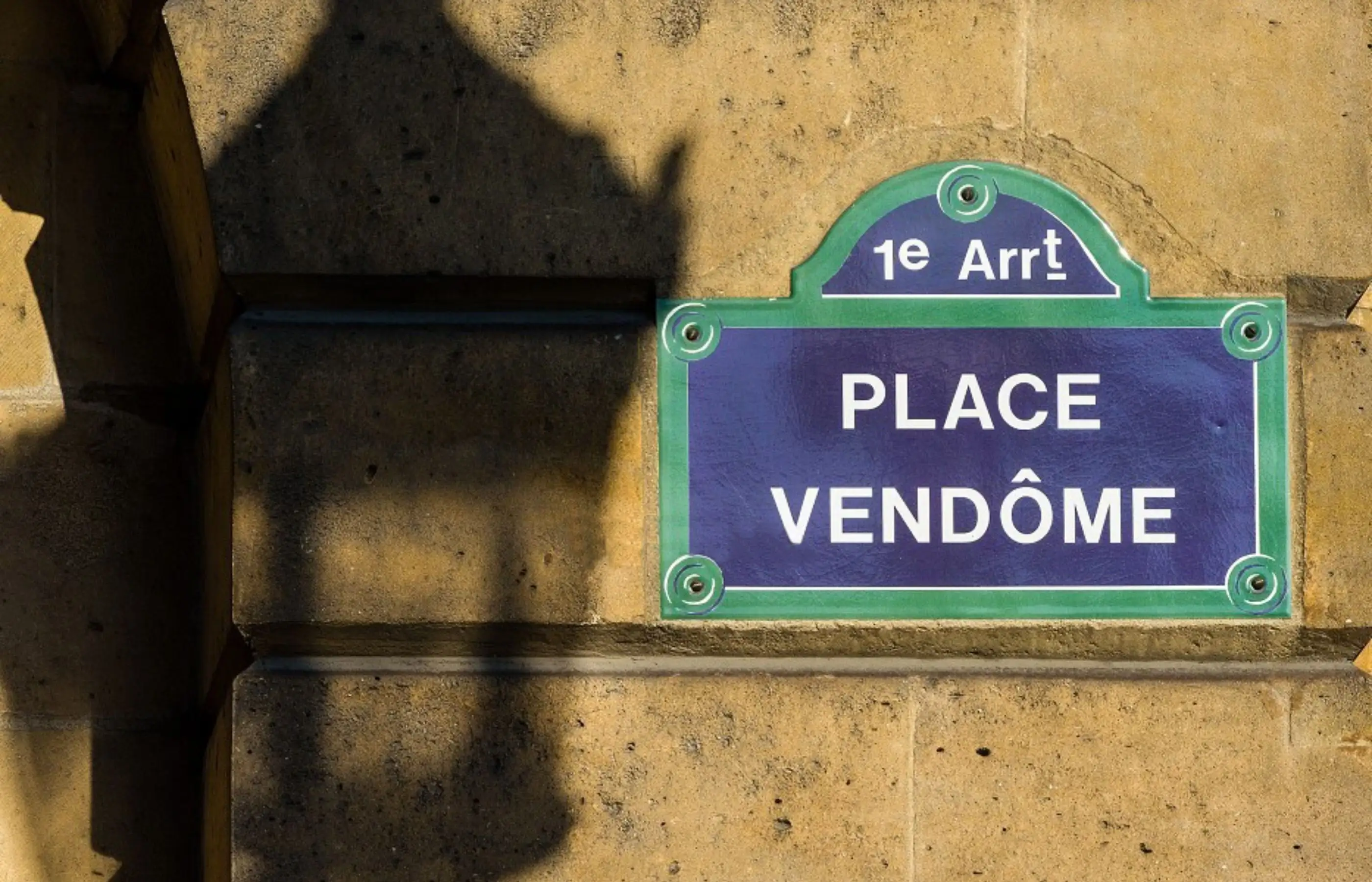
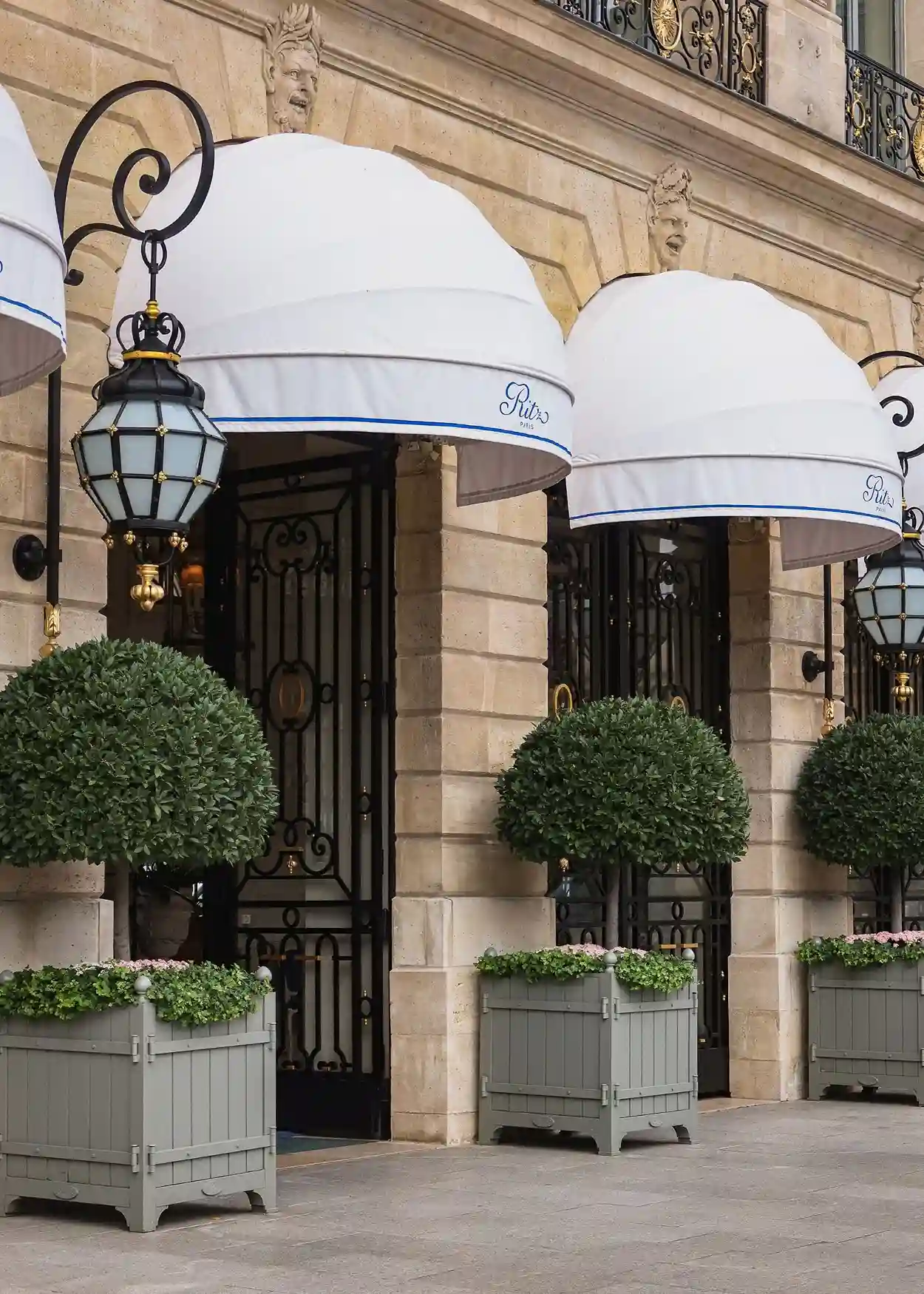
In the west of the arrondissement, between the streets of Capucines, Saint-Roch, Rivoli, Saint-Florentin, and the Boulevard des Capucines, lies the Place-Vendôme neighborhood. It owes its name to the famous royal square of the same name, known primarily for its jewelry boutiques and its central column. With few residents and primarily dedicated to luxury brands, grand hotels, and office buildings, this ultra-premium enclave offers a secure environment suited to a discerning and affluent international clientele.
The Palais-Royal neighborhood
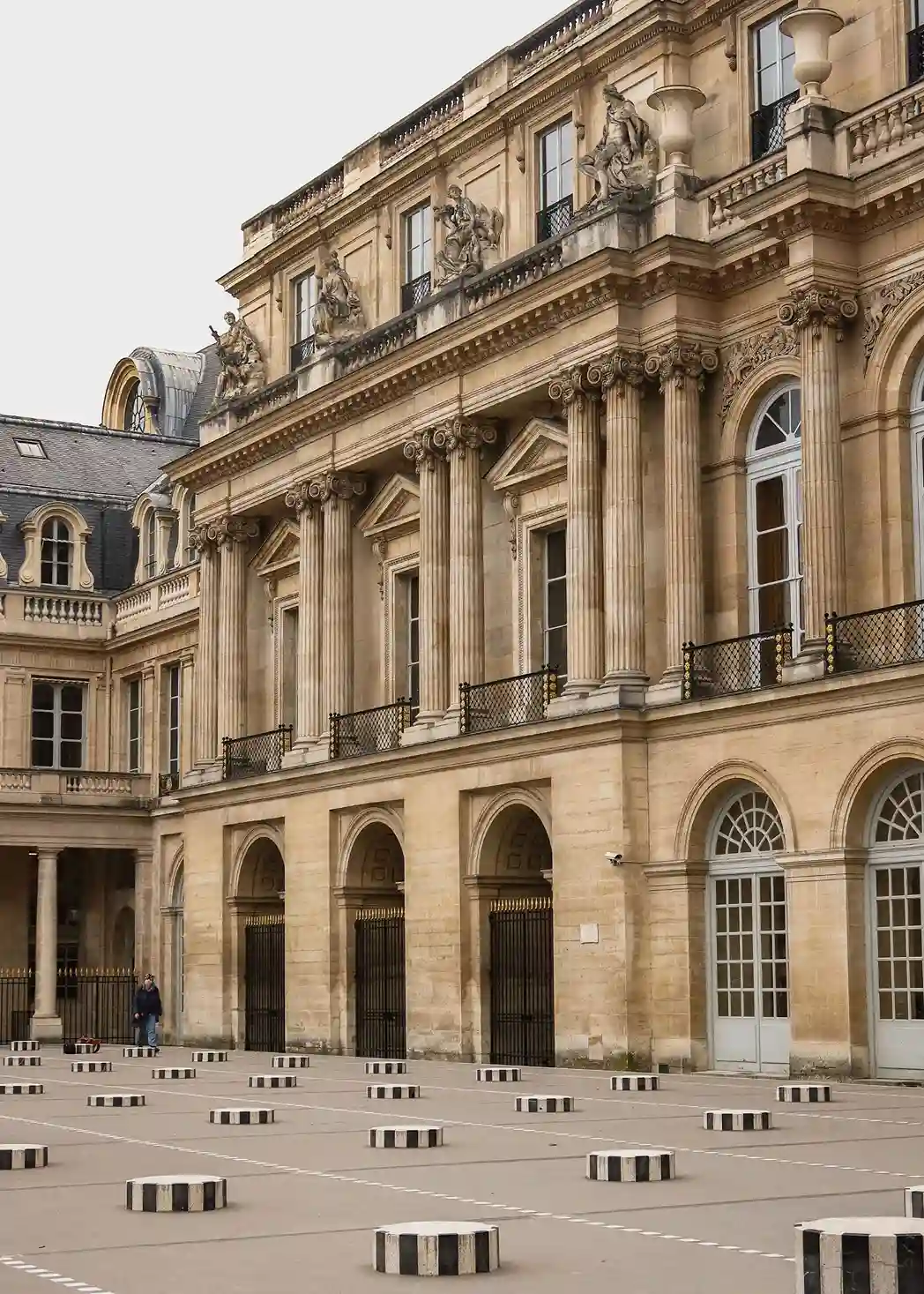
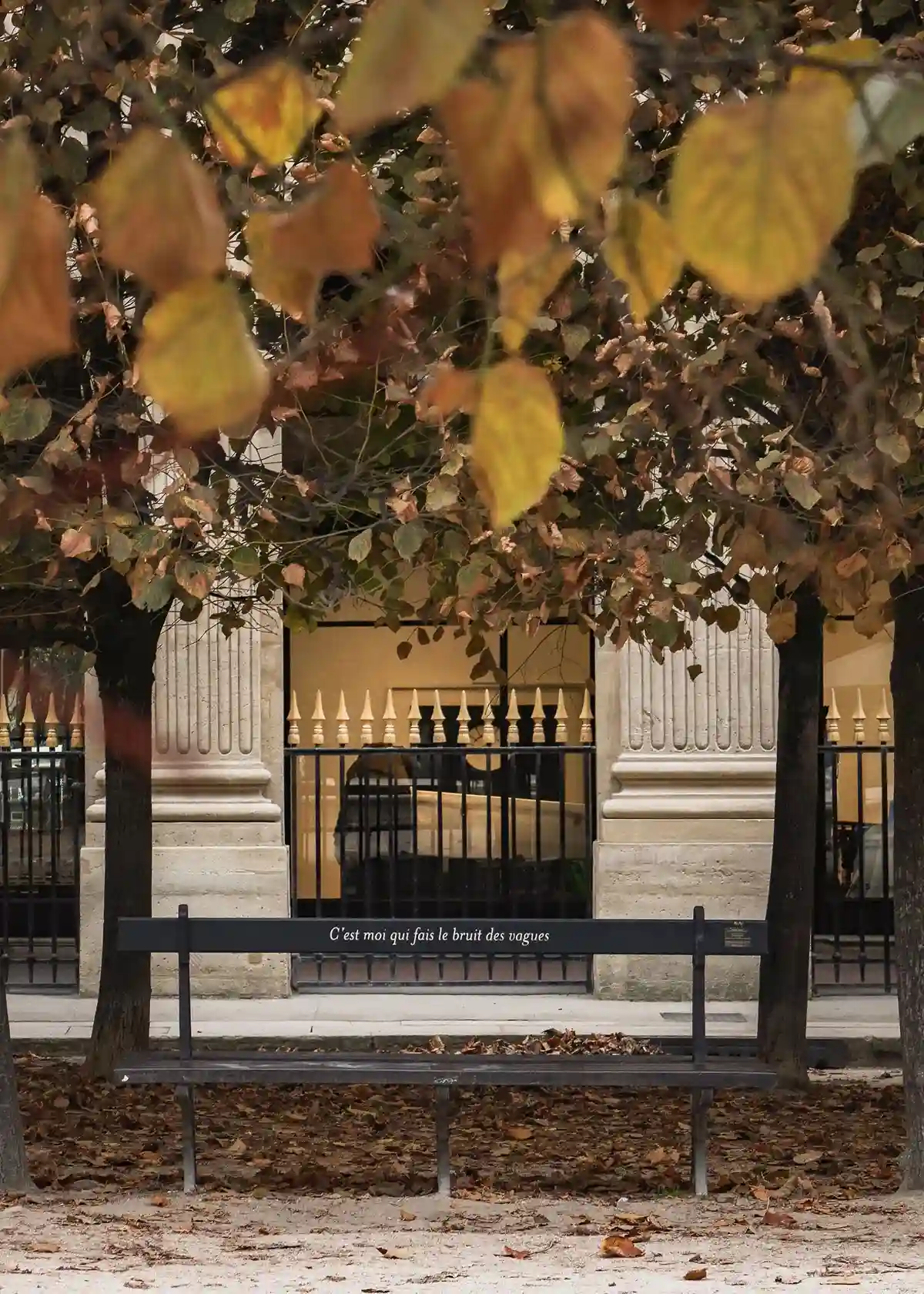
Heading toward the Palais-Royal neighborhood, between Rue Saint-Roch, Rue Croix-des-Petits-Champs, Rue des Petits-Champs, and Rue de Rivoli. Intimately linked to Cardinal Richelieu, who commissioned the Palais-Cardinal—now the Palais-Royal—in 1624, the neighborhood moves to the rhythm of its iconic landmarks, blending classical architecture with pre-Haussmannian alleys. Sitting down at Le Grand Véfour, reading by the fountain in the Palais-Royal garden, or attending a play at the Comédie-Française: this is the art of living in a neighborhood balanced between understated elegance and institutional presence. The setting is peaceful, refined, and appreciated by a clientele that values history, tranquility, and authenticity.
The Saint-Germain-l’Auxerrois neighborhood
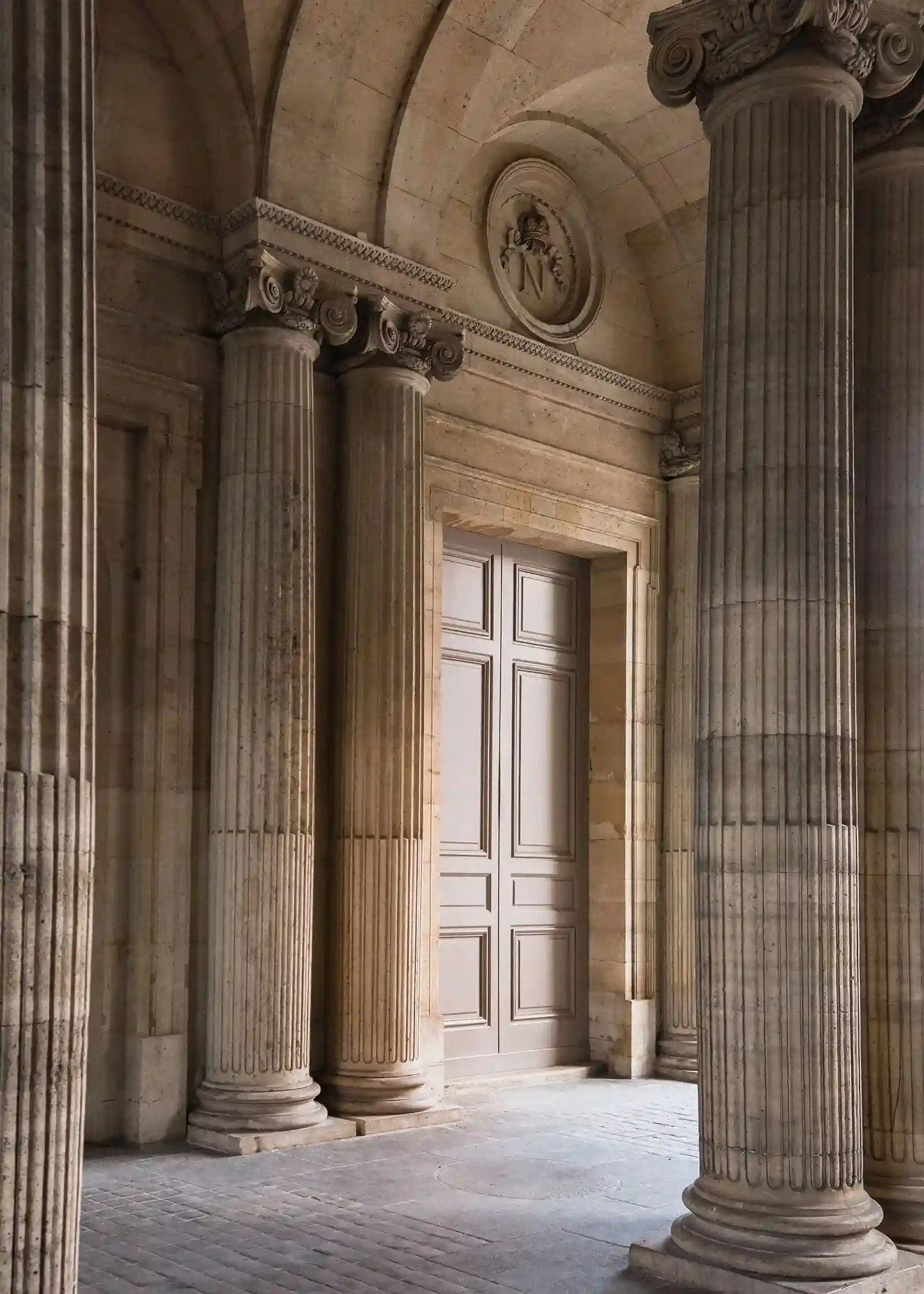
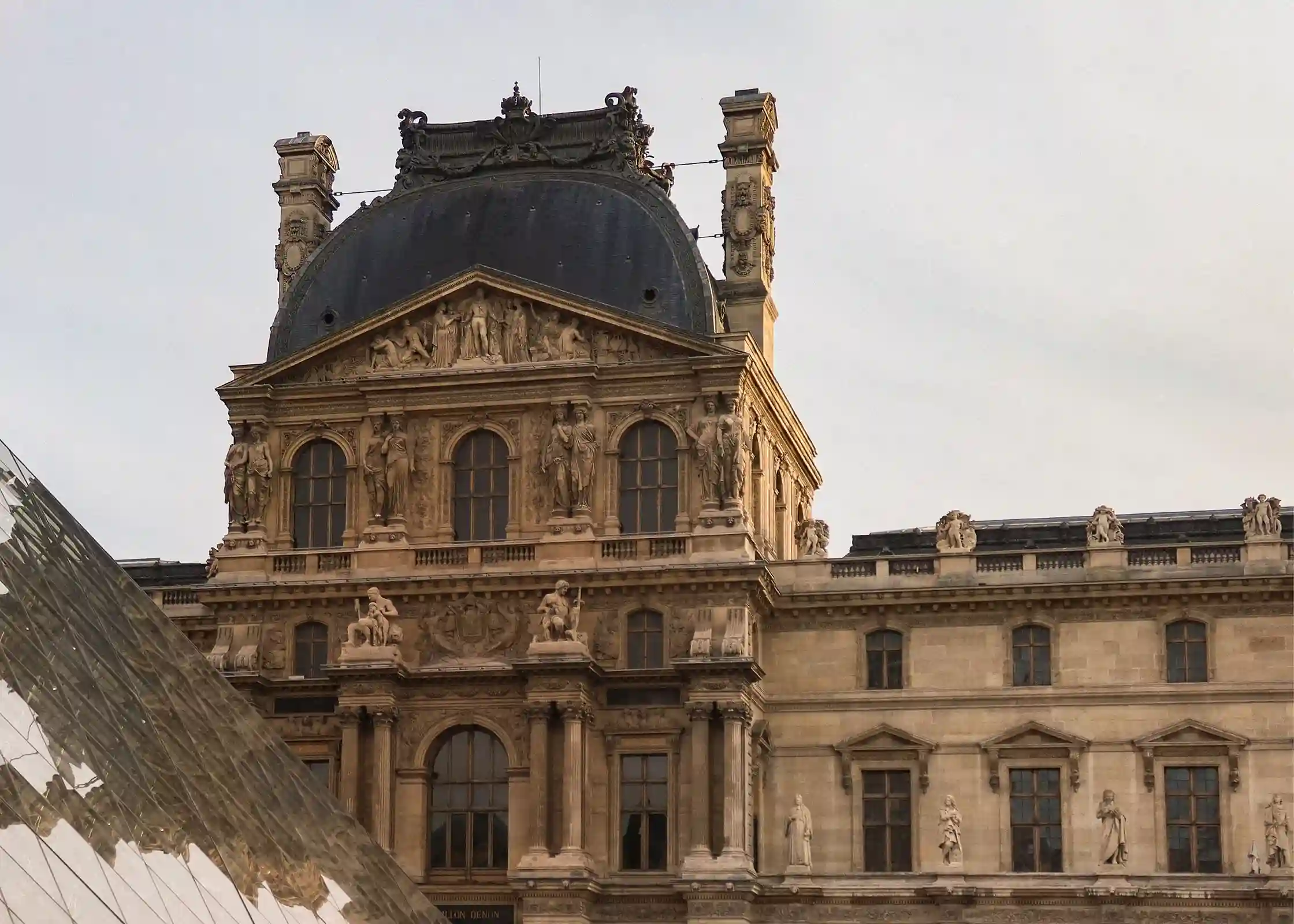
By the Seine lies the Saint-Germain-l’Auxerrois district, bordered by the Place de la Concorde to the west, Rue de Rivoli to the north, and Boulevard du Palais to the east. This is the historic cradle of the capital, as it was around the Île de la Cité that Lutetia, the ancient ancestor of Paris, was born. With few residential areas, the district is structured around cultural and administrative hubs—such as the Louvre Museum and Sainte-Chapelle—which limit the availability of housing. Thehousing stock is concentrated in a few preserved blocks, such as around the Place Dauphine or along the Quai de la Mégisserie, away from the main tourist routes.
Les Halles district
To the east of the arrondissement, between Rue de Turbigo, Rue Étienne-Marcel, Rue de Rivoli, Rue du Louvre, and Rue Saint-Denis, lies the Les Halles district. Long nicknamed “the belly of Paris” for its legendary market halls, it was radically transformed in the 1970s by the emergence of the underground Forum and the Châtelet–Les Halles multimodal station. Very busy, cosmopolitan, and resolutely urban, the district sees tens of thousands of passersby every day. A lively area from morning until late at night, it embodies Parisian intensity in all its diversity.
The real estate market in the 1st arrondissement: prices, housing, and trends
High prices
Prices in the 1st arrondissement reflect the prestigious and exclusive nature of the area. The median price per square meter for older properties is over €12,000/m², but this figure masks significant disparities depending on the specific location and the property's features.
In this regard, there are three price categories corresponding to three distinct sectors:
- A “ultra-luxury” sector, including Place Vendôme, Rue de Rivoli facing the Louvre, and the Île de la Cité: here, apartments frequently sell for over €18,000/m² due to the global renown of the address and the unique views it offers.
- A "classic prestige" sector, encompassing the Palais-Royal, the area around the Tuileries, and the western part of the Saint-Germain-l’Auxerrois district: prices here typically range between €14,000 and €17,000/m² for luxury apartments, although some properties requiring renovation can sell for €13,000/m².
- A "lively central" sector, corresponding to the area around Les Halles and certain more popular streets: prices here are more affordable, with the median price for existing properties standing at €12,150/m² (source: Figaro Immobilier).
Buying an existing property in the 1st arrondissement therefore requires a substantial budget, and it is wise to anticipate additional costs such as notary fees, which are also high for this type of transaction. However, such prices are justified by the resilience and prestige of the market in this sector, which represents a safe bet for real estate investment.
A prestigious housing stock dominated by rentals
Buying in Paris, in the 1st arrondissement, also means facing a limited supply : fewer than 14,000 housing units were recorded there in 2022 (source: Insee). Almost all of these dwellings are apartments in multi-family buildings, and the rare private mansions are generally owned by institutions or luxury brands. Your purchase will therefore necessarily be an apartment, generally between 25 and 60 m². Exceptional properties, such as large family apartments over 150 m² and entire floors of luxury buildings, are much rarer.
Furthermore, the arrondissement has a majority of tenants, compared to 31.8% who own their primary residence. This structure is explained by the high proportion of short-term rental apartments and secondary residences, which effectively leads to an 11.2% vacancy rate (source: Insee), above the Parisian average.
A competitive and exclusive market
In the 1st arrondissement, demand generally exceeds supply. Sales times are often very short for well-located and correctly priced apartments. In practice, this means the best listings go in a matter of days: it is common for a well-placed studio to find a buyer in less than a week, sometimes after just one group viewing. Similarly, family apartments priced correctly can attract multiple offers very quickly.
Several tips can help mitigate this market effect:
- Purchase a property in need of renovation : in addition to being cheaper, these homes are generally in lower demand and can increase in value through quality renovations.
- Pay in cash : this option helps reduce transaction times and is generally highly appreciated by sellers.
- Use a property hunter or a local agency : you will gain access to off-market opportunities and be able to find that rare gem before anyone else.
In short, investing in the 1st arrondissement requires careful preparation and a solid application. By working with Maison Kyka, experts in the Parisian real estate market will guide you step-by-step through this journey, offering a bespoke experience perfectly aligned with your project.
Why buy in the 1st arrondissement?
A secure heritage investment
Acquiring a property in the 1st arrondissement of Paris is a significant move, often akin to a long-term wealth investment. The scarcity of supply, stable demand, architectural quality of the buildings, and the district's international prestige create a favorable equation for long-term appreciation.
In this hyper-central pocket, space is limited, building permits are extremely rare, and properties for sale are often located in historic, listed, or protected buildings dating back to the 17th and 18th centuries or the Haussmann era. This physical scarcity mechanically fuels upward pressure on prices. Even during a global real estate slowdown, the 1st arrondissement remains resilient.
Entre 2025 et 2026, les prix de l’immobilier ancien ont progressé de 4 % (source : Figaro Immobilier) dans le 1ᵉʳ arrondissement, quand la tendance parisienne globale sur la même période est plus mesurée.
Un confort de vie unique
Habiter le 1ᵉʳ arrondissement, c’est évoluer chaque jour dans un décor qui mêle grandeur historique, densité culturelle et urbanité contemporaine.
L’accessibilité participe grandement à l’attrait du quartier. Les différentes stations de métro, RER et bus permettent de rejoindre rapidement les arrondissements plus excentrés, les grandes gares parisiennes et les aéroports internationaux — Paris-Charles de Gaulle et Orly. L’aménagement de la voirie favorise la circulation à pied et à vélo, grâce aux larges trottoirs et aux nombreuses pistes cyclables.
La richesse de la vie dans le 1ᵉʳ arrondissement tient à sa proximité avec de grands lieux de sociabilité, qu’il s’agisse des restaurants, des musées, des jardins. La nature, bien que limitée, y est précieuse, en témoignent les jardins des Tuileries et du Palais-Royal.
Enfin, la présence de nombreux ministères, ambassades et sites classés en fait un lieu sécurisé et entretenu.
La présence importante de biens à usage tertiaire (bureaux, sièges institutionnels) et de résidences secondaires signifie que certains immeubles peuvent être très calmes en soirée ou le week-end — un avantage pour les amateurs de tranquillité, un inconvénient pour ceux qui recherchent une animation continue.
Le 1ᵉʳ arrondissement est donc particulièrement adapté aux familles et aux acquéreurs d’un pied-à-terre d’exception au cœur de la capitale française.

.webp)
Les bonnes adresses de Maison Kyka
Plaisir des yeux, plaisir du ventre, plaisir tout court. Ou comment habiter le 1ᵉʳ arrondissement façon Maison Kyka.
- À deux pas de la place de la Concorde, Toraya s’impose comme l’un des salons de thé les plus raffinés de Paris. Depuis 1980, la maison propose des pâtisseries japonaises (wagashi) délicates et visuellement parfaites. L’adresse, sobre et paisible, invite à ralentir, le temps d’un thé matcha ou d’un yokan fondant.
- En plein cœur du quartier des Halles, la Bourse de Commerce transforme chaque visite en parenthèse artistique. Réhabilitée par Tadao Ando, cette rotonde du XIXᵉ siècle accueille les collections de François Pinault dans un écrin brut et monumental. On y découvre des expositions audacieuses, pensées pour dialoguer avec l’espace.
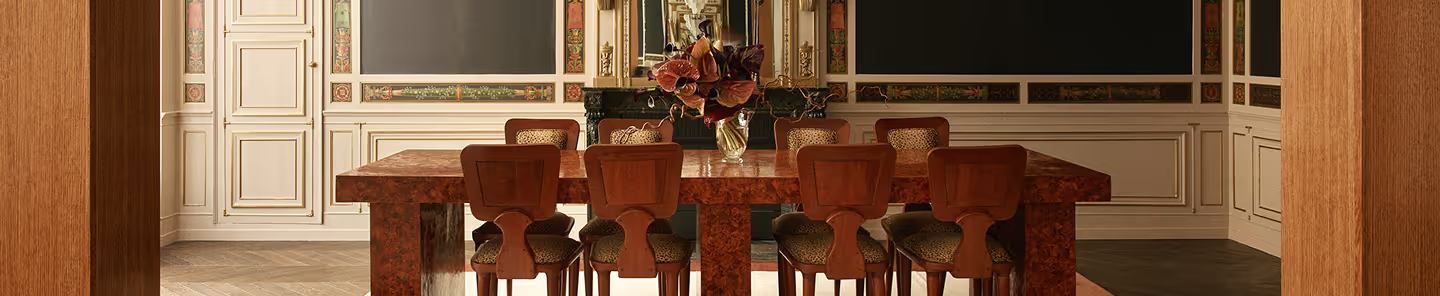
- Rue Étienne Marcel, AM.PM propose un espace design qui conjugue matières nobles et lignes épurées. Ici, chaque meuble, chaque luminaire semble pensé pour durer. C’est l’adresse idéale pour glaner des idées déco ou composer un intérieur sur mesure avec l’aide de l’équipe sur place.
Chez Maison Kyka, nos responsables de projet immobilier vous accompagnent dans votre projet d’achat dans le 1ᵉʳ arrondissement, du secteur à privilégier en passant par les visites et la transaction. Une expertise qui reflète l’excellence de votre expérience avec Maison Kyka, pour créer le bien de vos rêves à Paris.


.webp)
.svg)