.svg)



Differences between an architect, an interior architect, and an interior decorator
For a turnkey renovation or when working with an interior renovation company, it is common to call upon an architect, an interior architect, and/or an interior decorator.
Each of these professionals has specific skills and a distinct scope of work:
- An architect is primarily qualified to manage structural work affecting a building's framework (construction, extensions, etc.).
- An interior architect focuses on non-structural work, transforming and optimizing a living space without altering the building's structure.
- An interior decorator specializes in finishing touches, aiming to beautify or harmonize a living space without changing the layout.
Therefore, whether you need an architect, an interior architect, and/or an interior decorator depends on the type of work required for renovating an apartment or home renovation.
To help you see things more clearly, Maison Kyka guides you through the role of each trade to help you prepare for your renovation project under the best possible conditions. Need personalized advice? Tell us about your project using our simulator below.
The architect is responsible for work affecting the building's structure
Training and regulation of the architectural profession
The title of architect is protected by the Act of January 3, 1977, on architecture. It can only be used by professionals who hold a state-recognized degree and are registered with theOrder of Architects. This official body guarantees the competence, independence, and ethics of the profession.
To become an architect, one must acquire the technical, legal, and aesthetic skills necessary for the design and execution of architectural projects:
- Initial training (5 years) at a National School of Architecture (ENSA) or an authorized institution, leading to a state-recognized Master's level degree.
- Authorization to act as project manager (HMONP) allowing one to practice independently, sign plans, and supervise a construction site. This professional qualification is completed over one year through a work-study program.
- Swearing-in and registration with the Order of Architects : once graduated and authorized, the architect takes an oath and is registered with the Order of Architects. They can then take responsibility, in their own name, for an architectural project in its entirety.
What work should you entrust to an architect?
The architect is the professional authorized to design a building as a whole, and to modify the structure and to coordinate the various stages of a construction project, whether for new builds or renovations.
1. Comprehensive architectural design
The architect envisions the organization of volumes, the layout of rooms, traffic flow, facades, openings, and, more broadly, the balance between functionality, aesthetics, and energy performance. They take into account your needs, the technical constraints of the site, and the regulatory framework.
2. Structural work execution
The architect is qualified to work on the building's structural elements. For example, they can:
- open up a load-bearing wall to create a large living area,
- design an extension or an additional story,
- modify floors, beams, or the roof framework.
They guarantee the technical feasibility of the work and ensure the stability of the structure. They may also collaborate with specialized engineering firms to perform specific structural calculations.
3. Management of administrative procedures
The architect is authorized to prepare and submit a building permit or a prior declaration of works. They can also represent you before the urban planning department to expedite communications.
4. Project management and site coordination
If authorized for project management, the architect supervises every phase of the construction site: they ensure compliance with the schedule, budget, and quality of the work performed.
The architect works alone or relies on a network of specialized partners (thermal design office, structural engineer, geotechnical engineer). They can also collaborate with an interior designer or decorator if the project includes an aesthetic or interior comfort dimension.
Why hire an architect?
Hiring an architect ensures that every decision made is based on solid technical, legal, and regulatory foundations.
They are familiar with the urban planning regulations applicable to your municipality, the constraints of the Local Urban Plan (PLU), and thermal (RE2020) or accessibility standards. This mastery of the regulatory framework is translated into concrete solutions when purchasing an apartment or house that requires renovation, thereby avoiding unpleasant administrative surprises and helping to increase the value of a property in the long term.
The architect is also the only professional authorized to work on large-scale projects. In France, the law requires the use of an architect registered with the Order of Architects when the floor area of a project exceeds 150 m². This requirement is set out in Article R*431-2 of the Urban Planning Code.
Hiring an architect can also provide peace of mind. Under Article 1792-1 of the Civil Code, an architect is legally classified as a builder. As such, they are liable for any major defects or structural issues that compromise the integrity of the building for ten years following completion (Spinetta Law). Working with an architect therefore ensures you are covered by two types of insurance: structural damage insurance and ten-year liability insurance.

However, their scope of work is often limited when it comes to interior design and decoration. If your project involves detailed spatial transformation, a personalized atmosphere, or in-depth aesthetic guidance, the architect can work in tandem with an interior designer or decorator.
How much does an architect cost?
An architect's fees can vary significantly depending on the scale of the project, the complexity of the work, and the nature of the services provided.
1. Percentage-based fees
The most common method of remuneration for an architect on construction or major renovation projects is a percentage of the total project cost. They typically charge between 8% and 15% of the total construction budget, depending on the technical requirements of the site, the services included, and the location of the property.
2. Fixed fees for specific tasks
For simpler projects such as an extension, a design-only commission, or preparing a building permit application, a fixed fee can be agreed upon in advance. Prices generally start at a few thousand euros. This option allows you to keep costs down while benefiting from an architect's expertise.
Maison Kyka’s rates are supplemented by the services of partner architects when the project requires it, ensuring a turnkey experience regardless of the scale of the work.
The interior designer transforms the interior space
Training and regulation of the interior design profession
Unlike the profession of architect, the title of interior designer is not legally protected. There is therefore no strict regulation governing the use of this title. In theory, anyone can call themselves one.
However, certain qualifying training programs are recognized in the industry and legitimize the practice of this profession:
- BTS in Spatial Design which provides training in design techniques, 3D software, and interior layout principles, leading to a two-year higher education diploma.
- Higher Diploma in Applied Arts (DSAA), National Diploma in Art (DNA) with a design specialization, or programs in architecture or design schools. These paths, ranging from three to five years of higher education, offer a more in-depth approach to the aesthetic, technical, and cultural challenges of interior design.
- Professional certifications (RNCP) or specialized private training in spatial design or interior decoration, accessible for career changes or specialization.
Although no registration with a professional body is required, the CFAI (French Council of Interior Architects) plays a role in professional recognition. It grants accreditation to experienced interior designers after reviewing their training, experience, and a portfolio of completed projects. This accreditation attests to the professional's competence, reliability, and adherence to ethical standards.
What kind of projects should you entrust to an interior designer?
An interior designer plans, optimizes, and coordinates large-scale interior renovation projects, ensuring aesthetic consistency tailored to your lifestyle and personal taste.
1. Space planning and layout
An interior designer improves the functionality and flow of a home, particularly by modifying or removing non-load-bearing walls. For example, they can open up a kitchen to the living room to create a bright, welcoming living area, or partition a space to add an extra bedroom.
2. Managing interior renovation work
An interior designer is equipped to manage all interior fit-out work. They create floor plans, define project specifications, select materials, and ensure the desired style is maintained throughout.
For example, they can:
- manage utility and network installations (electricity, plumbing, lighting),
- design functional rooms such as bathrooms or kitchens,
- select flooring and wall finishes,
- design custom storage solutions.
3. Integrating decoration into the overall project
An interior designer does more than just imagine functional spaces: they define color palettes, finishes, textures, and even the furniture to be integrated or custom-built.
4. Site monitoring and coordination
As part of a full-service project, they can provide interior project management. They select contractors, schedule work, and ensure that every tradesperson adheres to the plans, deadlines, and finishing standards.
Why hire an interior designer?
Hiring an interior designer means gaining a comprehensive vision for your living space, combining technical expertise, a flair for layout, and aesthetic intelligence.
One of their greatest strengths lies in their ability to unlock the potential of an interior and completely rethink the organization of volumes, two aspects often underestimated by homeowners. They provide detailed 2D or 3D plans, allowing you to visualize the project before work begins.
An interior designer possesses technical mastery of renovation projects : they are familiar with current standards and the constraints related to electrical, plumbing, and heating systems, and know how to anticipate the interactions between different trades.

At Maison Kyka, every interior designer is paired with a renovation project manager, who ensures the coordination of work and adherence to the budget. This duo guarantees seamless project management, from the initial meeting to final delivery, including the selection of artisans and the inspection of finishes.
Excellent support throughout the search, floor plan design, furnishing, and project management. A very professional team and the perfect solution for those who want to buy and completely reimagine an apartment but lack the time to manage it all. Éloi Verspieren
How much does an interior designer cost?
The cost of an interior designer varies depending on the level of customization required and the scope of the project. Unlike an architect, who works on the building's structure, an interior designer works with existing spaces, which often results in more affordable costs—without compromising on expertise.
In practice, there are two common billing methods :
- A flat design fee, which is the most common for design projects. The interior designer charges a fixed amount based on the square footage (often expressed in €/m²) or the complexity of the project. This fee generally covers the site visit, the study of the project requirements, 2D/3D floor plan proposals, and sometimes a shopping list or a decorative mood board.
- A percentage of the total construction cost may be added when the interior designer also manages the construction phase, typically calculated as a percentage of the total project cost (usually between 5% and 12%). This includes coordinating contractors, reviewing quotes, managing schedules, and conducting regular site visits until final completion.
An interior decorator harmonizes and enhances a space
Training and regulation for interior decorators
The profession of interior decorator is neither legally regulated nor subject to strict professional standards. In other words, anyone can practice this profession, even without a degree, provided they possess solid skills in design, visual layout, and client management.
That said, formal training is highly recommended to acquire the fundamentals of the trade:
- BTS in Design and Layout Implementation, a two-year post-secondary program that covers interior design techniques, material knowledge, and the creation of technical drawings.
- National Diploma of Art (DNA), design option, awarded by art schools, which offers a more creative approach to space and is equivalent to a three-year undergraduate degree.
- Professional Bachelor’s degrees in layout or spatial design, accessible after two years of post-secondary study, which often lead to project management roles or the establishment of an independent agency.
- Private or online training programs, which allow those undergoing a career change or self-taught individuals to formalize their expertise.
In this profession, experience, artistic sensibility, and the ability to understand the client often take precedence over formal qualifications. A strong portfolio, a sharp eye for design, and truly listening to the client's needs make all the difference.
What kind of work can you entrust to an interior decorator?
An interior decorator steps in when it comes tobeautifying a space without altering its structure or architectural layout: their mission is primarily aesthetic.
1. Style and atmosphere consulting
The interior decorator begins by analyzing your home, your lifestyle habits, and your aesthetic preferences. They then propose a decorative concept overall : whether bohemian, contemporary, industrial, Scandinavian, or more classic… Everything is designed to create a visual harmony and consistency in every room.
2. Furniture and accessory selection
They will guide you in choosing furniture, lighting, curtains, rugs, and decorative accessories. Depending on your preferences, budget, and the constraints of the space, they can, for example:
- work with accessible brands,
- source rarer, high-end pieces,
- scour for vintage finds,,
- or propose custom-made furniture.
3. Decor layout
Even without moving walls, a skilled interior decorator knows how to optimize the arrangement of furniture to improve flow and highlight the space's proportions. For example, they might position a sofa to open up a view or create a decorative focal point with a gallery wall.
4. Home staging or decorative refresh
For a property sale or if you simply need a cost-effective refresh, the decorator offers light but impactful transformations: repainting a wall, installing graphic wallpaper, replacing cabinet hardware, reorganizing wall decor, or updating the lighting.
A decorator never works on load-bearing walls, partitions, or technical installations. If they identify a need for more extensive structural changes, they will refer you to an architect or interior designer. They provide the finishing touch to a renovation project, or serve as the starting point for a new look in a home that is already in good condition.
Why hire an interior decorator?
Hiring an interior decorator allows you to rethink the atmosphere of a home without undertaking major construction. This professional stands out for their aesthetic sense, their knowledge of design and current trends, such as the comeback of wallpaper in interior design. They excel at the art of creating unique atmospheres, particularly through the use of color for example. They also help you avoid costly mistakes : a sofa that is too large, a poorly chosen paint color, or inadequate lighting can quickly throw a room off balance. Their greatest strength in a nutshell: enhancing what is already there without tearing everything down.
On the other hand, an interior decorator does not have the authority or the expertise to modify a building's structure. They do not create technical plans, file building permits, or oversee major construction work. This is why their role complements that of an architect or interior designer.
Finally, it should be noted that an interior decorator is not subject to any legal insurance requirements, unlike an architect, and does not assume liability for the work.
How much does an interior decorator cost?
Hiring an interior decorator is often the most affordable option when it comes to transforming your home without undertaking technical renovations.
An interior decorator's fees vary depending on the nature of the project, the surface area involved, and sometimes the level of customization requested. Several pricing models are available:
1. "Mood board" or "decor coaching" flat fee
For a few hundred euros, the decorator provides you with a comprehensive design concept, accompanied by a shopping list and layout advice. This is the ideal solution if you want to refresh a room without committing to a complex project.
2. Hourly or daily rate
Often used for one-off home consultations, this billing method allows you to get an expert eye on your interior without further commitment.
3. Online packages
Some platforms offer 100% remote services including an analysis based on photos and floor plans, at a reduced cost. This format is suitable for small spaces or simple projects.
4. Commission on purchases
Some interior decorators receive a commission on furniture and decorative items purchased through their partner suppliers. This system does not directly impact your budget, but it may influence the selections proposed.
An interior decorator does not hold the same technical liability as an architect; they are not required to carry decennial insurance, which explains their lower rates but also a different level of professional commitment.
Summary of the differences between an architect, an interior designer, and a decorator
It is not always easy to know which professional to turn to for a renovation or design project. To help you make the right choice, Maison Kyka provides a summary table outlining the main differences between an architect, an interior designer, and an interior decorator :
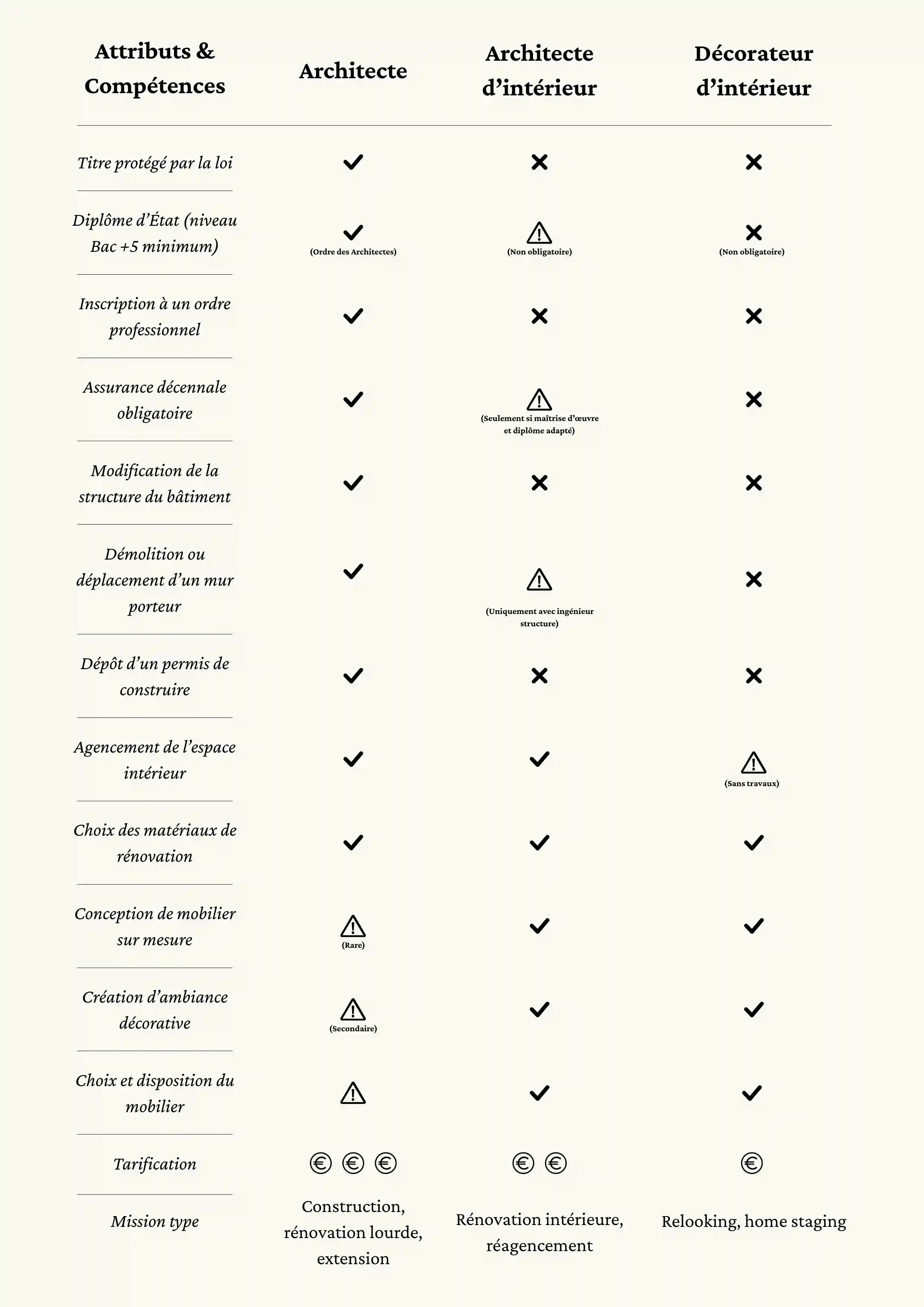
At Maison Kyka, we combine the expertise of these three professions into a bespoke experience, from the purchase of your property to the final decorative touches, including the renovation process.
.svg)