.svg)

_11zon.webp)
Renovating an apartment in Paris’s 5ᵗʰ arrondissement
A three-room Haussmannian apartment on Boulevard Saint-Michel, a flat with exposed beams tucked away behind Place de la Contrescarpe, or a studio near the Sorbonne rented out to students: renovating an apartment in Paris’s 5ᵗʰ arrondissement means working with some of the capital’s oldest buildings. Timber floors, thick walls, narrow streets and historic monuments around every corner: each project presents technical challenges and logistical constraints rarely encountered elsewhere in Paris.
Specialising in bespoke, turnkey property acquisition, interior design and renovation in Paris, Maison Kyka delivers move-in-ready apartments in the 5ᵗʰ arrondissement. You receive the keys to a fully finished home, designed around your needs, in the heart of the Left Bank. In this article, we explain how the architectural heritage of the 5ᵗʰ arrondissement shapes renovation projects, what budgets and timelines to expect, and how an apartment renovation works with a single point of contact.
How the buildings of Paris’s 5ᵗʰ arrondissement shape renovation projects
In Paris’s 5ᵗʰ arrondissement, the buildings themselves determine what a property renovation involves and how the work must be carried out. The district combines buildings dating back to the Ancien Régime, around Montagne Sainte-Geneviève and Rue Mouffetard, with Haussmannian apartment buildings lining the major boulevards developed during the 19ᵗʰ century. These two types of buildings require very different renovation approaches, and the first step is to identify which category your apartment belongs to.
Historic buildings in the Latin Quarter and Mouffetard
Along Rue Mouffetard, Rue de la Montagne-Sainte-Geneviève, Rue Saint-Jacques and around Place Maubert, many buildings date from the 17ᵗʰ and 18ᵗʰ centuries. Their apartments have a character unlike anywhere else in Paris: exposed beams, terracotta floor tiles, 60 cm-thick stone walls, original windows and irregular layouts. But they also come with specific constraints. Timber floors are not well suited to concentrated loads, an important consideration when positioning a bathtub, kitchen island or built-in masonry bookcase. Walls are rarely perfectly straight, floors are seldom level, and a carefully planned renovation begins with a detailed survey of these irregularities.
These historic buildings also require preliminary inspections. In properties built before 1949, lead-based paint is common, while asbestos surveys are required before demolition work in buildings constructed before 1997. These pre-renovation assessments should be scheduled during the design phase, ensuring that work begins with a clear understanding of the building’s condition.
Haussmannian buildings along the main boulevards
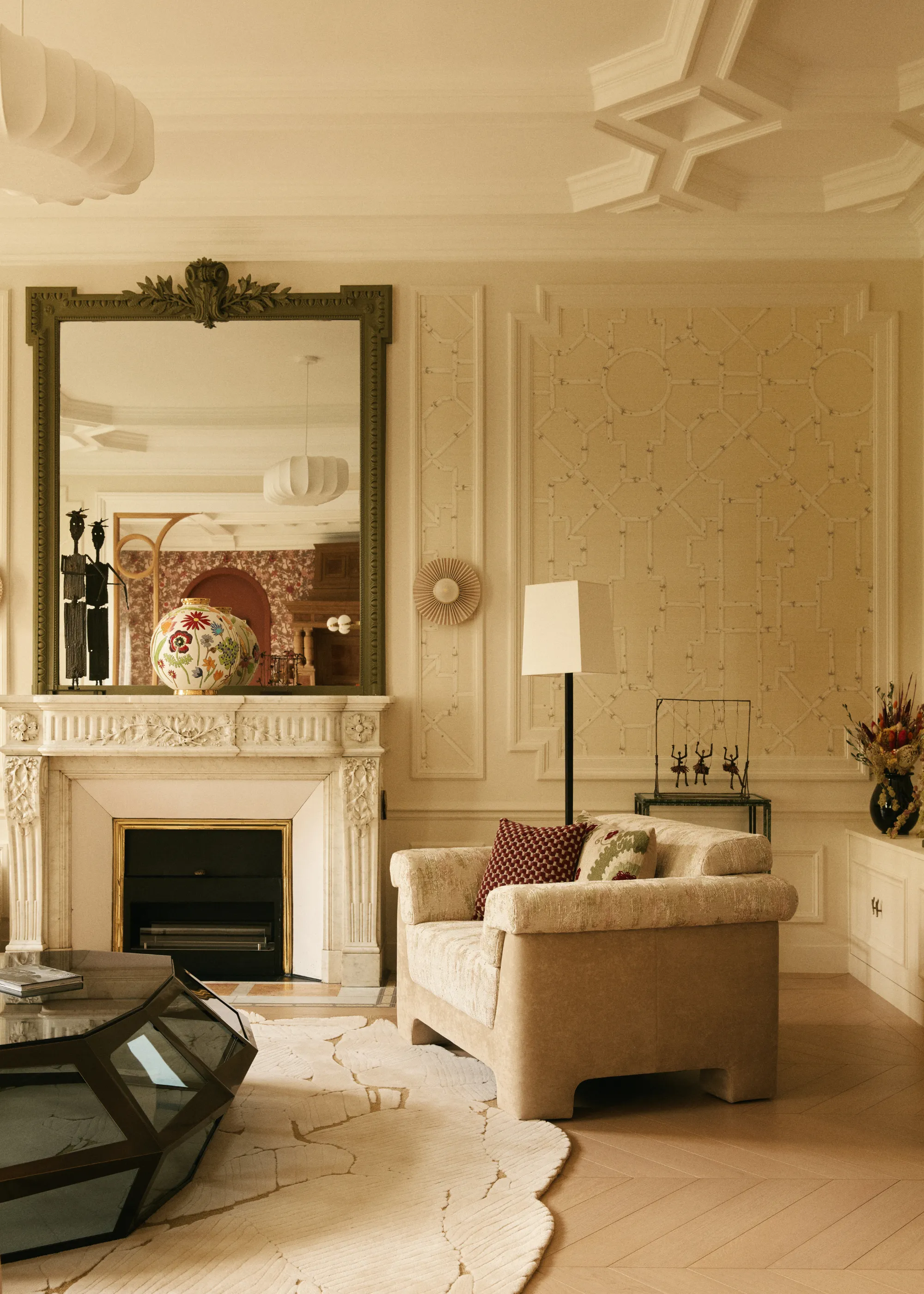
Boulevard Saint-Michel, Boulevard Saint-Germain, Rue Monge, Rue Gay-Lussac and Rue Soufflot: the Haussmannian buildings of Paris’s 5ᵗʰ arrondissement offer more regular apartment layouts, with generous ceiling heights, Hungarian point parquet flooring, decorative mouldings and marble fireplaces. Renovating a Haussmannian apartment generally involves preserving these original architectural features while completely upgrading the elements hidden from view: electrical systems, plumbing, sound insulation and the layout of bathrooms and other wet areas.
Historic monuments and approval from the Architecte des Bâtiments de France
Paris’s 5ᵗʰ arrondissement has an exceptional concentration of historic monuments: the Panthéon, the Sorbonne, Val-de-Grâce, the Church of Saint-Étienne-du-Mont, the Arènes de Lutèce and the Musée de Cluny. Each is surrounded by a protected area, meaning that a large proportion of the arrondissement’s buildings fall within the vicinity of at least one historic monument. Any work that alters a building’s external appearance, such as replacing windows, creating a new opening or installing a roof window, may therefore require a prior planning declaration subject to approval from the Architecte des Bâtiments de France (ABF), the French heritage authority.
Interior renovation work does not fall under the ABF’s remit: changing the layout of rooms or renovating a kitchen or bathroom does not require planning permission. The issue arises when a project involves external windows and joinery, as is often the case when improving insulation in an older apartment. At Maison Kyka, we identify these requirements from the design stage and factor approval times into the project schedule.
Load-bearing walls and co-ownership regulations
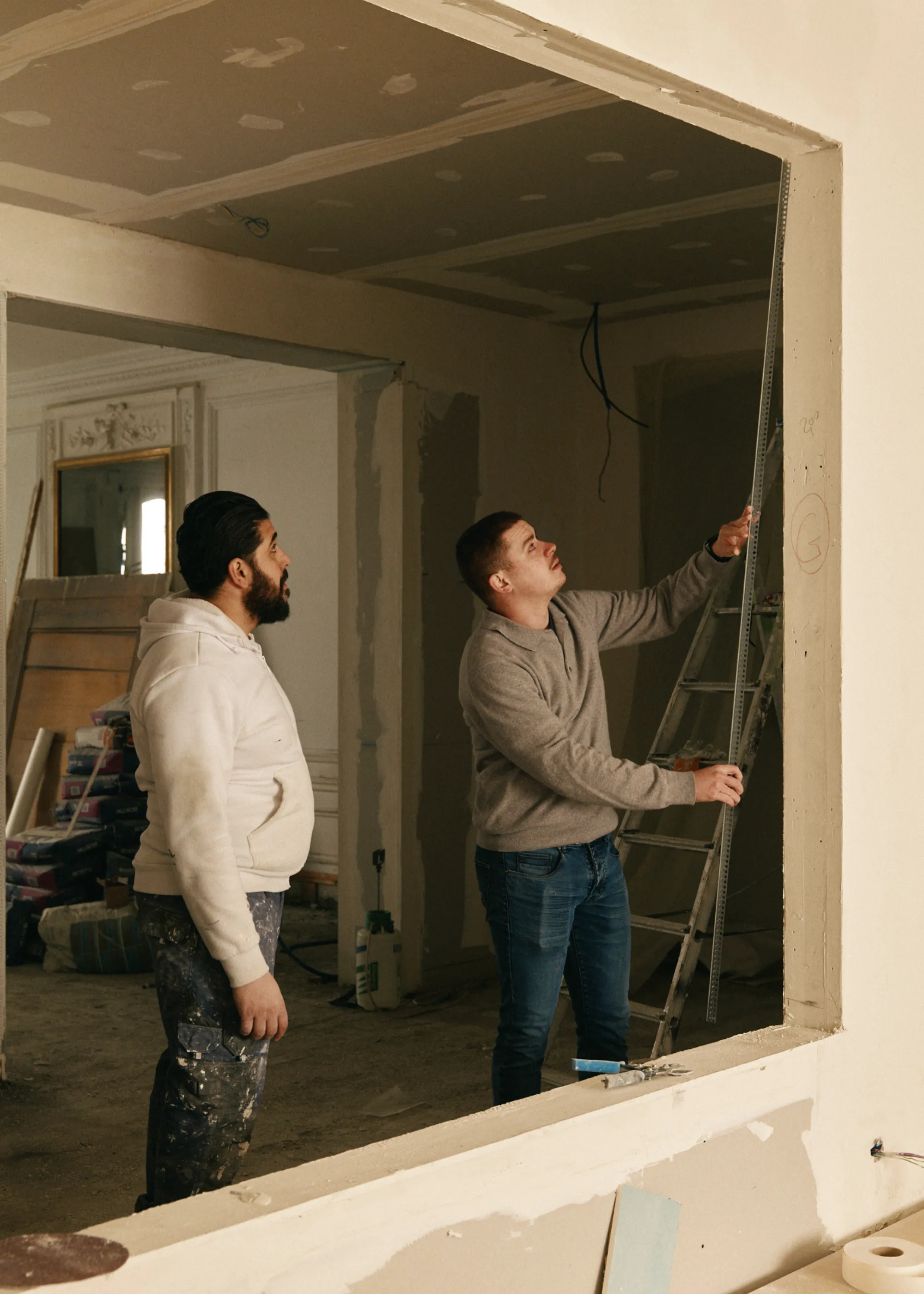
Opening up a kitchen to the living room or combining two smaller rooms to create a more spacious bedroom: in the historic buildings of the 5ᵗʰ arrondissement, these projects sometimes involve a load-bearing wall or floor structure. Such alterations are entirely feasible, provided that specific requirements are met: a structural assessment carried out by a structural engineering firm, the installation of a correctly sized supporting beam, and prior approval from the co-owners at a general meeting, since the building’s structure forms part of the communal areas. The timing of these meetings therefore becomes a factor to incorporate into the project schedule, rather than an obstacle. Non-load-bearing partitions, on the other hand, can be moved without special authorisation, subject to notifying the building’s managing agent in accordance with the co-ownership regulations.
Narrow streets, site access and rubble removal
The 5ᵗʰ arrondissement is one of the most challenging areas of Paris when it comes to organising renovation work. Narrow, sloping streets around Montagne Sainte-Geneviève, the largely pedestrianised Rue Mouffetard, markets at Place Maubert and Place Monge, and staircases without lifts in older buildings all make material deliveries and rubble removal particularly demanding. Placing a skip or construction hoist on a public road requires authorisation from the City of Paris, which must be obtained in advance.
These constraints affect both the budget and the project timeline. A well-planned renovation anticipates them through coordinated deliveries during permitted hours, rubble removal in bags when a skip cannot be used, careful protection of communal areas and compliance with the working hours set out in the building’s co-ownership regulations. This consideration also makes a real difference to your neighbours, who experience the renovation work alongside you.
The neighbourhoods of Paris’s 5ᵗʰ arrondissement where we work
Paris’s 5ᵗʰ arrondissement is divided into four administrative neighbourhoods, each with its own architectural character, atmosphere and typical renovation projects.
- Saint-Victor, between the Seine, Place Maubert and Rue Monge, combines historic buildings with some beautiful Haussmannian properties. Renovation projects often involve two- or three-room apartments with significant architectural heritage, including original beams and fireplaces worth preserving.
- Jardin-des-Plantes, around the Grand Mosque of Paris, the Arènes de Lutèce and Rue Mouffetard, is a residential, family-friendly neighbourhood. Properties range from small courtyard-facing apartments to spacious homes overlooking the gardens, with renovation projects often focused on reconfiguring layouts to suit family life.
- Val-de-Grâce, in the southern part of the arrondissement towards Port-Royal, offers quieter Haussmannian and post-Haussmannian buildings, with larger apartments well suited to use as a main residence.
- Sorbonne, between Boulevard Saint-Michel, the Panthéon and the Luxembourg Gardens, lies at the heart of the university district in the Latin Quarter. Studios and smaller apartments are particularly common, often purchased as rental investments for students or academics.
Across all four neighbourhoods, from the Panthéon to the Jardin des Plantes, we approach apartment renovation in the same way: by understanding the building, its constraints and how you want to live in your home. Renovating a studio near the Sorbonne and transforming a five-room apartment in Val-de-Grâce may involve very different scopes of work, but both follow the same carefully structured process.
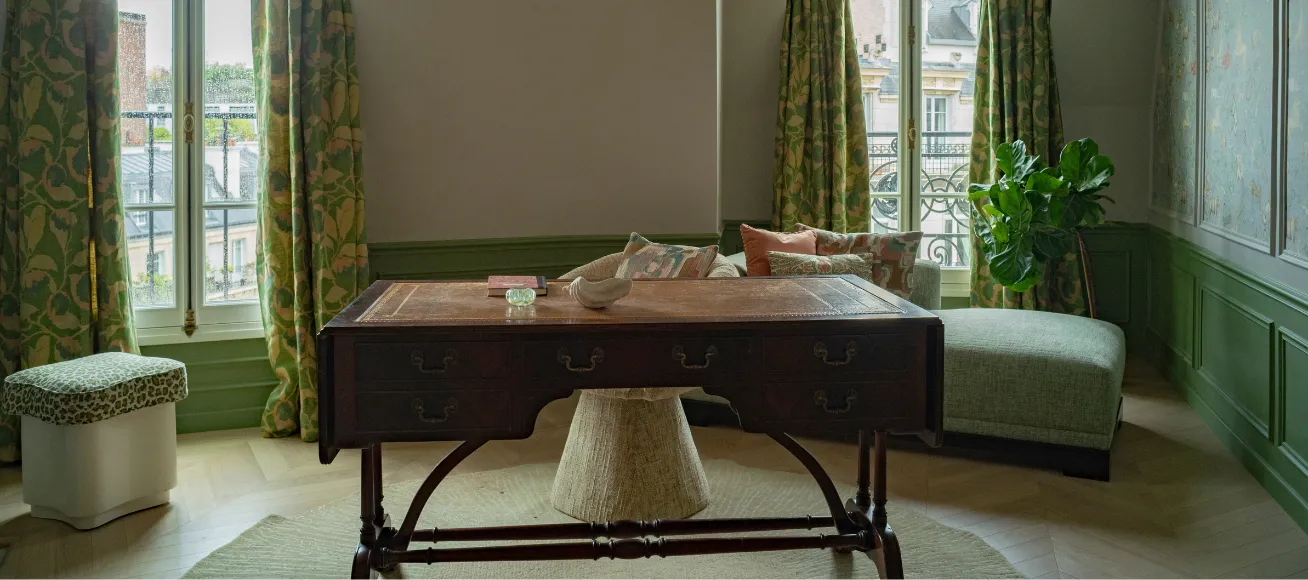
A bespoke, turnkey renovation, from design to move-in
Renovating an apartment in Paris’s 5ᵗʰ arrondissement means coordinating interior design, property surveys, co-ownership requirements, sometimes an ABF application, multiple trades and complex site logistics. You can entrust these tasks to several separate contractors or choose a turnkey renovation company that takes care of everything.
One point of contact, right through to furnishing
Many renovation companies promise a single point of contact throughout the building works. At Maison Kyka, our commitment extends well beyond the completion of the renovation: our team designs your interior, coordinates the tradespeople working on site, furnishes your apartment and hands it over ready to move into. No contractors to coordinate, no interior decorator to hire afterwards and no shopping lists to tackle at the weekend.
In practical terms, you receive a detailed, itemised quotation before work begins. Every tradesperson involved in your renovation, from builders and plumbers to electricians and painters, is a qualified professional in their field, covered by ten-year liability insurance. Our team oversees the entire renovation, coordinating each trade in the right sequence and checking the quality of every stage before moving on to the next.
The stages of your renovation project
Whatever the scale of the work, the process follows the same steps:
- Property acquisition: property search with a dedicated search mandate and administrative support, if you have not yet found your property.
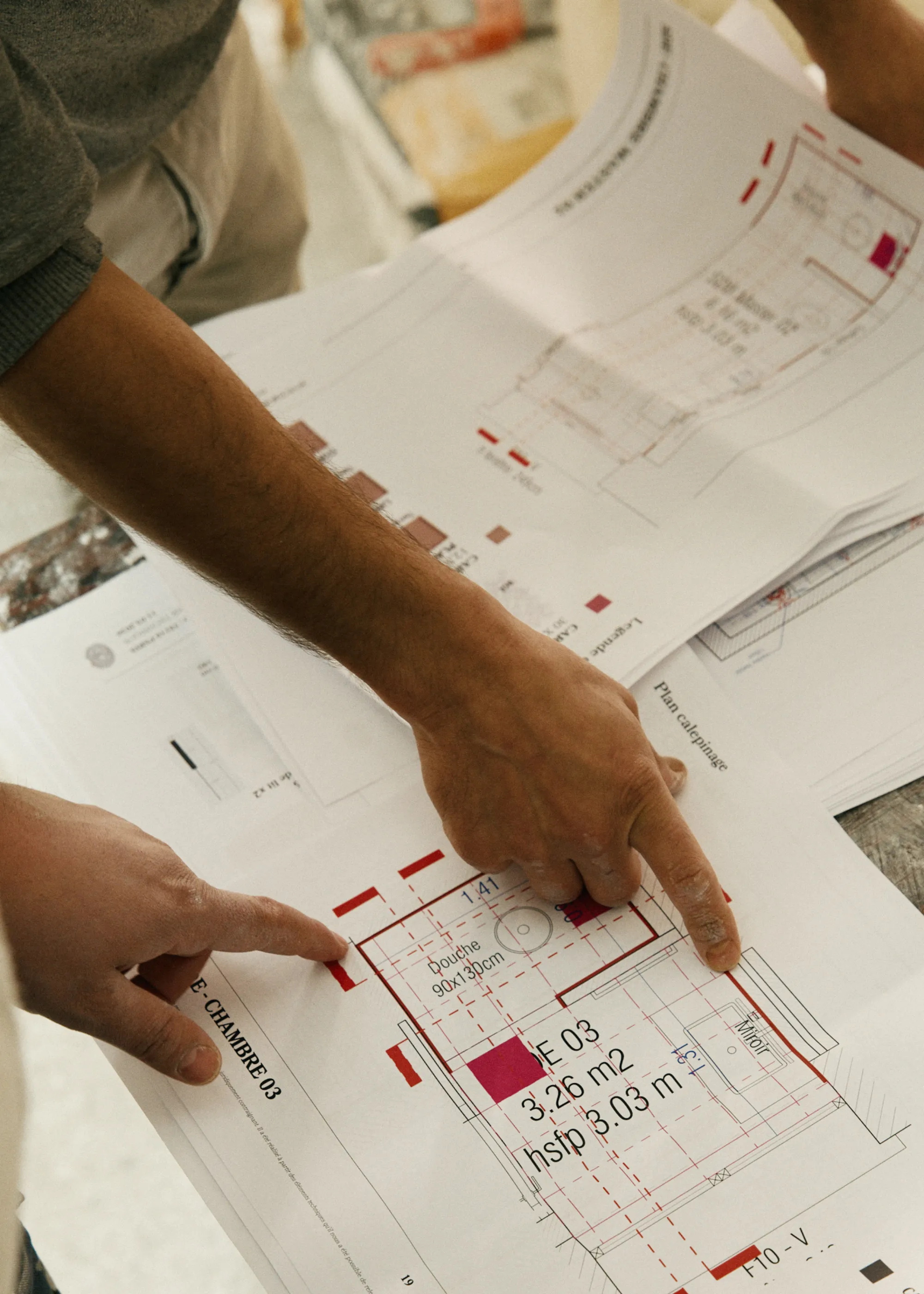
- Assessment and design: survey of the existing property, inspections, assessment of the building’s constraints, floor plans, selection of materials and finishes.
- Approvals and permissions: notification of the building’s managing agent, approval at a co-owners’ general meeting if the structure or communal areas are affected, a prior planning declaration subject to ABF approval if the exterior is altered, and permits for the use of public space during construction.
- Renovation work: strip-out, plumbing and electrical systems, compliance upgrades, insulation, kitchen, bathroom, floors and walls, finishing work.
- Furnishing and decoration: bespoke or vintage furniture, textiles, lighting and tableware.
- Handover: your apartment is cleaned, furnished and fully equipped, ready for you to arrive with your suitcases.
Every stage is supported by regular site supervision, with progress updates and a continuously updated schedule. We explain this approach in detail in our guide to apartment renovation in Paris.
A complete apartment renovation, item by item
In an older apartment in Paris’s 5ᵗʰ arrondissement, much of the renovation work involves elements that are no longer visible once the project is complete.
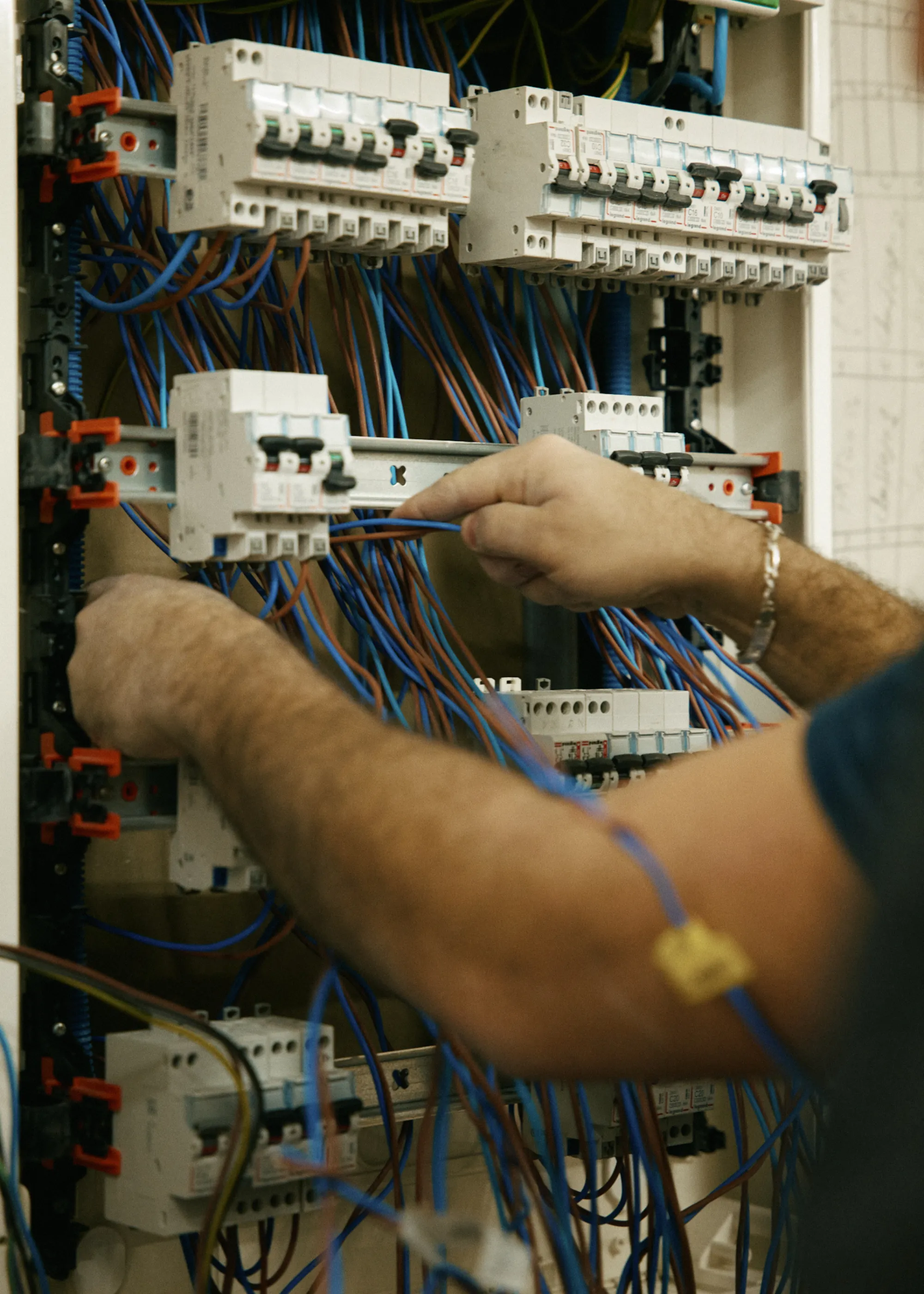
Plumbing and electrical systems come first, as they determine how the rest of the project can be carried out. In both 18ᵗʰ-century and Haussmannian buildings, these systems have often been modified piecemeal over the decades. A complete renovation involves redesigning them from the ground up: a compliant electrical distribution board, upgraded water supply and drainage systems, and plumbing connections positioned to suit the new layout, while taking into account the location of the building’s communal drainage stacks.
Next come floors and walls. Restoring original parquet flooring or terracotta tiles wherever possible, reinforcing or levelling old floors, installing sound insulation between storeys, laying tiles in bathrooms, preparing surfaces and painting walls and ceilings. It is this attention to finishing details, often invisible on a floor plan, that sets a carefully executed renovation apart from a rushed one.
Finally, the kitchen and bathroom account for a significant share of the technical renovation budget, as they bring together plumbing, electrical work, surface finishes, joinery and fittings. Renovating a bathroom in an older Parisian building requires checking the waterproofing of timber floors and the slope of drainage pipes. Renovating a kitchen means ensuring that the electrical installation and ventilation are suited to the chosen appliances. In the smaller apartments of the Latin Quarter, bespoke design truly comes into its own: a kitchen fitted into an alcove, a shower tucked beneath a beam or storage designed down to the last centimetre.
How much does it cost to renovate an apartment in Paris’s 5ᵗʰ arrondissement?
For a complete apartment renovation in Paris’s 5ᵗʰ arrondissement, expect to pay between €2,000 and €2,500 per m², rising to €2,500–€3,500 per m² or more for an extensive renovation involving changes to the layout. These price ranges include VAT but exclude furnishings. An accurate renovation quote can only be provided after visiting the apartment.
You may find considerably lower price ranges online, starting at around €800–€1,400 per m² for what is described as a complete renovation. However, these figures generally refer to cosmetic refurbishment in newer buildings, without upgrades to plumbing or electrical systems or any interior design work. In an older apartment in Paris’s 5ᵗʰ arrondissement, where surveys, timber floors, access constraints and the careful preservation of original features must all be taken into account, a complete renovation rarely costs less than €2,000 per m².
Three factors influence the renovation budget in Paris’s 5ᵗʰ arrondissement:
- The condition of the building’s floors, plumbing and electrical systems.
- Whether original architectural features (parquet flooring, beams, fireplaces) are preserved.
- Site access and logistical constraints.
A simple cosmetic refurbishment limited to painting and flooring is a different type of project and does not constitute a renovation as we define it. Improvement works carried out on properties completed more than two years ago benefit from a reduced VAT rate of 10%, while allowing a contingency budget of 10–15% remains a sensible precaution when renovating older buildings. We break down these costs using actual figures from our completed projects in our guide to apartment renovation costs in Paris.
"A HUGE thank you to Maison Kyka, and especially to the team who supported me from start to finish with my property purchase. The whole process was incredibly smooth, with clear, almost daily communication that took away so much of the pressure and stress, especially as a first-time buyer." Anissa B.
How long does an apartment renovation take?
When renovating an apartment in Paris, allow a few weeks for a simple cosmetic refurbishment, 3 to 5 months for a complete renovation and 6 to 9 months for an extensive renovation involving changes to the layout. In the 5ᵗʰ arrondissement, these construction timelines must also account for the additional time required to obtain local approvals and permissions.
Approvals and permissions are prepared during the design phase, meaning they rarely extend the overall project timeline by their full processing period. At Maison Kyka, we identify these administrative requirements from the very first meeting, ensuring that the proposed schedule is realistic and achievable. For a detailed breakdown of each stage of the renovation process, see our guide to apartment renovation work in Paris.
Renovating to live in or to rent out
In Paris’s 5ᵗʰ arrondissement, a significant proportion of renovation projects involve apartments intended for rental. Home to the Sorbonne, the Collège de France, the École normale supérieure and the Jussieu campus, the area is particularly popular with students, researchers and academics, making it one of Paris’s most sought-after neighbourhoods for rental property investment.
For a main residence, renovation focuses on improving your everyday living experience: layout, storage, bathrooms, natural light and peace and quiet. For a rental investment, the priority is to create a well-finished, low-maintenance property that can be let quickly. An apartment delivered fully furnished and decorated can be rented out as soon as the keys are handed over, avoiding the weeks spent furnishing and equipping a property that can delay the start of a tenancy. We explore the specific requirements of smaller properties in our guide to studio apartment renovation in Paris.
Energy efficiency has become a decisive factor in these projects. Properties with a G rating under France’s Energy Performance Certificate (DPE) have been banned from the rental market since 2025, while F-rated properties will face the same restriction from 2028. Many older apartments in the 5ᵗʰ arrondissement, with their original windows and uninsulated walls, are affected. A well-planned renovation addresses these issues as part of the same project: internal wall insulation, window replacement or refurbishment with ABF approval where required, and ventilation systems suited to historic buildings. The result is an apartment that achieves the energy rating required to remain eligible for rental, while offering the comfort expected of a modern home.
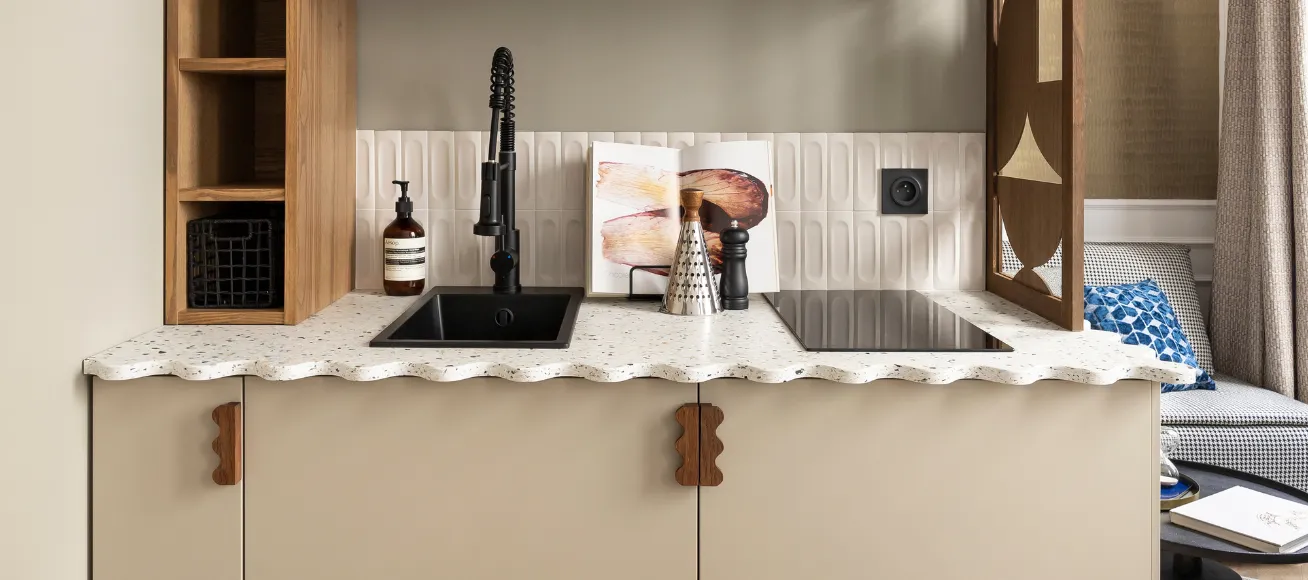
Nicolas’s apartment, a rental investment on the Left Bank
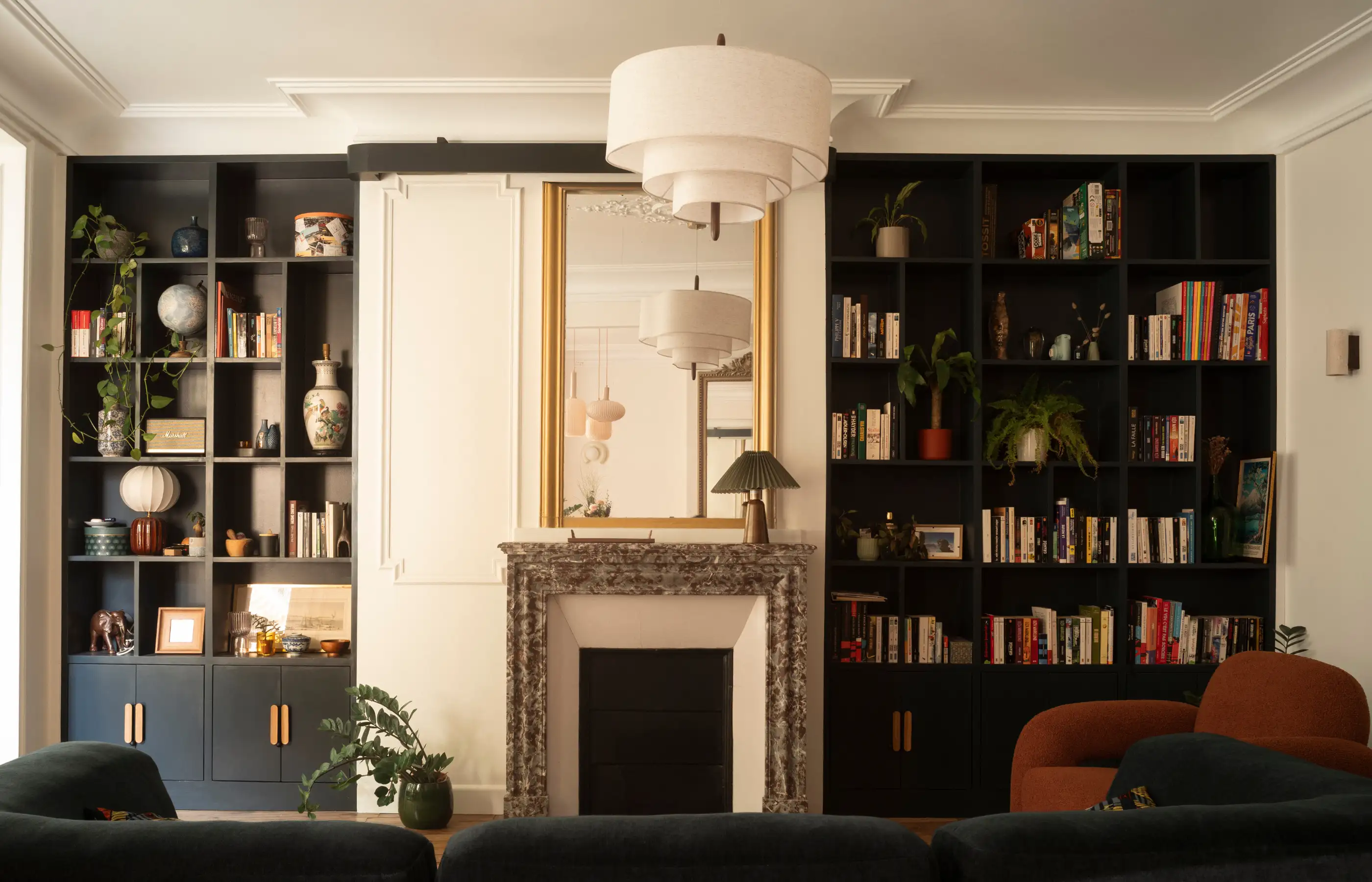
Just a few streets from the 5ᵗʰ arrondissement, Nicolas’s project illustrates how a small apartment in a historic building can be transformed when the layout, finishes and furnishings are designed together with the rental market in mind. Discover more projects across the capital in our portfolio, and explore our approach to renovating properties in another historic Parisian neighbourhood in our guide to apartment renovation in the 18ᵗʰ arrondissement.
Still looking for a property to renovate?
Many of our projects begin at the property acquisition stage. In Paris’s 5ᵗʰ arrondissement, where properties in need of renovation are scarce and highly sought after, and where the true condition of an older apartment can be difficult to assess from estate agent photographs, evaluating renovation costs during a viewing can make all the difference when negotiating the purchase price.
Maison Kyka also supports you throughout your property search, through an exclusive or non-exclusive property search mandate. We accompany you on viewings, estimate renovation costs on site and give you a clear understanding of the total investment required: purchase price and renovation budget combined. Our guide to buying a property in need of renovation explains how to assess renovation costs before committing to a purchase.
Frequently asked questions about apartment renovation in Paris’s 5ᵗʰ arrondissement
_11zon.webp)
_11zon.webp)
.svg)