Share the article


realty
Article
The 125 questions to ask yourself when visiting an apartment
Summary
Have you found an apartment you are interested in and have you obtained a date to visit it? Now you have to prepare yourself because the Visiting an apartment passes quickly and numerous questions need to be addressed. They largely depend on the type of apartment you want to buy (new or to be renovated) and your requirements. In this article, we have listed the questions the most important things to ask yourself in order to allow you to evaluate the quality of the apartment from every angle. Electricity, plumbing, insulation, light, light, heating, heating, heating, ancillary costs, co-ownership... Maison Kyka is at your disposal to assist you in visiting the apartments that interest you in order to help you not forget any important details for your real estate project.
Age and diagnosis of the apartment
At the start of the tour, get the date the building was built. If you want buying real estate to move in, knowing the date of construction of the building allows you to know what real estate diagnoses must be carried out.
If you are considering buying an apartment to rent, the date the building was built can have an influence on the amount of rent. For example, since the Élan law of July 1, 2019, the rent control in Paris varies according to the year of construction of the property, the number of rooms and the type of rental chosen (furnished or unfurnished).
Then, check with the seller or real estate agent that all mandatory real estate diagnoses have been carried out. Depending on the property you are visiting, several real estate diagnoses are mandatory:
- Energy Performance Diagnosis (DPE) : mandatory for all apartments, it makes it possible to assess the quality of the insulation by analysing the energy consumption of the property
- Diagnosis: Carrez law : mandatory for all apartments, it attests to the exact area of the lot (after deduction of rooms whose height is less than 1.80m, the area occupied by the walls, doorways etc...).
- ERP diagnosis (Risk and Pollution Report) : mandatory for all apartments, it informs buyers or tenants of the various risks to which the property is exposed (pollution, natural, mining, technological risks, etc.).
- Termite diagnosis : mandatory for all apartments located in areas that are infected or likely to be infected (such as Paris). This diagnosis is valid for 6 months.
- Asbestos diagnosis : mandatory for all real estate built before July 1, 1997.
- Lead diagnosis : mandatory if the construction date of the building is prior to January 1, 1949.
- Electrical diagnosis : valid for 3 years, it is mandatory for all apartments whose electrical system is more than 15 years old.
- Gas diagnosis : valid for 3 years, it is mandatory for all apartments whose gas installation is more than 15 years old.
- Sanitation diagnosis : mandatory for real estate with an individual sanitation installation.
Finally, take the time to talk to the seller or ask his real estate agent for some information:
- How long did the landlord live in the apartment?
- Why is the apartment for sale?
- Did the owner carry out renovations or renovations?
Call on Maison Kyka to be accompanied by a real estate expert who knows how to ask the right questions when visiting an apartment. Are you looking to buy and renovate an apartment? Maison Kyka accompanies you at each stage of your project. During the first visit, we pay particular attention to what cannot be changed (condominium, luminosity, the building, the common areas...). When it comes to the interior of the apartment, the magic of Maison Kyka works: everything can be transformed and arranged according to your tastes and desires.
“Despite my lack of time and experience in this area, Maison Kyka transformed the purchase of my main residence in the 15th arrondissement into a smooth and pleasant experience. Their team was able to find a property with great potential, manage the renovation work with expertise and taste, and support me at each stage of the process. The result was beyond my expectations. I would highly recommend their services!”
Nans R.
Condition of the floor and walls
Once in the apartment, visit the various rooms and assess their general condition by asking yourself the following questions:
- Do you see traces of mold or humidity on the walls or ceiling?
- How clean is the paint or wallpaper? Do the walls need to be refreshed?
- In the bathroom, what condition are the bath, shower and sinks in? Traces on walls and ceilings can be a sign of poor ventilation.
- Open a window and observe the frame: are there traces of flow that indicate excess humidity?
Afterwards, observe the layout and upholstery of each room and imagine yourself living in the apartment. The following questions can help you get started:
- Are the coatings adapted to the different rooms? For example, the presence of wooden floors or slippery tiles in a bathroom is rarely a good idea.
- Does the parquet creak? Do you have to walk on cold tiles when you get out of the shower?
- How far is the bathroom from your bedroom? Crossing the living room to take a shower is rarely optimal.
- Do you have kids? Where is their room compared to yours?
- Put yourself in the window of your room, is there an opposite? What about the other rooms?
- Is there enough space to accommodate your household appliances (e.g. washing machine, dryer, dishwasher etc...)?
- In the kitchen, are the cooking appliances old or modern?
- What condition is the sink in? Is it big enough and deep enough? Are there one or two tanks?
- Is there a dressing room or closets big enough to allow you to store your things?
Electricity issues
In the age of digital and teleworking, the quality of the electrical installation in the apartment is important. As mentioned above, if the electrical system is more than 15 years old, the owner is required to carry out an electrical diagnosis (valid for 3 years).
Get closer to the electrical panel :
- What condition is it in?
- Is it equipped with RCDs? This makes it possible to cut off the electricity in a part of the apartment, in case of a problem.
- How many departures do you see? Are they well labelled in order to easily identify the powered terminals?
If the apartment is new or renovated, its electrical installation must comply with the rules of the NFC 15-100 standard (also called C 15-100). For example, depending on the size of the living room, this standard requires the presence of 5 to 7 ground sockets and a telephone and/or internet outlet.
Again, it is important to imagine the layout of the rooms and to project yourself :
- Are there enough sockets to power your electrical equipment without installing extension cords and/or power strips?
- Does the electrical system allow you to power light bulbs on the ceiling or on the walls?
- Is the apartment connected to fiber? If not, is he eligible?
- Does your phone pick up the telephone network and 4G/5G in all rooms?
Plumbing questions
It is not mandatory to carry out a plumbing diagnosis to proceed with the sale. However, it may be wise to carry out this diagnosis by calling on a plumber and heating engineer, especially if you buy your first property.
Learn about the type of domestic hot water production : is it collective or individual?
- If it is an individual hot water production: What is the production method? (Boiler or water heater?) Is there a hot water meter?
- If it is a collective hot water production: how are the costs divided between owners?
In addition, evaluate the quality of the drinking water supply system by asking yourself the following questions:
- What condition are the pipes in? Are there traces indicating a leak in a connection?
- In the case of an apartment to be renovated: check that the supply pipes are not made of lead as this can be harmful to health
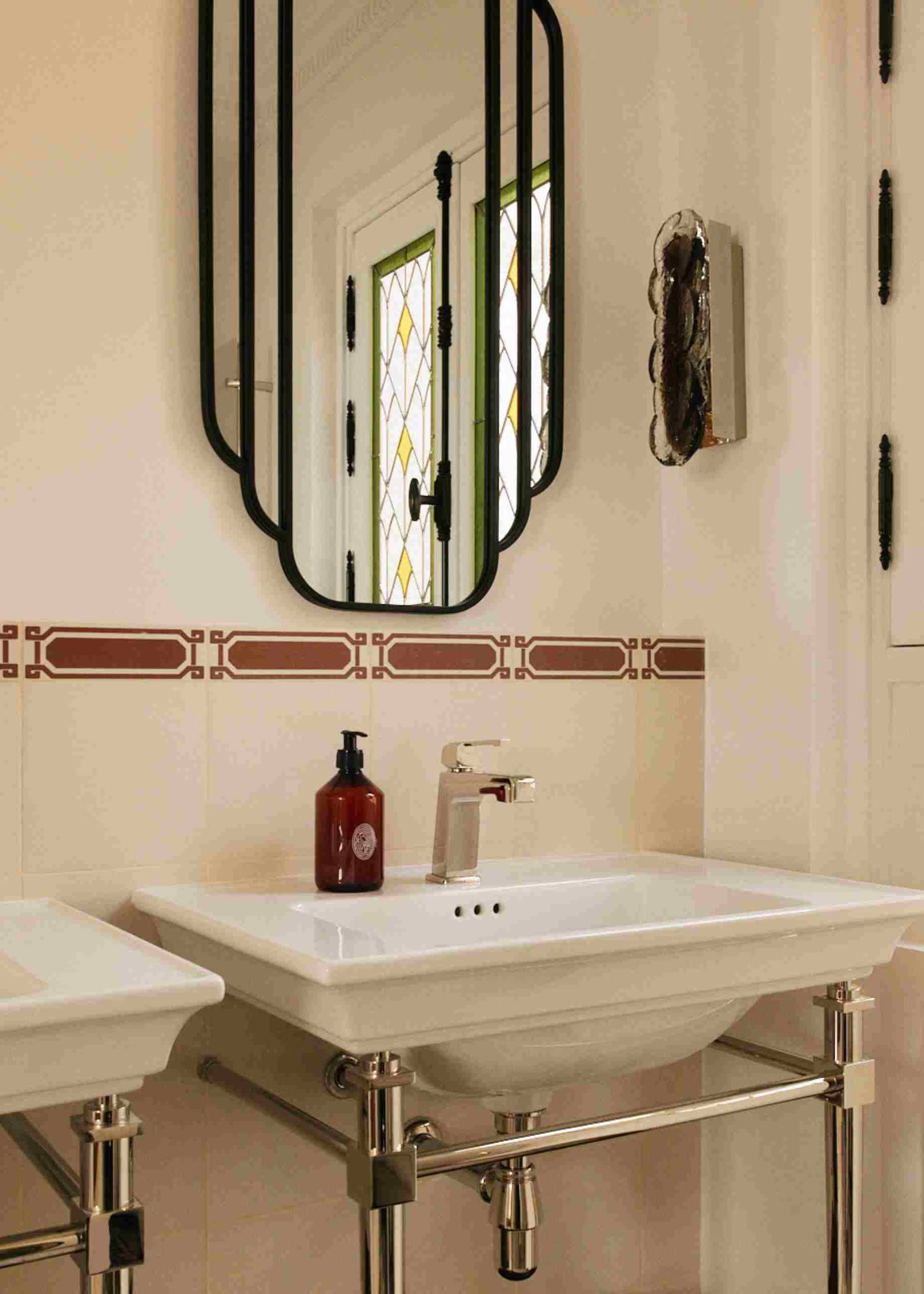
- What type of faucets are installed? Do you see mixers, mixers, or thermostatic mixers?
.avif)
- Is the kitchen faucet high enough? (in general, the higher it is, the more convenient it is to use)
- Under the sink, do you see traces of humidity?
- Turn on a faucet and observe the flow and pressure of the water. Is the faucet easy to turn off completely? Does the water drain quickly?
- Fill a glass with water: is the water cloudy, colored, or fragrant?
- Is there enough water supply to allow you to install your household appliances?
- In the bathroom: what is the condition of the joints? Is there a softener to avoid lime deposits?
- In the bathroom: do you see traces of humidity on the floor or around the shut-off valve? Is the toilet flush working properly? Do you see cracks in the bowl?
- Is there a valve to shut off the water? Is it easily accessible and easy to turn?
To answer all these questions, we advise you to prepare a checklist dedicated to buying an apartment and to be accompanied during the visit. To move forward peacefully with your real estate project, call on Maison Kyka and benefit from the experience of our real estate experts.
“I was supported by Maison Kyka in the realization of my project and I am very satisfied with the result! All the teams listened to me and fully understood my expectations. I am delighted to have been supported by the Maison Kyka service and I advise anyone who wants to carry out a tailor-made and innovative real estate project to go for it!”
Olivier Dhalluin
How the heating works in the apartment
To live comfortably during the colder months, evaluate the mode and quality of heating an apartment is crucial.
To get started, ask the owner or realtor about the apartment heating mode : is it individual or collective heating?
- If it is individual: you control your consumption but the maintenance of the system is your responsibility. How old is the boiler? Is it easily accessible?
- If it is collective: find out how central heating costs are distributed.
Then, take an interest in type of heating installed by asking the following questions:
- What if it is an electric heater? with gas? With fuel oil? of a pellet stove?
- Are there hot water heaters? with a radiant panel? with inertia?
- Is there a heat emitter in each room?
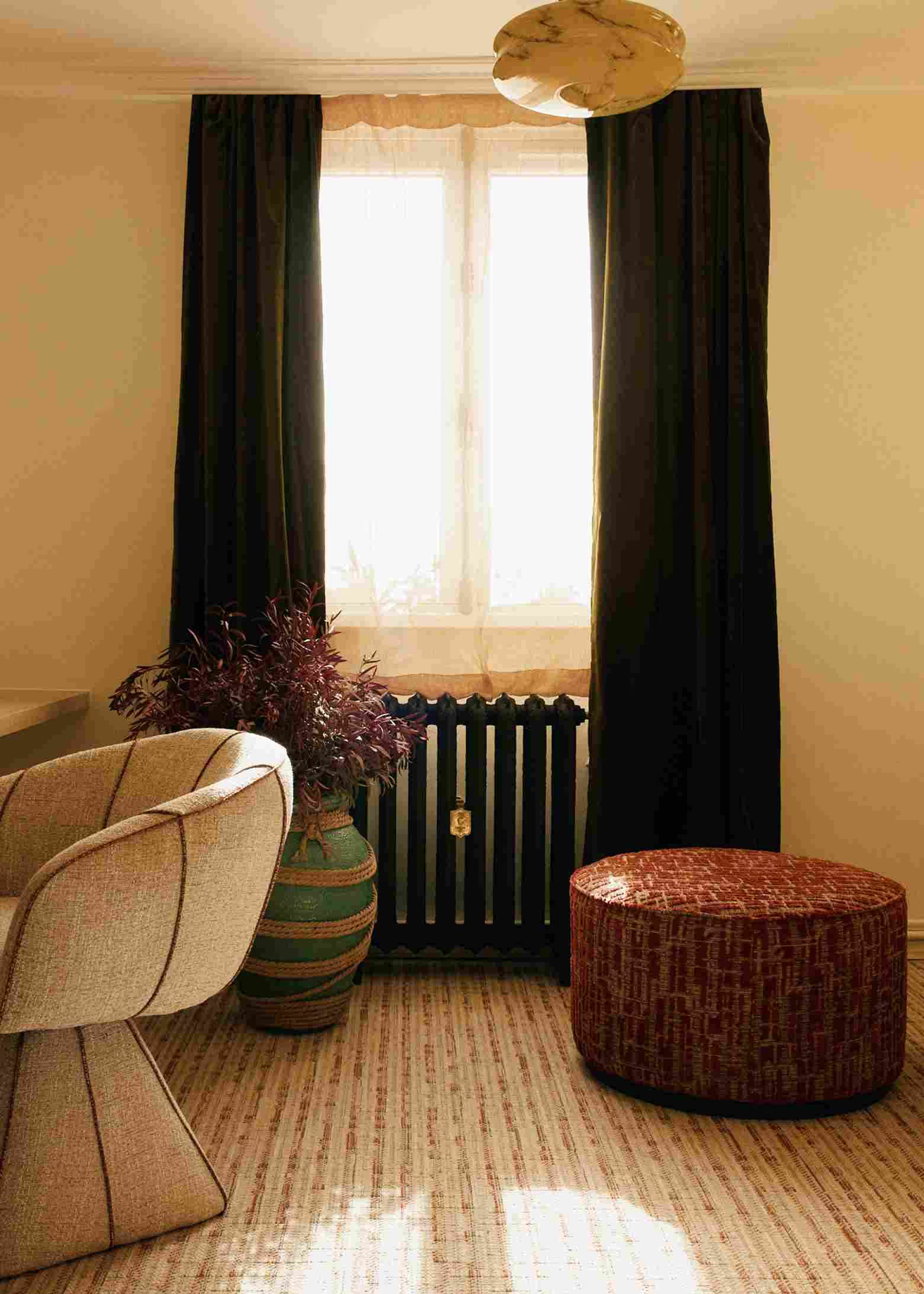
- Where are the radiators positioned? (under the windows is ideal)
- Is the bathroom equipped with a towel dryer?
- Is there a heated floor? Exactly what surface does it cover?
- If a chimney is present: is it in working condition? When was it swept up? In what condition is the home located?
- Is the apartment equipped with a control system to adjust the temperature of the rooms?
Thermal and sound insulation of the apartment
The insulation of an apartment is also a very important element to consider before buying.
Indeed, poor thermal insulation can considerably increase your energy expenditure. The DPE label, ranging from A to G, gives an idea of the energy performance of the apartment. On average, a well-insulated home (label A) consumes 9 times less than a “thermal strainer” (label G).
Note
During a renovation, Maison Kyka manages to improve an apartment’s energy performance rating (DPE) by at least one grade, and sometimes even two or three, simply by optimizing what can be improved (windows, wall insulation, ventilation system, heating system, etc.). In addition to making the apartment more energy-efficient, these improvements significantly enhance overall comfort. Book an appointment with our team to receive personalized advice.
So assess the level of thermal insulation in the apartment by asking the following questions:
- Are the windows single or double glazed?
- Are the radiators working properly?
- Pass your hand near window frames or front door knuckles: do you feel a draft?
If you observe traces of humidity in the living room or bedrooms, this is a sign of poor insulation and poor air tightness.
In addition, find out about the ventilation system in the apartment :
- Is there natural ventilation? A single-flow or double-flow CMV?
- Does the kitchen have a hood?
Finally, pay attention to the sound insulation of the apartment :
- Can you hear noise coming from the apartment? (ex: radiators, boiler, refrigerator...)
- Do you hear noise from common areas or from the neighborhood? (ex: sound of footsteps, elevator...)
- Do you hear noise coming from the street? (ex: vehicles, schoolyard...)
Brightness of the rooms

The sun exposure of an apartment has a significant impact on energy expenditure and your mental health. A southern exposure generally offers excellent light but this can be annoying during heat waves.
A double south-east or south-west exposure is ideal. A southern exposure is perfect for the living room or dining room, a bedroom facing east is particularly pleasant and a western exposure is ideal for a balcony or terrace.
To check the exposure of the property you are visiting, you can ask the owner for the plan of the apartment, North is often indicated on the document. If you are already there, your smartphone can be used as a compass.
That said, assess the brightness of the apartment you are visiting by asking yourself about the size, number and type of openings present:
- Does the apartment have a bay window or a French window?
- How many windows are there in the living room and the other living areas of the apartment?
- Are there rooms without windows?
- What floor is the apartment located on?
- Do obstacles (trees, nearby buildings) limit sun exposure?
- In the middle of summer, can blackout shutters or curtains keep the apartment cool?
Amount of charges and ancillary costs
The selling price of the apartment is not the only factor to take into account. It is important to anticipate other ancillary costs by asking your interlocutor the following questions :
- What is the amount of the charges for the apartment (water, electricity, heating)?
- How much are the costs of maintaining the equipment in the home (e.g. overhauling the boiler, chimney sweeping, etc.)?
- What is the amount of property tax?
- What is the amount of home insurance?
- How much are the annual condominium fees?
Anticipate possible renovation work
Renovating an apartment involves setting a budget for the work. And buy a home with work to be done is also an excellent way to increase your valuation and realize added value at the time of sell your main residence to buy another.
During the visit, it is important to assess the amount of renovation work on the apartment or building by asking the following questions:
- Given the general condition of the apartment, do you want to carry out development work?
- Do the windows need to be changed?
- Does the electrical system need to be improved?
- Is there any condominium work to be planned (e.g.: facade renovation, staircase renovation, etc.)? If yes, how many co-owners are there? What are the prices of the lot?
Pay particular attention to the DPE. If the grade of the property you are visiting is low, improving the DPE of the apartment may involve major work.
Call on Maison Kyka to be supported at each stage of the purchase and renovation of your apartment. Our real estate experts are at your disposal to help you find the rare pearl and our interior design studio is there to help you renovate, arrange and decorate according to your tastes.
“My experience with this team has been exceptional. My architect fully understood my expectations and the project team was always attentive. My project was delivered on time and the end result is fantastic. I am very satisfied with the service received.”
Lyrod Levy
Presence of amenities in the building
Before finishing the visit, take the time to ask a few questions about the building and the amenities available:
- Is the entrance to the building protected by a digicode? Is there an airlock after the first door?
- Is there a caretaker or a building caretaker?
- Is the apartment door equipped with an A2P 3-point lock offering good protection against intrusion attempts?
- Does buying the apartment give you access to a parking space? Is it big enough to accommodate your vehicle?
- Is there bike storage?
- What condition is the basement of the building in? Do you have access to a cellar?
Condition of the building, common areas and condominium
Unlike the questions to ask when buying a house, visiting an apartment is accompanied by questions specific to the building and the neighborhood:
- How does co-ownership work? What are its rules?
- Do the co-owners live in the building or have they rented their property?
- Are there business premises in the building?
Neighborhood issues
Last but not least, it is important to you familiarize yourself with the atmosphere and the assets of the neighborhood where the apartment is located. This can have a significant impact on your quality of life and the value of the property that you are visiting:
- What are the shops nearby? (bakery, supermarket, pharmacy etc.)
- Is there a market nearby? If yes, when is it open?
- If you are looking for a property for your family: is there a nursery or a school nearby?
- Is there a green space near the apartment?
- How far is the apartment from your workplace?
- What means of transport do you have access to? (subway line, bus, SNCF station etc.)
- Is there a restaurant, bar, or nightclub nearby?
- Is the neighborhood safe?
- Are public projects planned in the coming weeks or years?
You now know the most important questions to ask when viewing an apartment. Do not hesitate to ask for a counter-visit if the first visit did not allow you to address all the points listed in this article.
Of course, there are other questions, depending on the type of property you are looking for and your preferences. Make an appointment with our team in order to benefit from personalized support!
“A big thank you for your support. I immediately felt confident and understood my needs and expectations. Congratulations to the whole team for listening, your availability and meeting deadlines, which was very important for me. I am delighted with the final result: thank you very much.”
Muriel Bardoux


