.svg)

From Bastille to Oberkampf, the lively life of Eastern Paris
Place de la Bastille, the crossroads of the 4th, 11st and 12th arrondissements
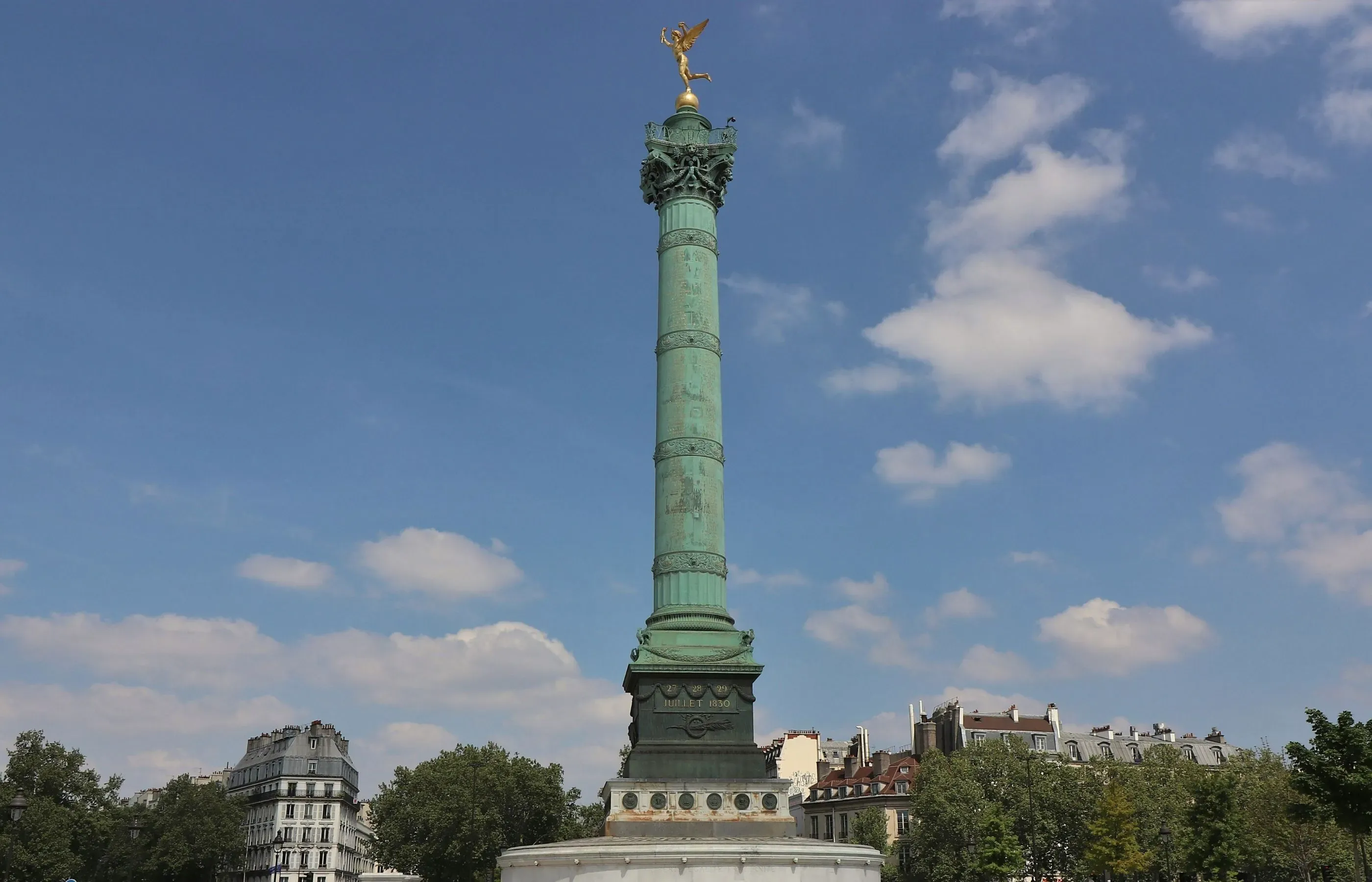
For this new stroll, meet at Place de la Bastille, at the foot of the historic July Column, erected in the mid-19th century. From there, let’s take a look at the Opéra Bastille, designed by Carlos Ott and inaugurated in 1989 for the bicentennial of the French Revolution. Next, head to the picturesque Cour Damoye, whose main—and unexpected—entrance is located at 12 Place de la Bastille. It is a peaceful spot to begin our tour of this bustling neighborhood in total tranquility, surrounded by greenery. The best season to walk the cobblestones of this alley is undoubtedly spring, when the wisteria in bloom adds color to the storefronts and offices nestled there.
Let’s then make our way to the Hôtel de Sully, a must-see in the Marais district with its orangery, courtyard, and garden: after admiring the allegories on its facades, take the secret passage by pushing open the door of the pavilion on the right, which leads to the Place des Vosges. Take the opportunity to have breakfast at Carette, the quintessential Parisian tea room that never fails to impress: pastries, macarons, cakes… You’ll be spoiled for choice, but don’t miss their decadent hot chocolate.
This is also where you’ll find the Maison de Victor Hugo, which can be visited by reservation only, every day except Wednesday: perfect for a post-meal stroll in the footsteps of one of France’s greatest writers.
Heading to the Folie-Méricourt neighborhood
Once you’ve had your fill, in every sense of the word, head toward Boulevard Richard Lenoir, which leads directly to the Oberkampf district. Every Thursday and Sunday, it comes alive with the Bastille market, one of the most gourmet spots in the capital. If you’re still hungry, stop by the “Papy Chichi” stand, which serves up churros faster than you can blink. Another place for gourmet shopping is Maison Plisson, on Boulevard Beaumarchais, which stocks over a thousand fresh artisanal products and fine groceries.
Let’s continue our journey by heading up Boulevard Beaumarchais: on your right, admire the Cirque d’Hiver, built in 1852 by architect Jacques Hittorff and listed as a historical monument. Its statues, friezes, and bas-reliefs are well worth a look.

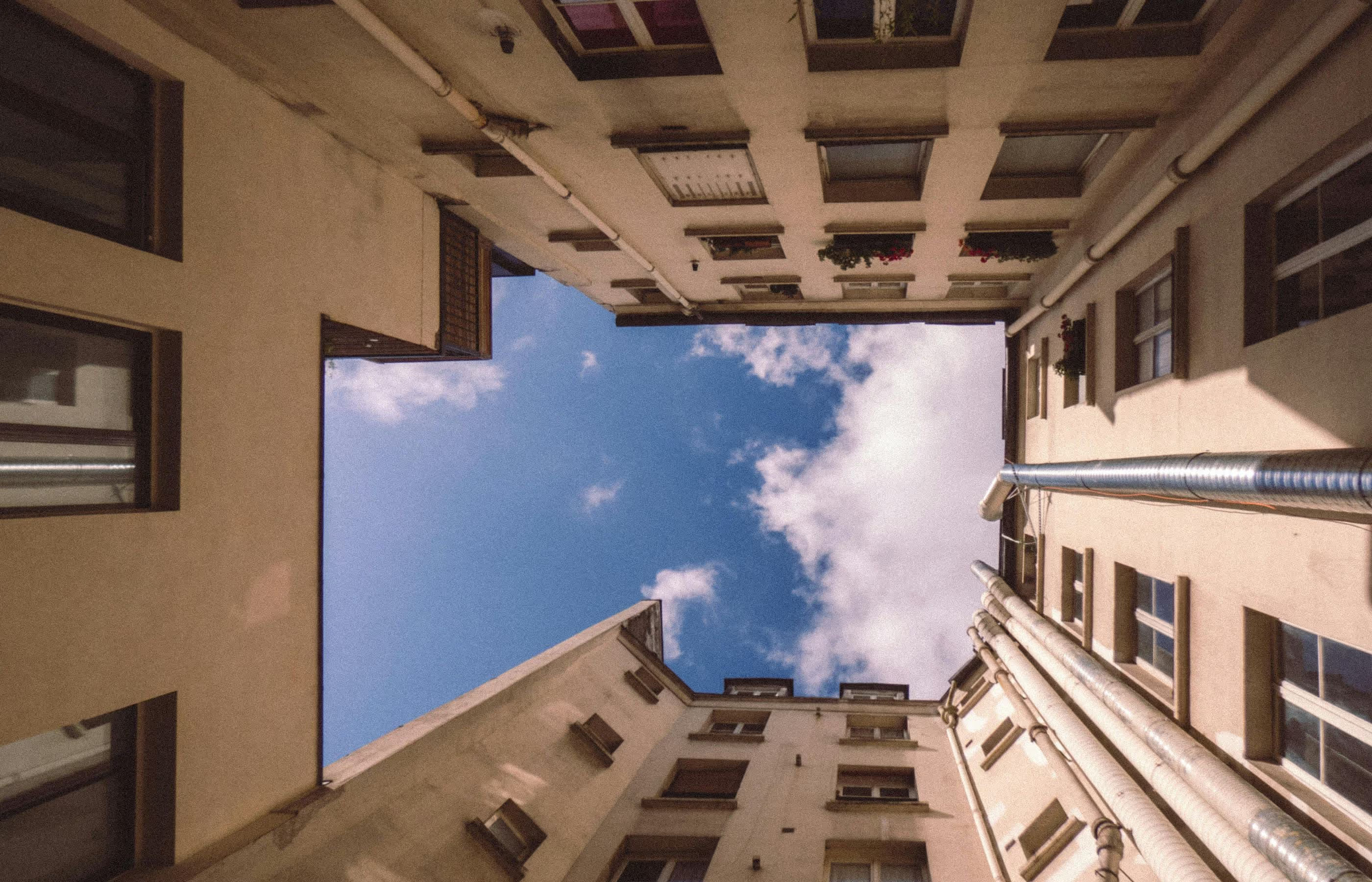
We’ve finally arrived at the Oberkampf station, known as the epicenter of nightlife in this part of Paris. But the neighborhood is also lovely to explore by day, with hidden gems and various curiosities to discover. Let’s start by grabbing a coffee at Dreamin’ Man, a pocket-sized coffee shop where, as soon as you walk in, the notes of a Neil Young hit drift from an old radio…
While we’re in the neighborhood, let’s head over to the Bataclan, a legendary concert venue now sadly infamous, whose architecture is striking: inaugurated in 1865, it was designed by Charles Duval as a pastiche of Chinese architecture. You will find a facade with flashy colors, oversized Buddha statues, and dragons on the cornices.
A change of pace with the Cité du Figuier, accessible via numbers 104-106 on Rue Oberkampf. Tucked away from the bars, this bucolic haven is dotted with small houses featuring colorful facades—don't miss the one with the turquoise storefront and its elephant frieze. This former workers' housing complex once housed metalworking workshops.
A foodie neighborhood
For a sweet treat in the afternoon, there are two options. First choice: the bakery Utopie, which offers several creations featuring black sesame, including an original roll and madeleines. Alternatively, we also recommend one of the best vegan spots in Paris, Aujourd’hui Demain. Both a concept store and a restaurant, the venue serves delicious pancakes and granola bowls, in addition to an enticing savory menu. Pair it with a hot spiced apple juice when it’s cold outside.
We end the day with a drink at Little Red Door, ranked among the best cocktail bars in the world. Finding it is very simple: just look for its little red door. It’s hard to leave its dim, cozy atmosphere and velvet armchairs, but you have to eat, and we have just the place for you.
Back to Bastille at the Grande Brasserie, a timeless restaurant serving classic bourgeois cuisine. Burgundy snails, pâté en croûte, hand-cut tartare, salmon with sorrel, as well as profiteroles and crème brûlée. You won't know where to start. The perfect way to wrap up this day of tradition and modernity.

.svg)